The Evolution of Architecture Diagramming
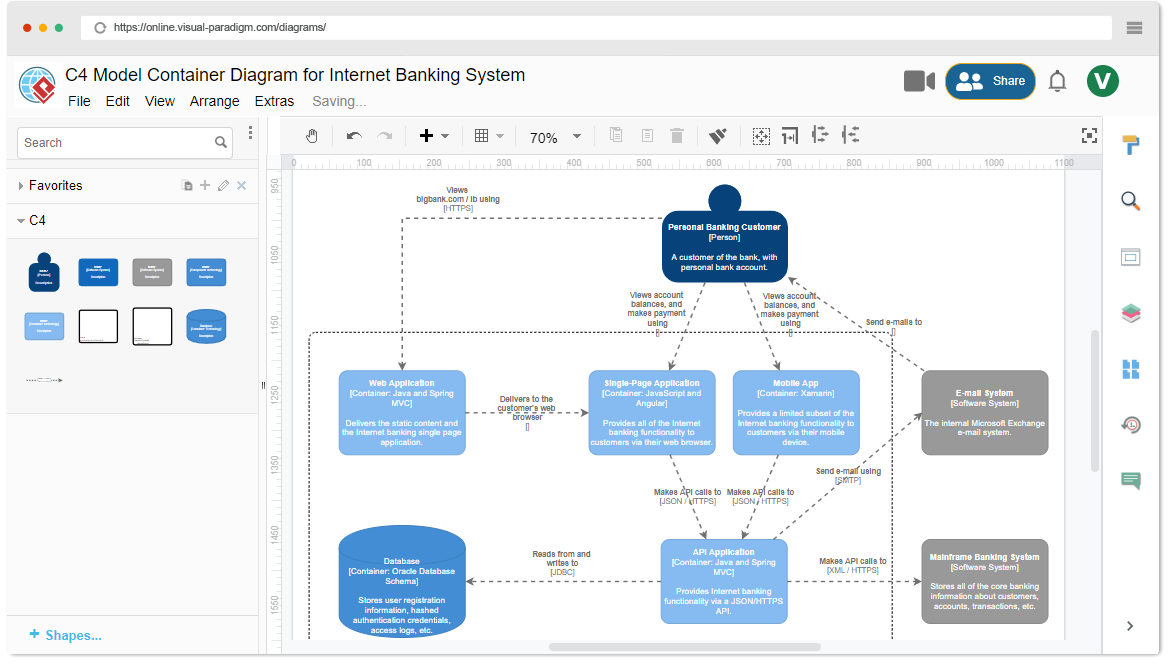
Gone are the days when creating a system context diagram required hours of clicking, dragging, and dropping shapes on a canvas. Today, we stand at the intersection of artificial intelligence and software architecture, where your ideas can be translated directly into visual models without lifting a mouse.
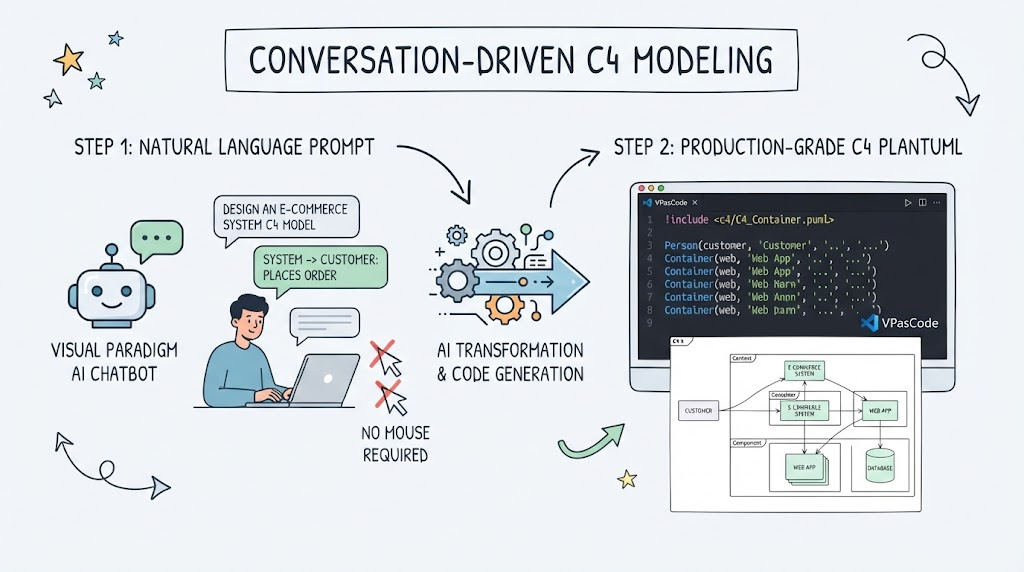
This shift is best illustrated by the concept of “Conversation-Driven C4 Modeling.” Imagine describing your system in plain English, and having an intelligent assistant immediately generate the corresponding technical documentation. This isn’t just a futuristic idea; it’s a workflow available through tools like the Visual Paradigm AI Chatbot.
Step 1: The Natural Language Prompt
The journey begins with you. Instead of worrying about syntax or layout, you simply define your scope. Let’s look at a typical scenario for an e-commerce platform.
You might type a prompt such as: “Design an e-commerce system C4 model.”
In this phase, the goal is clarity of intent. You don’t need to specify that there should be a “Container” box or a “Person” icon. You simply state what you want to build. The system interprets this high-level request as a trigger to begin the modeling process.
Step 2: AI Transformation & Code Generation
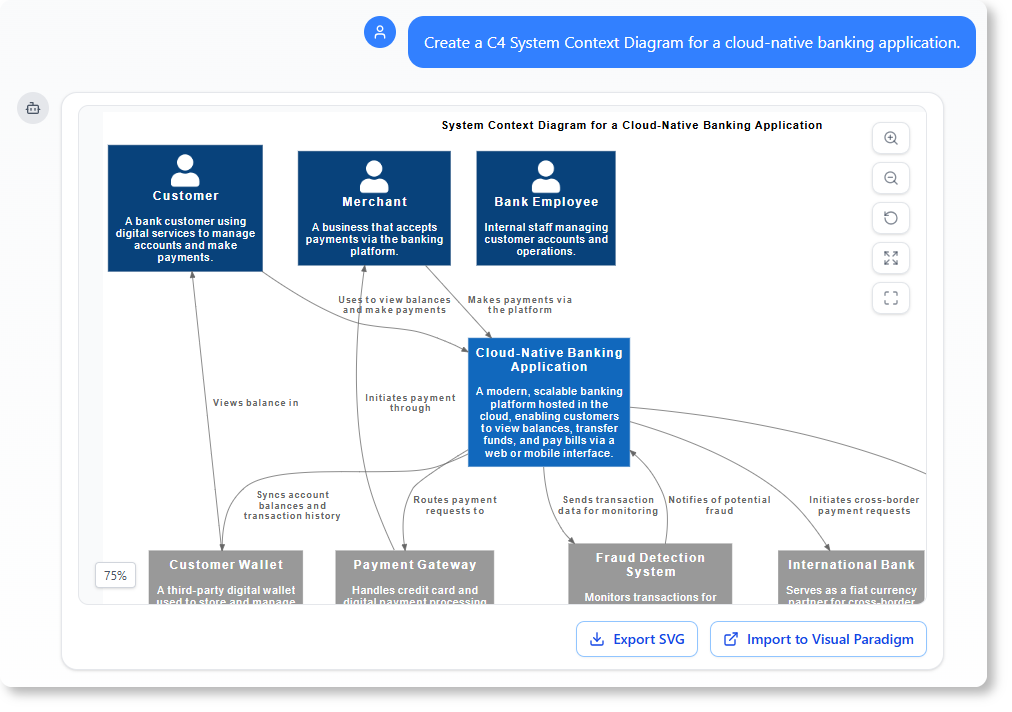
Once the prompt is submitted, the magic happens behind the scenes. The AI chatbot acts as a bridge between human language and machine-readable code. It performs two critical tasks simultaneously:
- Code Generation: It writes production-grade PlantUML code. This is the underlying script that defines the structure of your diagram.
- Visual Rendering: It instantly renders this code into a graphical representation.
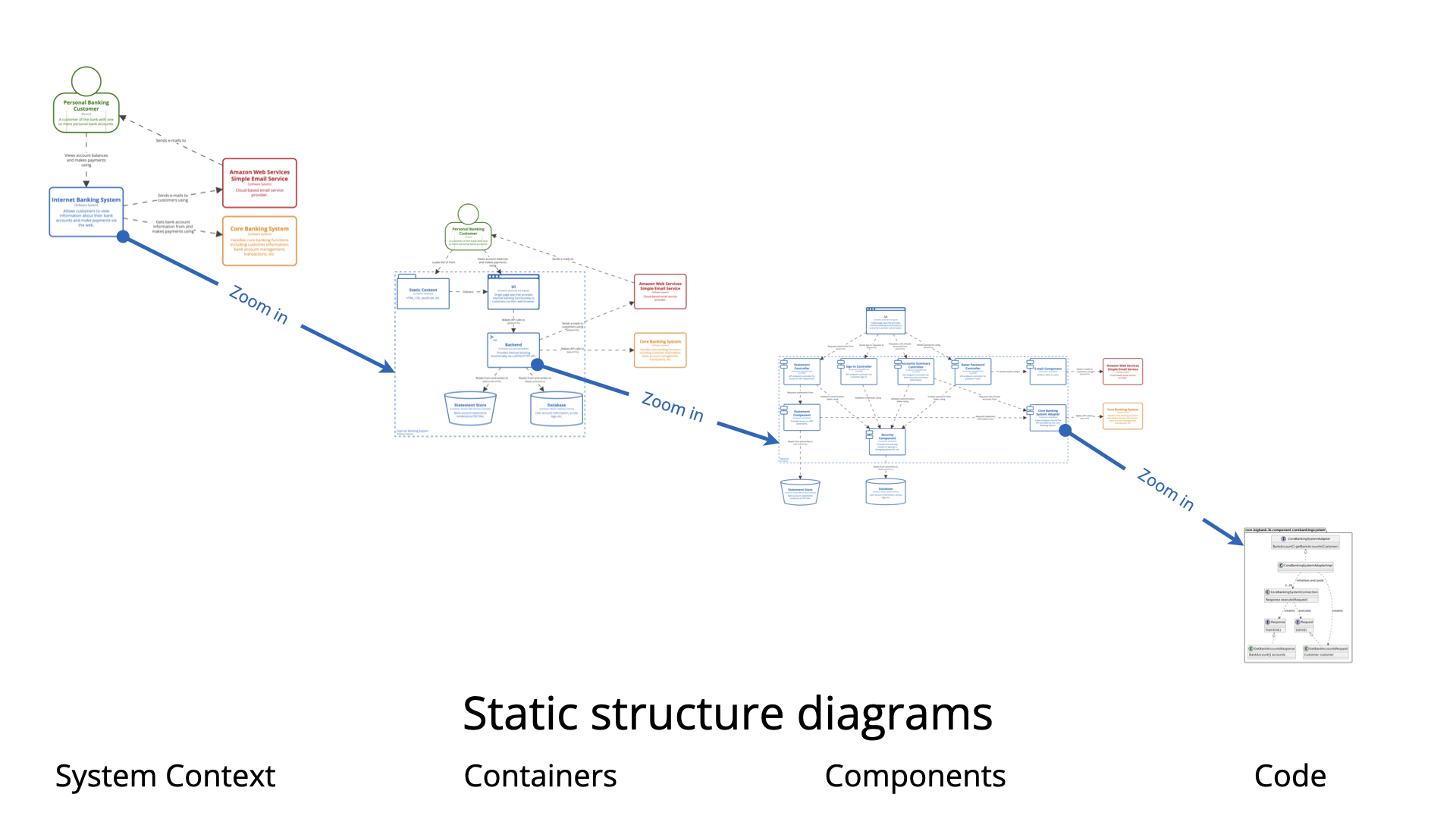
Notice the efficiency here. There is no need for manual configuration. The AI understands that an “e-commerce system” implies specific actors (like Customers) and components (like Web Apps and Databases). It structures these elements according to the C4 model hierarchy automatically.
The Power of VPasCode
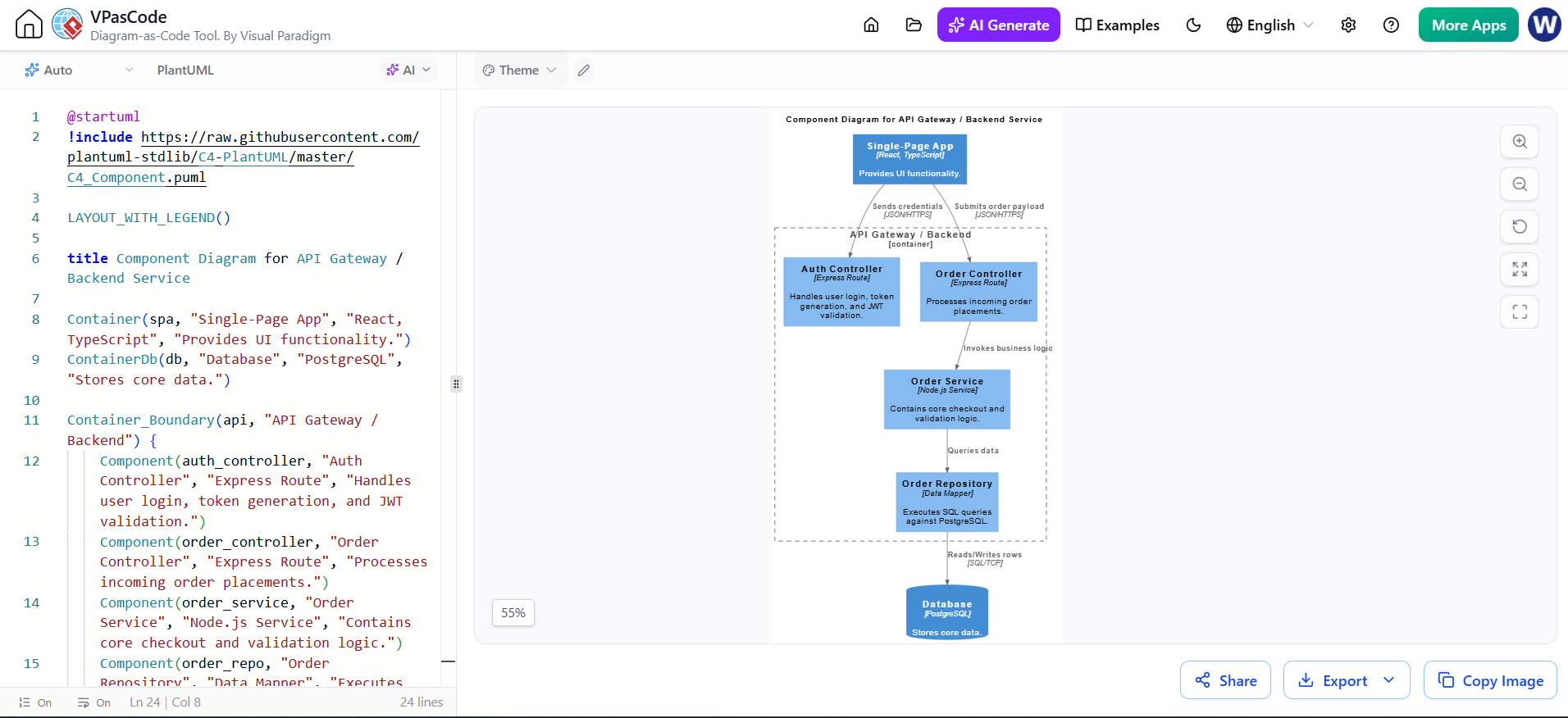
A key component in this workflow is the integration with VPasCode. As shown in the output, the AI generates clean, commented PlantUML code (such as include <c4/C4_Container.puml>). This ensures that the output isn’t just a static image, but a living piece of code that developers can version control and edit later if necessary.
This approach democratizes architecture design. You don’t need to be a diagramming expert to produce professional-grade documentation. By removing the friction of manual drawing, you allow yourself to focus entirely on the logic and flow of your system.
Summary of Key Learnings
- Speed and Efficiency: Conversation-driven modeling drastically reduces the time spent on boilerplate diagram creation.
- Accessibility: Users can create complex C4 diagrams using simple natural language prompts rather than complex UI tools.
- Production Readiness: The generated output includes valid PlantUML code, ensuring compatibility with existing documentation workflows.
- AI Integration: Tools like the Visual Paradigm AI Chatbot serve as powerful assistants that handle the heavy lifting of syntax and layout.