In the complex world of business process management, the gap between a theoretical idea and an automated reality is often bridged by a single, critical artifact: the Business Process Model and Notation (BPMN) diagram. As illustrated in the industry-standard framework, BPMN is far more than a method for drawing flowcharts; it is a rigorous technical standard that enables organizations to achieve clarity, compliance, and true automation.
The Foundation: ISO-Standardized Architecture
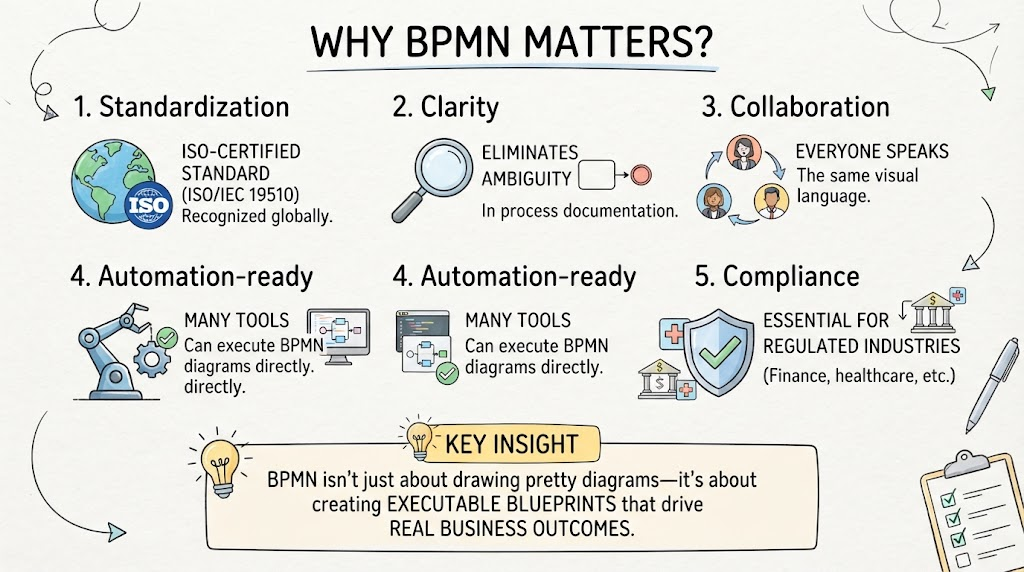
At the heart of BPMN’s utility is its adherence to global standards. Unlike proprietary flowcharting tools that create siloed data, BPMN is an ISO-certified standard (ISO/IEC 19510). This international recognition ensures that a process model created in one software environment can be understood and utilized in another, anywhere in the world.
- Global Interoperability: Because it is ISO-certified, the diagrams serve as a universal language, removing the need for translation between departments or different technology stacks.
- Structured Modeling: The standard defines exactly how elements should behave, ensuring that the “Standardization” of the process is not just visual, but logical.
Eliminating Ambiguity through Visual Clarity
One of the most significant technical challenges in system architecture is the “translation error”—where business requirements are misinterpreted during the coding phase. BPMN addresses this through Clarity.
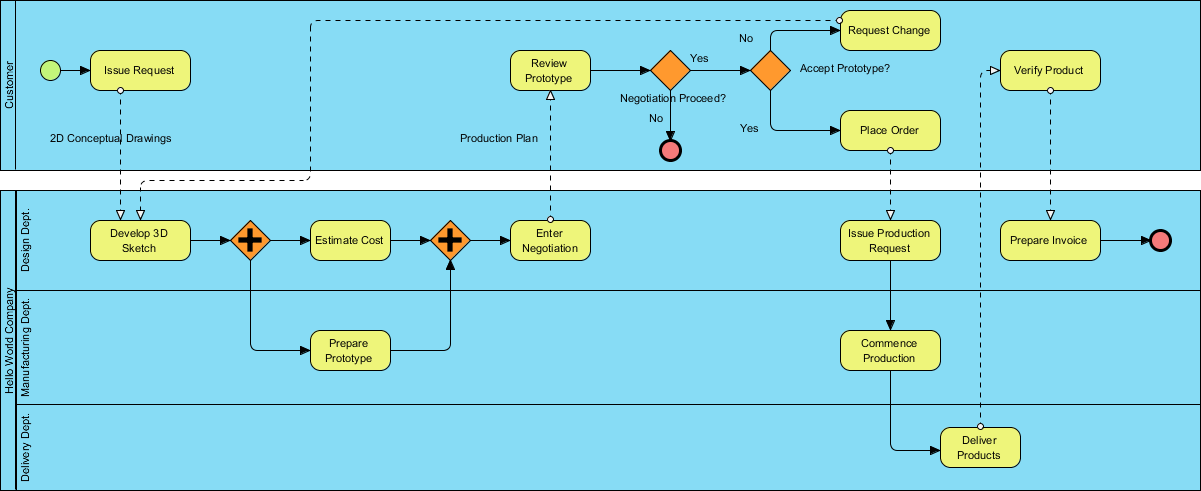
By utilizing a standardized set of symbols, BPMN eliminates ambiguity in process documentation. Instead of vague text descriptions, stakeholders use precise visual cues. For example, a specific shape might denote a “User Task” (human intervention) versus an “Automated Task” (system execution). This visual precision ensures that when a developer reads the diagram, there is no confusion about who or what is responsible for a specific step in the workflow.
The Power of Collaboration: A Shared Visual Language
Successful projects require alignment between business analysts, IT developers, and management. BPMN facilitates this through Collaboration. Because the notation is consistent, it creates a unified visual language where everyone “speaks the same dialect.”
When a business analyst draws a process, the developer understands the sequence flows and gateways without needing a lengthy verbal explanation. This shared understanding reduces friction and accelerates the development lifecycle, as the diagram itself acts as the primary communication tool.
From Static Diagram to Dynamic Automation
The most transformative aspect of BPMN is that it is Automation-ready. In the past, flowcharts were static documents that sat in binders or PDF files, never to be executed by a machine. Modern BPMN tools have changed this paradigm.
- Direct Execution: Many BPMN engines can parse the diagram and execute the logic directly. This means the code is effectively generated from the visual model.
- Reduced Development Time: By mapping the process to BPMN, organizations can utilize “many tools” to execute diagrams directly, reducing the amount of boilerplate code developers need to write manually.
- Real-Time Monitoring: Because the process is executable, organizations can monitor the actual performance of the business logic in real-time.
Ensuring Compliance in Regulated Industries
In sectors like finance, healthcare, and government, processes are not just about efficiency; they are about Compliance. BPMN is essential for these industries because it provides an auditable trail of logic.
When a process is modeled in BPMN, every decision point, exception handler, and data flow is explicitly defined. This makes it easier to demonstrate to auditors that the system is functioning according to regulatory requirements. The visual nature of the diagram allows compliance officers to verify that the “what” matches the “how” without needing to read through lines of source code.
Key Insight: The Blueprint for Outcomes
Ultimately, the purpose of mastering BPMN is to move beyond the aesthetics of drawing. As the core insight suggests: “BPMN isn’t just about drawing pretty diagrams—it’s about creating executable blueprints that drive real business outcomes.”
By treating your process diagrams as executable specifications, you transform business architecture into a tangible asset that drives efficiency, ensures compliance, and powers automation.