


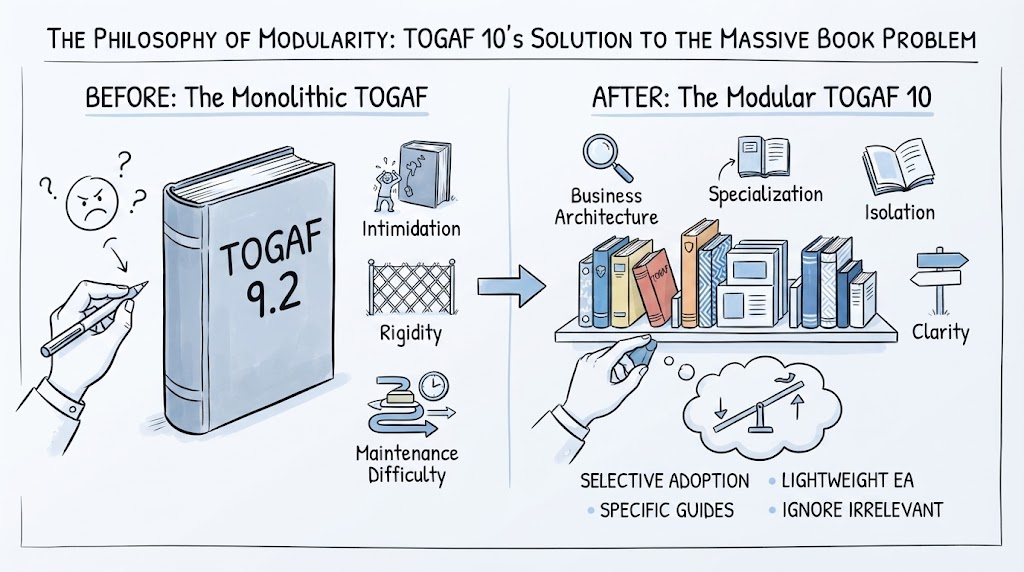
In the world of Enterprise Architecture (EA), complexity is often the enemy of adoption. For years, practitioners faced the “Massive Book Problem”—a scenario where the standard itself was so dense and intimidating that it hindered rather than helped. This tutorial explores the architectural shift from the monolithic structure of TOGAF 9.2 to the modular, flexible ecosystem of TOGAF 10, and introduces a powerful tool to help you model and visualize this transition.
The Monolithic Challenge: Why “The Massive Book” Failed
Previous iterations of the TOGAF standard, particularly version 9.2, were presented as a single, dense document. This approach attempted to cover every conceivable aspect of enterprise architecture in one volume. While comprehensive, this structure created significant friction for organizations:
- The Intimidation Factor: New practitioners often felt overwhelmed by the sheer breadth of the content, making it difficult to know where to start.
- Rigidity: Organizations felt pressured to adopt the entire standard, even if specific parts were irrelevant to their specific context or maturity level.
- Maintenance Difficulty: In the fast-paced tech world, updating a monolithic document was slow. Republishing the entire standard meant delaying the incorporation of new ideas and agile practices.
The Modular Solution: TOGAF 10 Architecture
TOGAF 10 addresses these structural flaws by shifting from a “one-size-fits-all” book to a modular framework. This architectural shift allows for specialization, isolation, and clarity.
1. Specialization: Focus on What Matters
Instead of reading a 600-page tome, different teams can now focus on modules most relevant to their specific work. For example, a security team can dive deep into security guides without wading through irrelevant business strategy chapters, while business architects can focus on the business architecture guides. This targeted approach accelerates learning and application.
2. Isolation: Agile Updates
The modular design provides isolation for updates. If new practices are needed—such as adding specific agility practices or updating digital transformation guides—these can be updated independently. This means the core fundamental content remains stable, preventing version chaos and allowing for faster iteration.
3. Clarity: Purpose-Driven Modules
Each module in TOGAF 10 has a clear purpose and audience. This clarity makes it significantly easier to find specific guidance when a problem arises, rather than searching through a monolithic index.
Selective Adoption: The Freedom to Scale
The most significant advantage of this modularity is Selective Adoption. Organizations are no longer forced to implement a rigid template. Instead, they can scale their adoption based on their needs:
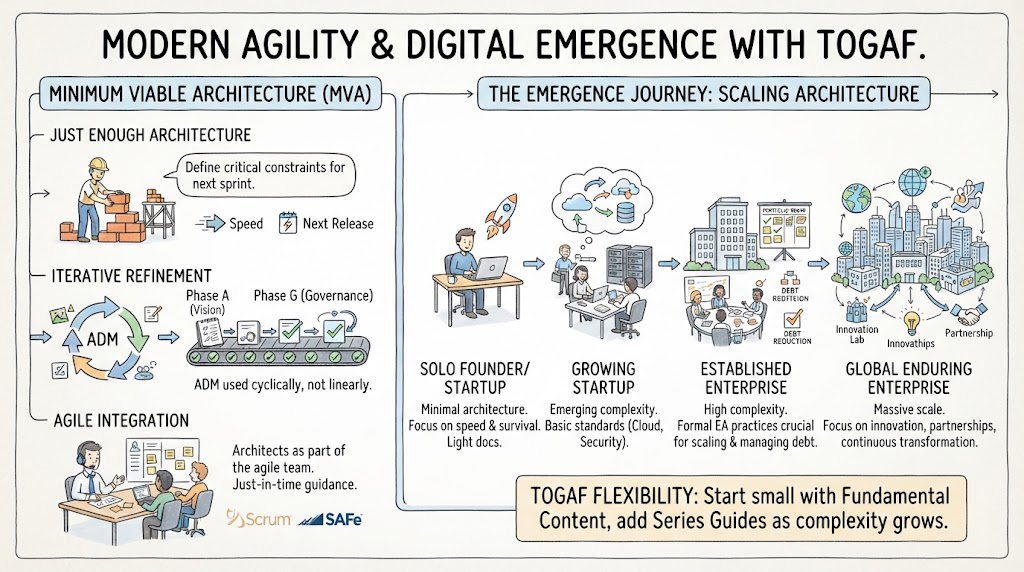
- Lightweight EA: Startups or smaller teams can adopt only the Fundamental Content for a lean architecture practice.
- Targeted Solutions: Organizations can select specific Series Guides to address current challenges, such as Digital Transformation or Security.
- Relevance Filtering: Teams can ignore modules that are irrelevant to their industry or maturity level.
This flexibility allows TOGAF 10 to scale from small startups to large multinational corporations, adapting to unique needs rather than forcing the organization to adapt to the standard.
Recommended Tooling: Visual Paradigm TOGAF ADM Tool
To effectively implement this modular architecture and visualize the flow of your Enterprise Architecture, Visual Paradigm is a recommended tooling solution. Specifically, the TOGAF ADM Tool within Visual Paradigm helps bridge the gap between theoretical modularity and practical application.
Why use Visual Paradigm for TOGAF 10?
- Visualizing the Shift: The tool allows you to model the transition from legacy monolithic processes to modular workflows, helping stakeholders understand the benefits of the new structure.
- ADM Cycle Management: It supports the Architecture Development Method (ADM), allowing you to create specific views for different modules (e.g., Business vs. Information Systems) without cluttering the entire model.
- Collaboration: By using a shared repository, different teams can work on their specific modules (Business Architecture, Security, etc.) simultaneously, reflecting the “Specialization” benefit of TOGAF 10.
- Scalability: Whether you are building a lightweight model or a complex enterprise-wide architecture, the tool scales to support your selective adoption strategy.
By adopting the modular philosophy of TOGAF 10 and utilizing tools like Visual Paradigm, organizations can transform Enterprise Architecture from a daunting obstacle into a strategic asset.
Related posts:
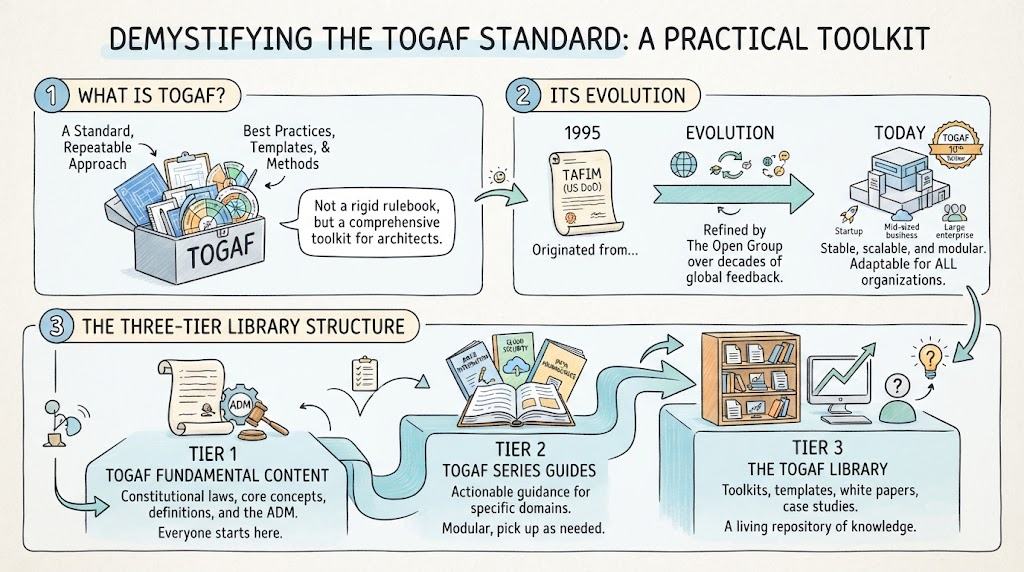 Demystifying the TOGAF Standard: A Practical Toolkit for Modern Enterprise Architecture
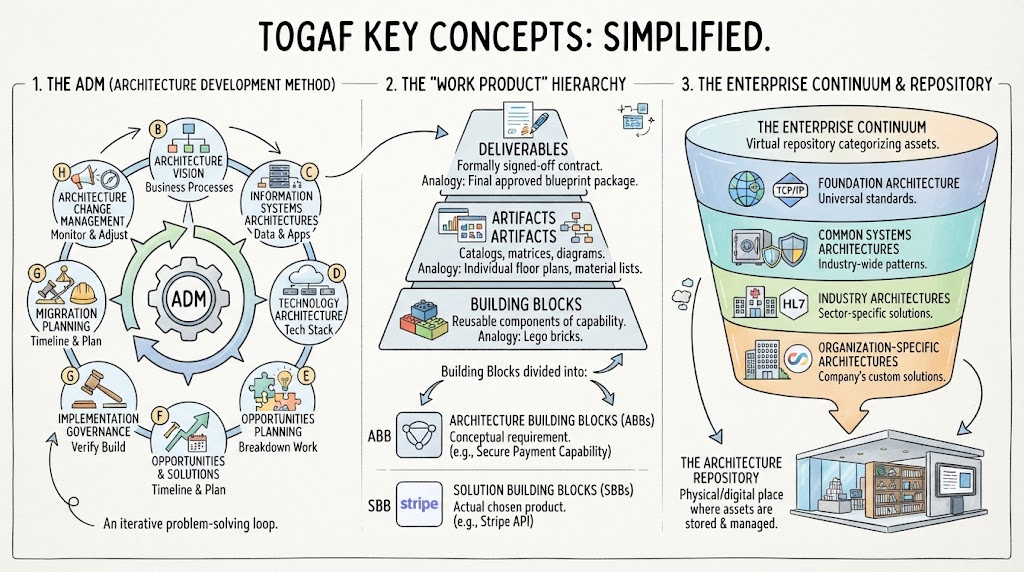 Mastering TOGAF: A Step-by-Step Guide to the ADM Cycle and Enterprise Architecture
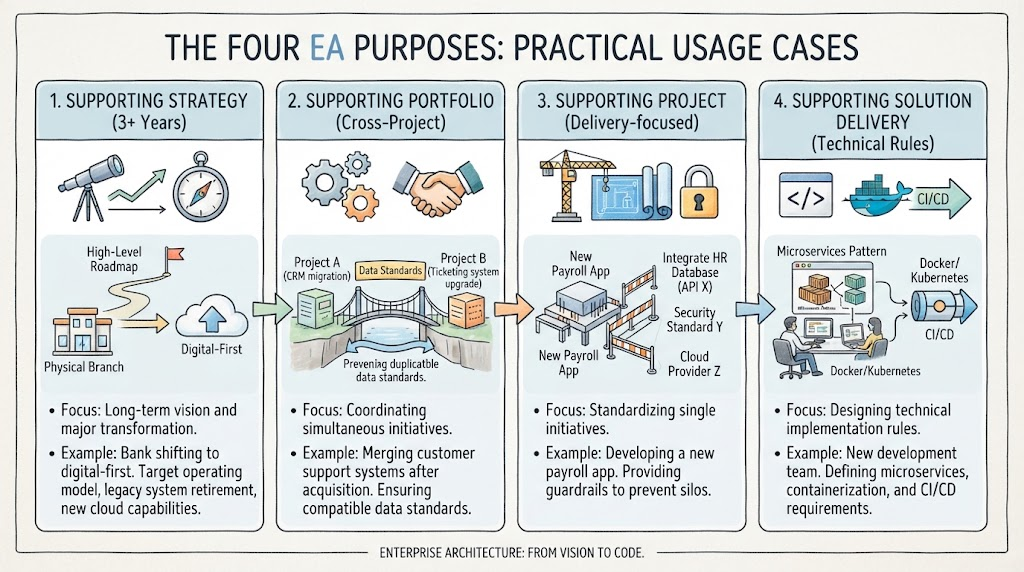 Mastering Enterprise Architecture: A Step-by-Step Guide to the Four Core Purposes
 Mastering Modern Agility: A Tutorial on Minimum Viable Architecture and the Digital Emergence Journey