


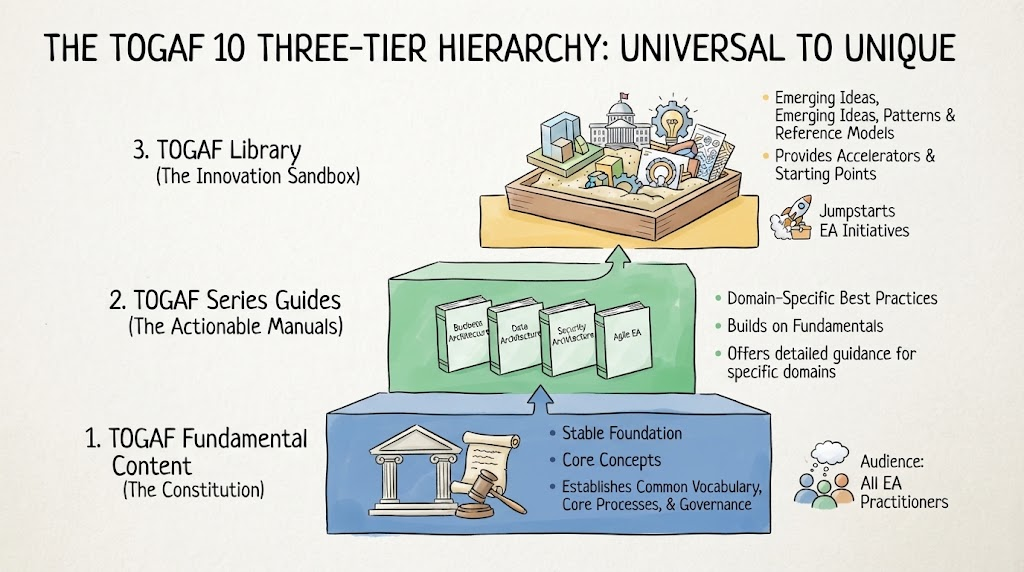
In the rapidly evolving landscape of Enterprise Architecture (EA), standards must be robust enough to provide stability yet flexible enough to adapt to new technologies. TOGAF 10 addresses this challenge through a sophisticated structural evolution known as the Three-Tier Hierarchy. This system acts as a logical framework, guiding organizations from universal, immutable principles to unique, domain-specific implementations.
This tutorial breaks down the architecture of the TOGAF 10 Standard, explaining how the three tiers interact to create a cohesive ecosystem for enterprise planning and execution.
1. The Foundation: TOGAF Fundamental Content
Every robust system architecture requires a stable base. In TOGAF 10, this base is represented by the TOGAF Fundamental Content, often metaphorically described as the “Constitution”. This tier is the bedrock upon which all other architectural activities are built.
Core Characteristics
- Stability and Endurance: Unlike specific business processes that change frequently, the Fundamental Content contains core concepts that are stable and enduring. It establishes the common vocabulary and core governance structures necessary for any EA practitioner.
- Universal Applicability: This tier is designed to be applicable to all organizations, regardless of industry or size. It defines the “Rules of the Road.”
- The ADM Core: At the heart of this tier lies the Architecture Development Method (ADM), the cyclic process used to develop architecture.
Target Audience: All Enterprise Architecture practitioners.
2. The Action Layer: TOGAF Series Guides
Once the foundation is laid, organizations need actionable instructions. The second tier, the TOGAF Series Guides, serves as the “Actionable Manuals.” These guides build directly upon the fundamentals, translating abstract principles into concrete best practices.
Building on Fundamentals
While the Fundamental Content provides the “What” and “Why,” the Series Guides provide the “How” for specific areas of architecture. They are more dynamic than the fundamentals and are updated frequently to reflect emerging trends.
Key Domains
The Series Guides are categorized by specific domains, allowing architects to focus their efforts. Key examples include:
- Business Architecture Guide: Focuses on business strategy, governance, and operations.
- Data Architecture Guide: Addresses data management and information flow.
- Security Architecture Guide: Provides best practices for securing enterprise systems.
- Agile EA Guide: Offers guidance on integrating Agile methodologies into the architecture process.
Purpose: To offer detailed guidance on applying EA principles to specific domains or methodologies.
3. The Innovation Sandbox: TOGAF Library
The top tier of the hierarchy is the TOGAF Library, the “Innovation Sandbox.” This is the most fluid part of the ecosystem, containing emerging ideas, patterns, and reference models that are not yet fully standardized but are valuable for experimentation.
Accelerating Implementation
The Library is designed to help organizations “jumpstart” their initiatives. Instead of building every component from scratch, architects can utilize pre-defined patterns and accelerators found in the Library. This tier is crucial for keeping the organization agile and forward-looking.
Examples of Library Content
- Digital Business Reference Model: Models that help align architecture with digital transformation goals.
- Government Reference Model: Specific patterns tailored for public sector needs.
- Industry-Specific Templates: Ready-to-use artifacts for healthcare, finance, or manufacturing.
Tooling for Success: Visual Paradigm
Understanding the hierarchy is one thing; implementing it is another. To effectively utilize the TOGAF 10 framework, architects need robust modeling tools that support the complexity of these three tiers.
Recommended Tooling: Visual Paradigm TOGAF ADM Tool
Visual Paradigm offers a comprehensive modeling environment that aligns perfectly with the TOGAF 10 structure. By using the Visual Paradigm TOGAF ADM Tool, organizations can:
- Map the Hierarchy: Visually link fundamental content to specific series guides and library artifacts.
- Automate Artifacts: Generate standard TOGAF documentation automatically.
- Collaborate: Ensure all practitioners are using the same vocabulary defined in the Fundamental Content.
Conclusion
The TOGAF 10 Three-Tier Hierarchy is not just a list of documents; it is a dynamic system architecture for your organization’s EA strategy. By respecting the stability of the Fundamental Content, leveraging the specificity of the Series Guides, and experimenting with the Library, organizations can achieve a balance of governance and innovation.
Related posts:
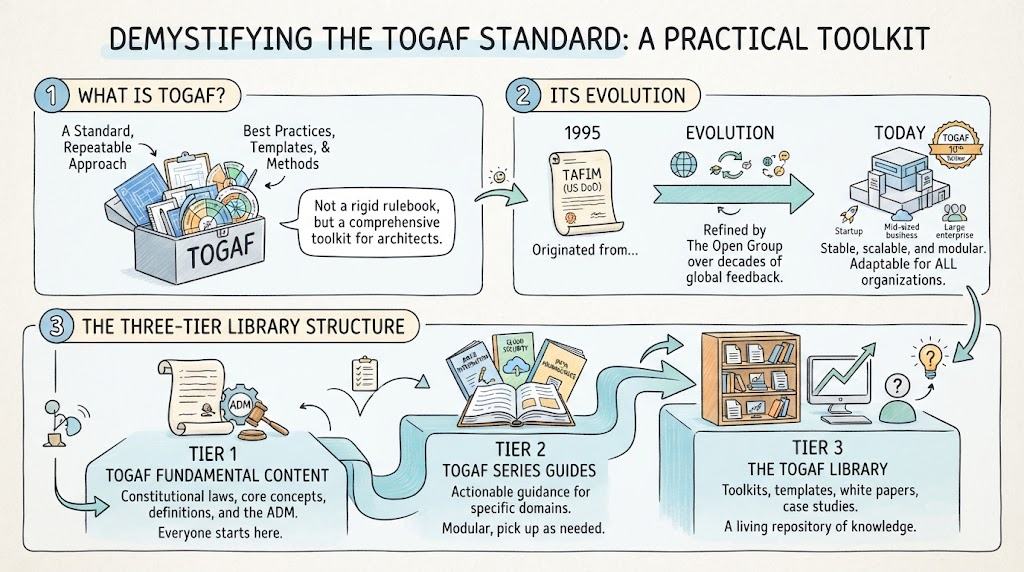 Demystifying the TOGAF Standard: A Practical Toolkit for Modern Enterprise Architecture
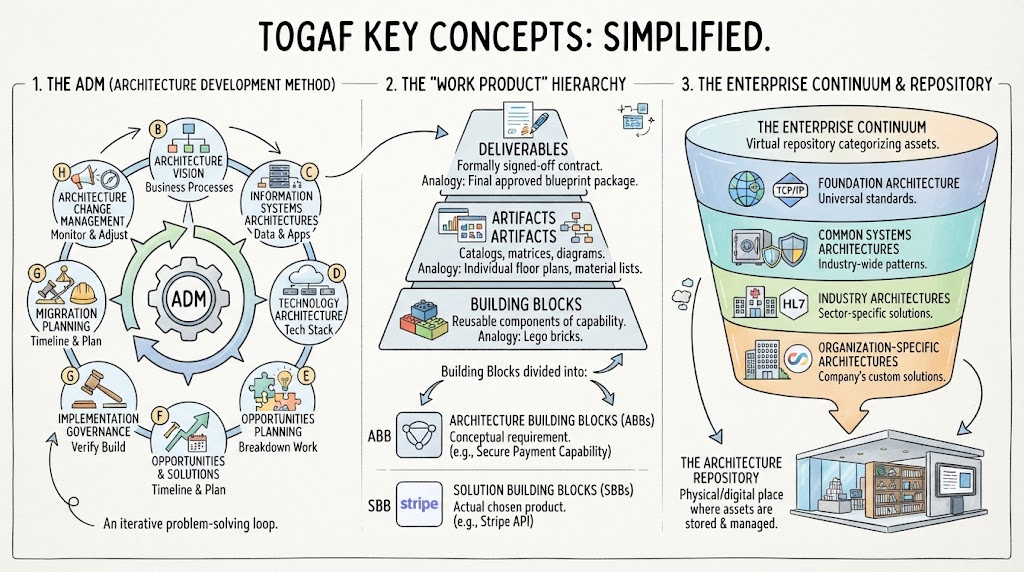 Mastering TOGAF: A Step-by-Step Guide to the ADM Cycle and Enterprise Architecture
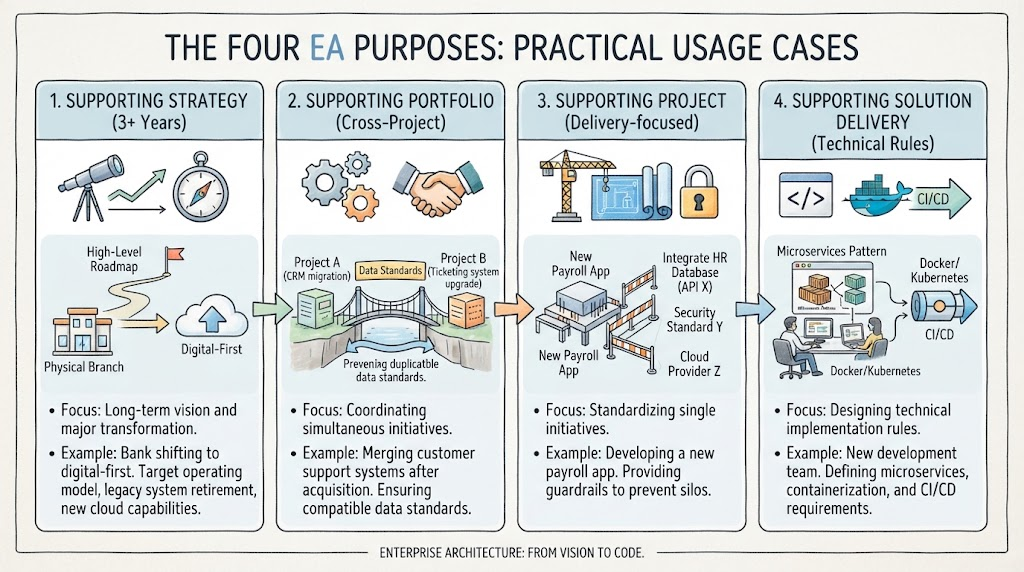 Mastering Enterprise Architecture: A Step-by-Step Guide to the Four Core Purposes
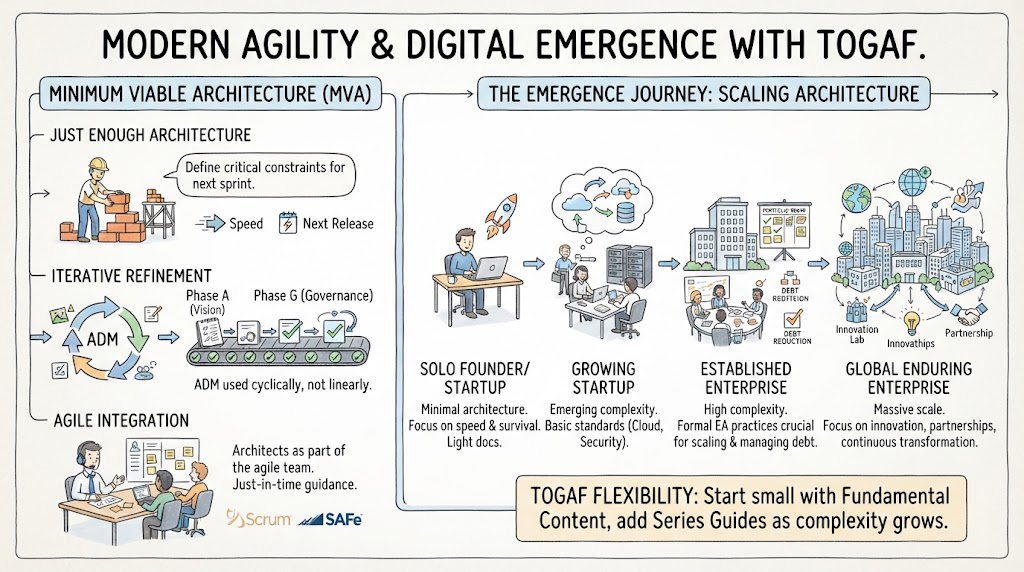 Mastering Modern Agility: A Tutorial on Minimum Viable Architecture and the Digital Emergence Journey