


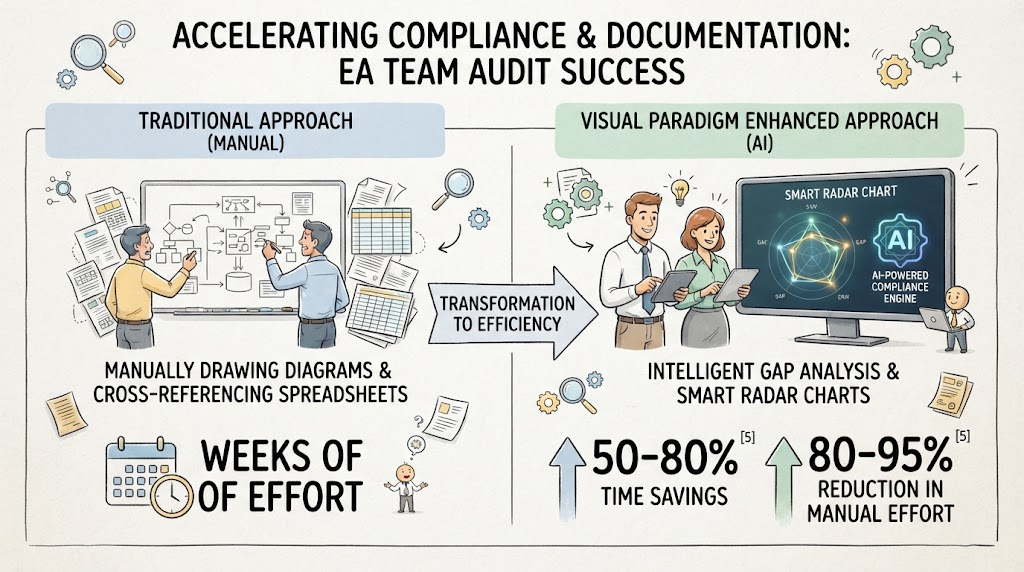
In the modern enterprise landscape, Enterprise Architecture (EA) teams are increasingly tasked with the daunting responsibility of auditing complex IT landscapes. When an audit requires demonstrating alignment between high-level strategy and implementation across 50+ disparate systems, the traditional manual methods of drawing diagrams and cross-referencing spreadsheets can take weeks of effort. However, by leveraging modern AI-enhanced workflows, specifically within tools like Visual Paradigm, this process can be transformed from a bottleneck into a streamlined engine of efficiency.
This tutorial explores the architectural shift from manual documentation to AI-driven compliance, explaining the underlying modeling concepts and how to implement this using the TOGAF ADM framework.
The Problem: The Manual Compliance Bottleneck
Traditionally, preparing for an EA audit involves a labor-intensive cycle. Architects must manually draw diagrams to visualize system connections, then cross-reference these visuals against spreadsheets to verify compliance rules. This approach suffers from:
- Fragmented Data: The architecture model exists in one place, while compliance evidence is scattered across spreadsheets.
- High Latency: Updating a diagram to reflect a system change requires manual redrawing, which can take days.
- Human Error: Manually linking a specific system component to a regulatory requirement is prone to oversight.
The result is a “Weeks of Effort” scenario where the team spends more time documenting than actually architecting solutions.
The Solution: AI-Enhanced Compliance Workflows
The “Visual Paradigm Enhanced Approach” introduces a paradigm shift by integrating an AI-Powered Compliance Engine. Instead of manually creating evidence, the system uses intelligent gap analysis to auto-generate compliance artifacts.
1. Intelligent Gap Analysis
In this workflow, the EA tool does not just store data; it understands relationships. By ingesting the current state of the 50+ systems, the AI compares the actual implementation against the required strategic standards. It identifies “gaps” where systems fail to meet the audit criteria, automatically flagging these areas for review.
2. Smart Radar Charts
Visualization is key to audit success. The enhanced approach utilizes Smart Radar Charts (also known as Spider Charts) to provide a holistic view of compliance health. Rather than a static image, this chart dynamically plots metrics such as security adherence, data integrity, and strategic alignment.
- Visual Impact: The radar chart allows auditors to instantly see which areas of the enterprise are strong (the chart extends outward) and which are weak (the chart contracts inward).
- Dynamic Data: As the EA team updates the architecture model, the radar chart updates in real-time, reflecting the current compliance status.
Technical Impact: The Efficiency Transformation
The shift from manual to AI-enhanced workflows is not merely cosmetic; it delivers quantifiable technical and operational benefits. Recent benchmarks indicate that this transformation yields:
- 50-80% Time Savings: By automating the collection and verification of evidence, the team reduces the total duration of the audit preparation cycle by half or more.
- 80-95% Reduction in Manual Diagramming: The AI handles the heavy lifting of generating standard compliance diagrams, allowing architects to focus on high-value strategic design rather than rote documentation.
Recommended Tooling: The Power Trio for EA Success
To achieve this level of optimization, the integration of three specific technologies is recommended:
1. Visual Paradigm (The Enabler)
Visual Paradigm serves as the central repository and processing engine. It provides the interface for the 2026 AI Enhancements, offering the specific capabilities for gap analysis and the rendering of smart radar charts. Its ability to handle large-scale models (50+ systems) ensures that the architecture remains performant.
2. TOGAF ADM (The Methodology)
The TOGAF Architecture Development Method (ADM) provides the structured lifecycle for the audit. Specifically, during Phase A (Architecture Vision) and Phase G (Implementation Governance), the AI tools integrate to ensure that the “Target Architecture” aligns with the “Business Strategy.” The ADM provides the “why” and “when,” while the tooling provides the “how.”
3. ArchiMate (The Language)
ArchiMate is the standard modeling language used to visualize the relationships between the strategy, business processes, and IT systems. By using ArchiMate, the EA team ensures that the data fed into the AI Compliance Engine is standardized. This standardization is crucial because the AI needs to “read” the model consistently to perform accurate gap analysis.
Summary of the Workflow
- Model in ArchiMate: Architects define the systems and their relationships using standard ArchiMate notation.
-
Analyze with TOGAF: The team follows the TOGAF ADM phases to define compliance requirements.
- Execute in Visual Paradigm: The AI engine analyzes the ArchiMate model against the TOGAF requirements.
- Visualize: Generate the Smart Radar Chart to present the compliance status to stakeholders.
By combining these tools, the EA team moves from a reactive, manual documentation burden to a proactive, AI-driven strategic asset.
Related posts:
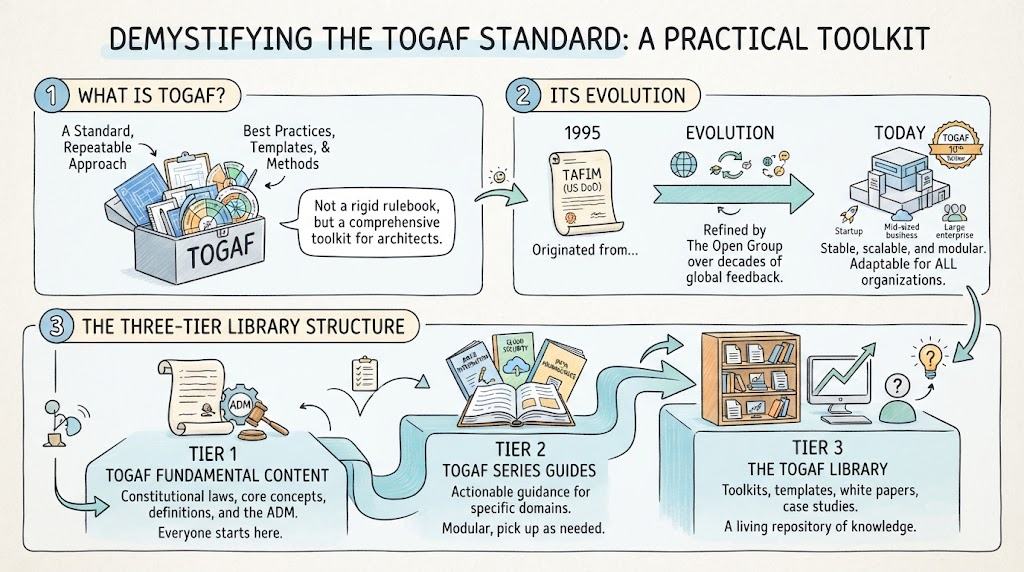 Demystifying the TOGAF Standard: A Practical Toolkit for Modern Enterprise Architecture
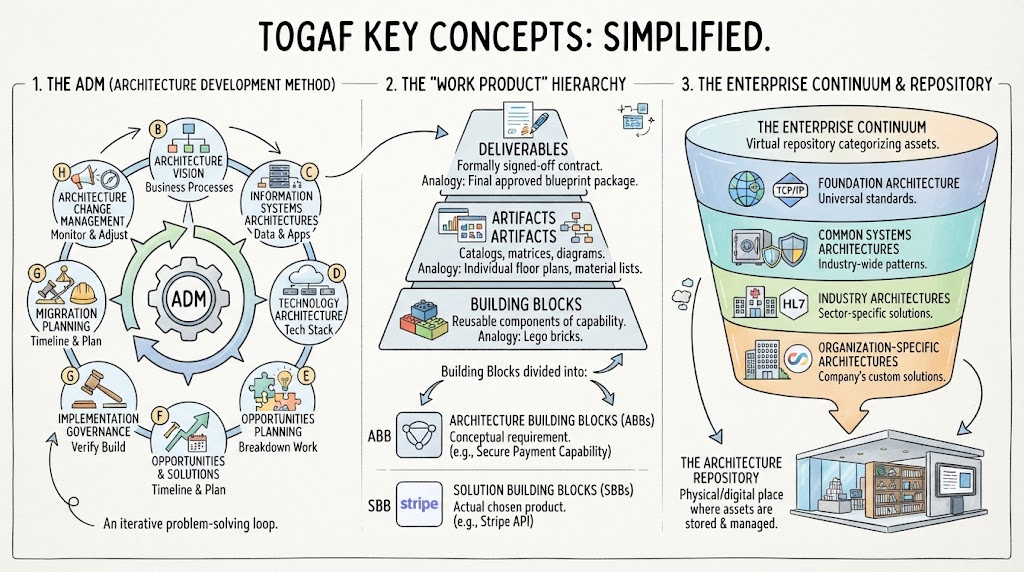 Mastering TOGAF: A Step-by-Step Guide to the ADM Cycle and Enterprise Architecture
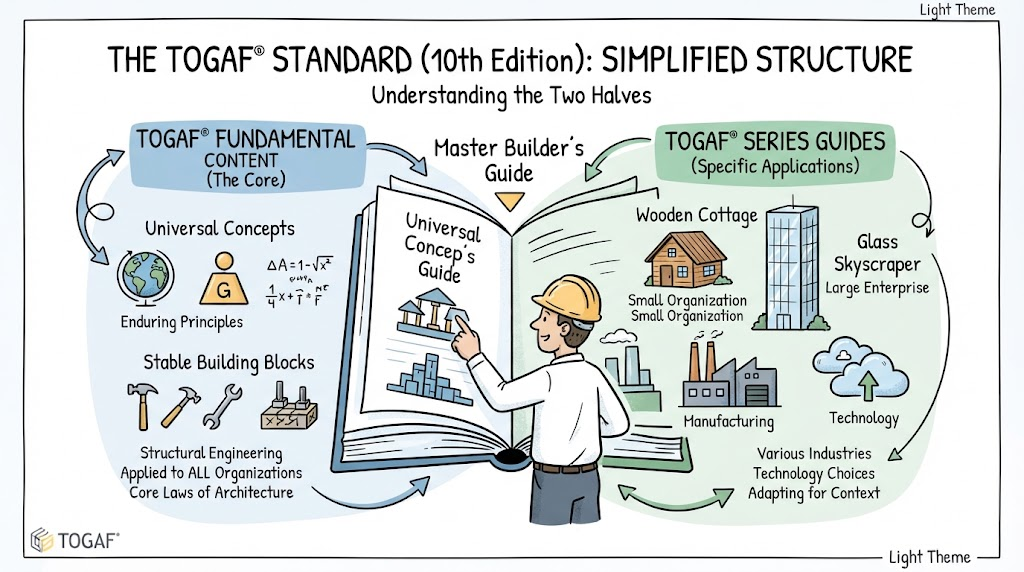 Mastering the TOGAF Standard: The Core vs. The Guides
 Mastering Enterprise Architecture: A Step-by-Step Guide to the Six Core Pillars of TOGAF