


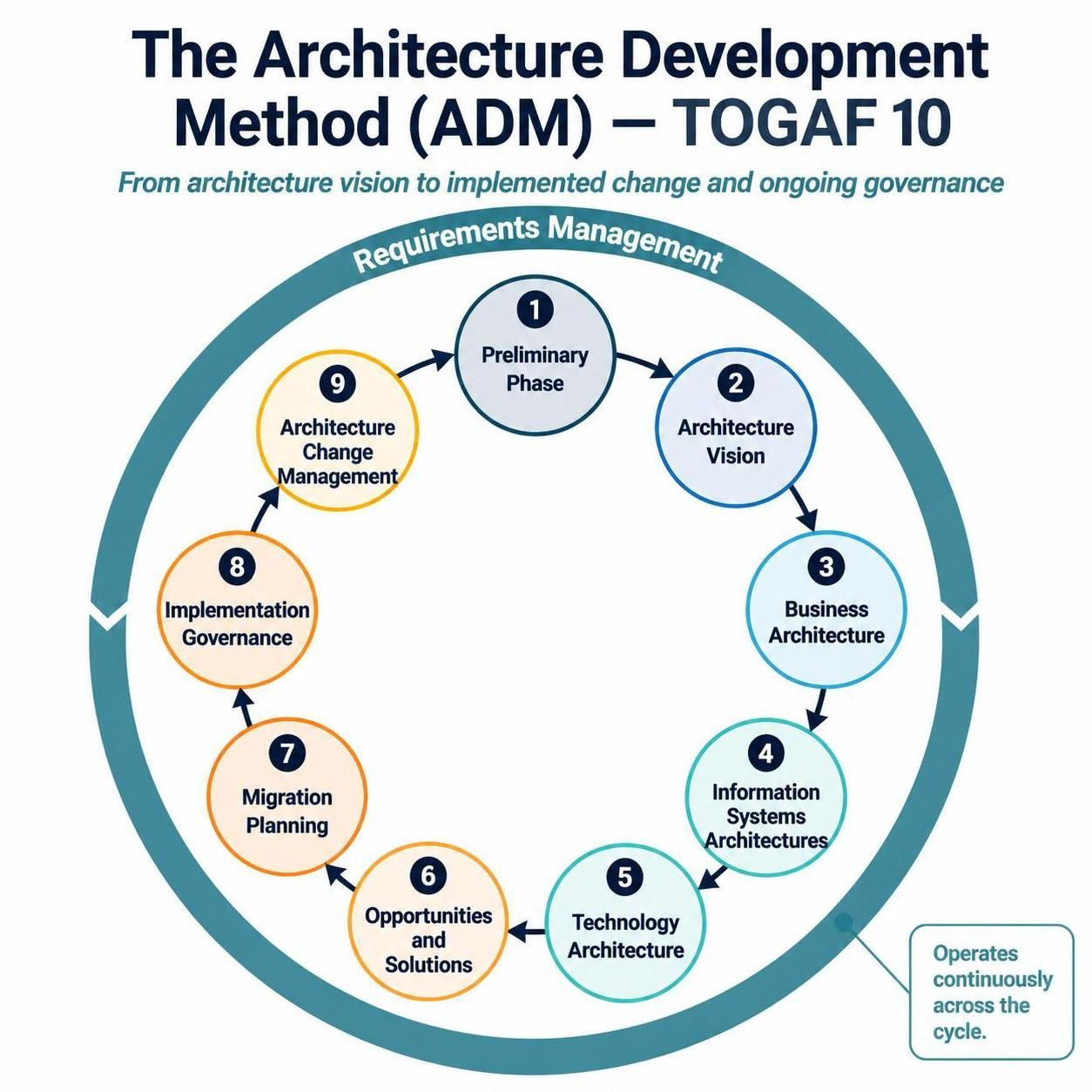
Welcome to this comprehensive tutorial on the Architecture Development Method (ADM), the beating heart of TOGAF 10. Whether you are a seasoned enterprise architect or a student looking to understand how organizations structure their digital transformation, understanding this cycle is essential.
The ADM is not a linear checklist; it is a continuous, iterative loop that guides an organization from a high-level vision to implemented change and ongoing governance. In this guide, we will break down the nine specific phases shown in the diagram, explaining what happens at each step and how they connect to form a robust architectural framework.
1. The Foundation: The Preliminary Phase
Phase 1: Preliminary Phase is where the journey begins. Before we can design the architecture, we must define the architecture itself. This phase is about establishing the “ground rules.”
- Scope and Stakeholders: We determine the scope of the architecture project and identify who the key stakeholders are.
- Principles: We define the guiding principles that will govern our design decisions.
- Framework Selection: This is where we select the specific tools and methods we will use. (Note: For this tutorial, we will focus on utilizing Visual Paradigm TOGAF ADM Tool to streamline these processes.)
2. The Vision: Phase A
Phase 2: Architecture Vision involves creating the initial blueprint. This is the “big picture” moment.
- Statement of Architecture Work: We create a formal document that outlines the scope and constraints.
- Stakeholder Management: We ensure that the initial vision aligns with the business needs and stakeholder expectations.
- Requirements Management: We set up the mechanism to track requirements throughout the entire lifecycle.
3. Business Architecture: Phase B
Phase 3: Business Architecture focuses on the business itself. This phase translates the high-level vision into a detailed description of the business capabilities, processes, and organizational structure.
Think of this as mapping out the “business blueprint.” It answers the question: What business capabilities do we need to support the vision?
4. Information Systems Architectures: Phase C
Phase 4: Information Systems Architectures is often split into two sub-phases: Data Architecture and Application Architecture.
- Data Architecture: Defines the logical and physical data assets and data management resources.
- Application Architecture: Provides a blueprint for individual applications, their interactions, and their relationships to the core business processes.
5. Technology Architecture: Phase D
Phase 5: Technology Architecture describes the hardware, software, and network infrastructure required to support the business and information architectures.
This phase answers the question: What technology platforms do we need to run these applications and store this data? It includes everything from servers and databases to cloud infrastructure and security protocols.
6. Opportunities and Solutions: Phase E
Phase 6: Opportunities and Solutions is the bridge between design and implementation. Here, we identify the major projects and initiatives required to achieve the target architecture.
- Gap Analysis: We compare the Baseline Architecture (where we are) with the Target Architecture (where we want to be).
- Project Identification: We define the projects that will close these gaps.
7. Migration Planning: Phase F
Phase 7: Migration Planning involves creating a detailed implementation plan. It is not enough to know what to build; we must know how and when to build it.
- Implementation Plan: We create a high-level plan for the transition.
- Implementation Governance: We ensure that the projects are aligned with the architecture.
8. Implementation Governance: Phase G
Phase 8: Implementation Governance involves monitoring the projects to ensure they align with the architecture. This is the “watchdog” phase.
- Architecture Compliance: We ensure that the solution being built matches the architectural blueprint.
- Vendor Management: If third-party vendors are involved, this phase ensures they adhere to the architectural standards.
9. Architecture Change Management: Phase H
Phase 9: Architecture Change Management ensures that the architecture evolves over time. As the business environment changes, the architecture must adapt.
- Change Requests: We manage requests for changes to the architecture.
- Continuous Improvement: We ensure that the architecture remains relevant and effective.
10. The Continuous Loop: Requirements Management
As shown in the diagram, Requirements Management is not a phase in itself but a continuous process that operates across the entire cycle. It ensures that the architecture remains aligned with the evolving needs of the organization.
Conclusion: Tools for Success
Navigating the TOGAF ADM cycle is a complex task that requires precision, collaboration, and the right tools. To effectively model these phases, visualize the architecture, and manage the lifecycle, we highly recommend using Visual Paradigm TOGAF ADM Tool.
This tool provides a comprehensive environment for architects to define, model, and document the ADM phases, ensuring that your architecture is not just a theoretical exercise but a practical, actionable roadmap for success.
Related posts:
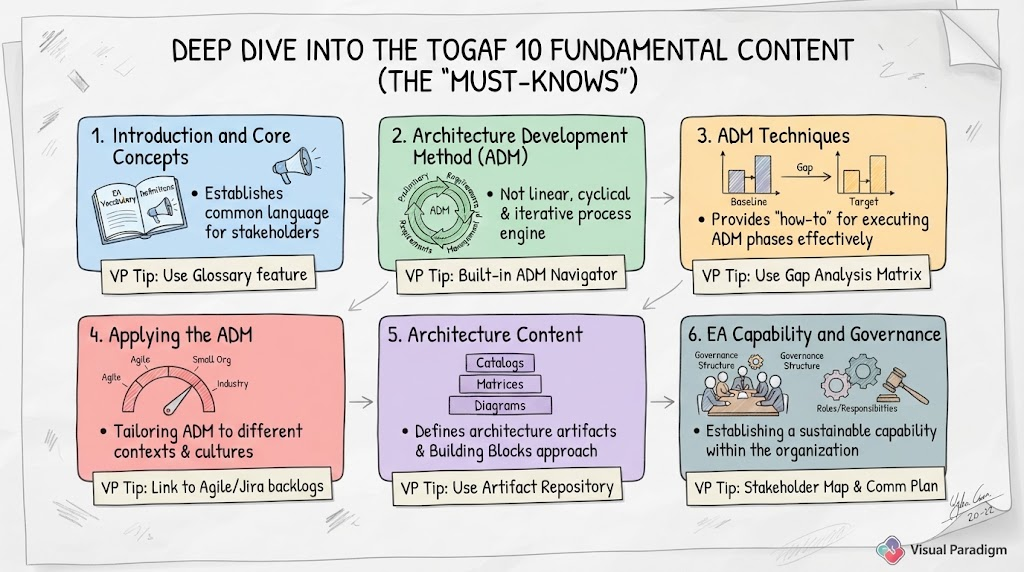 Mastering TOGAF 10: A Step-by-Step Guide to the Six Fundamental Content Pillars
 Mastering the TOGAF Preliminary Phase with Visual Paradigm and ArchiMate
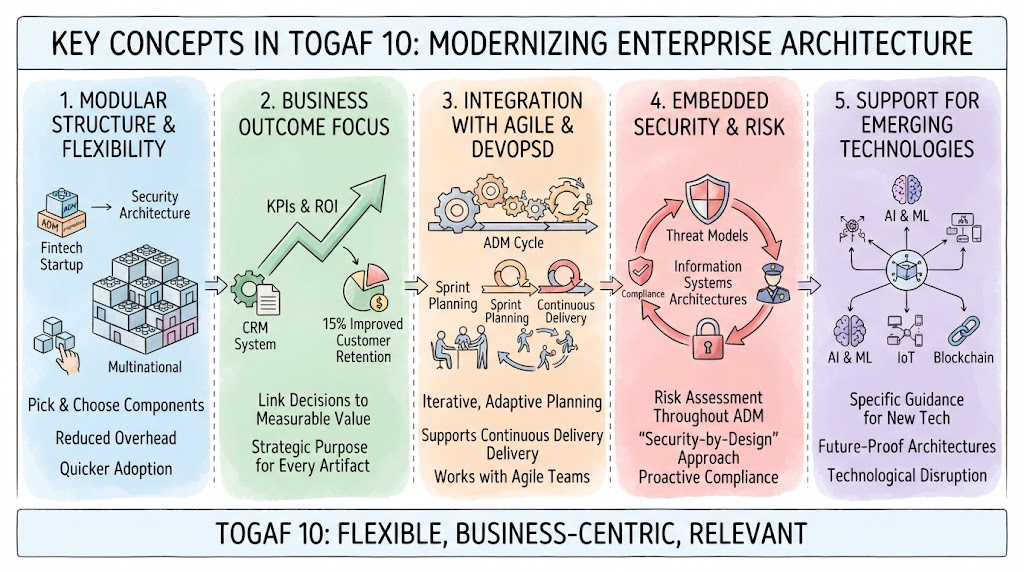 Mastering TOGAF 10: A Modern Guide to Flexible Enterprise Architecture
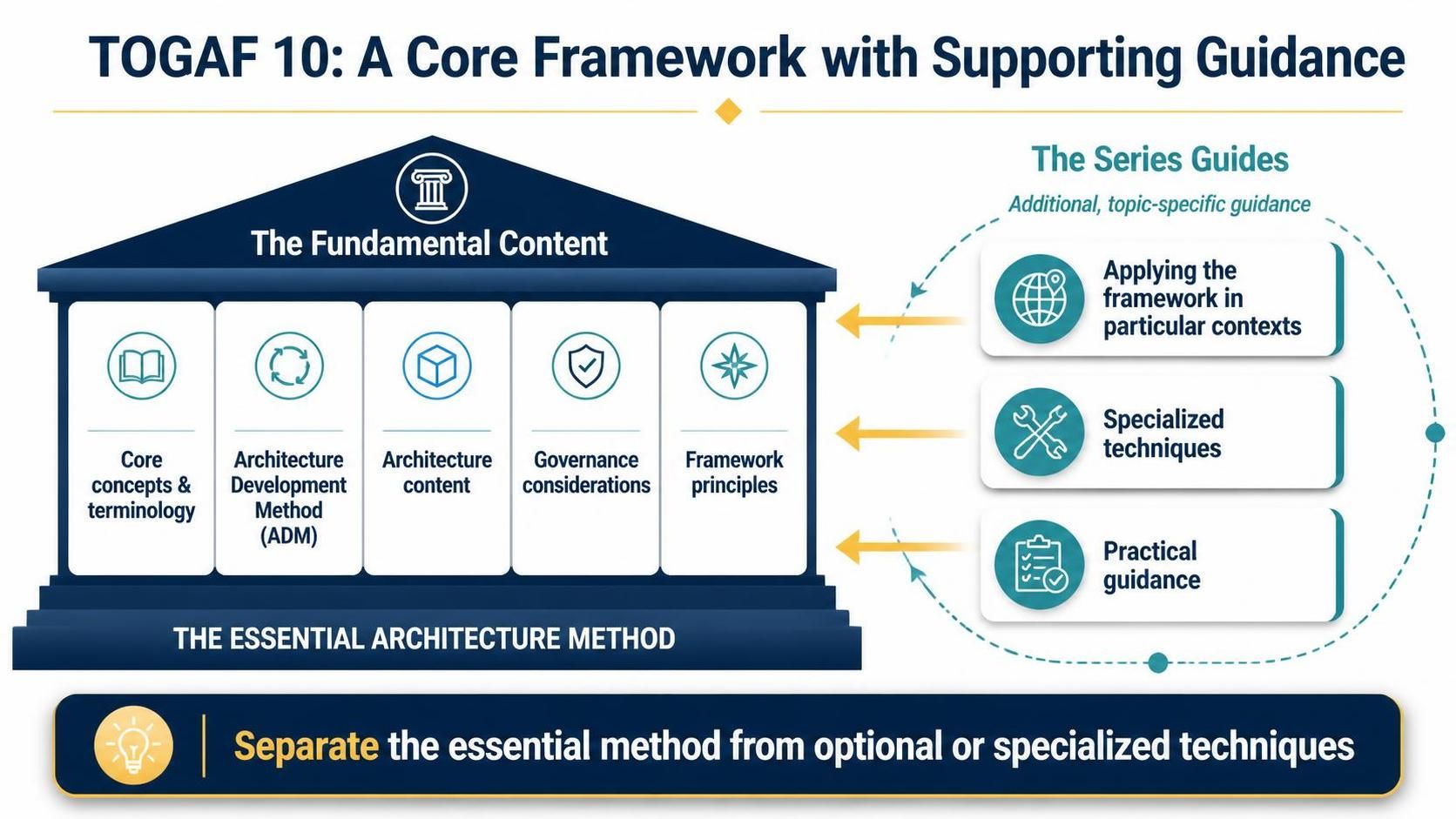 Mastering TOGAF 10: Separating the Essential Architecture Method from Specialized Guidance