


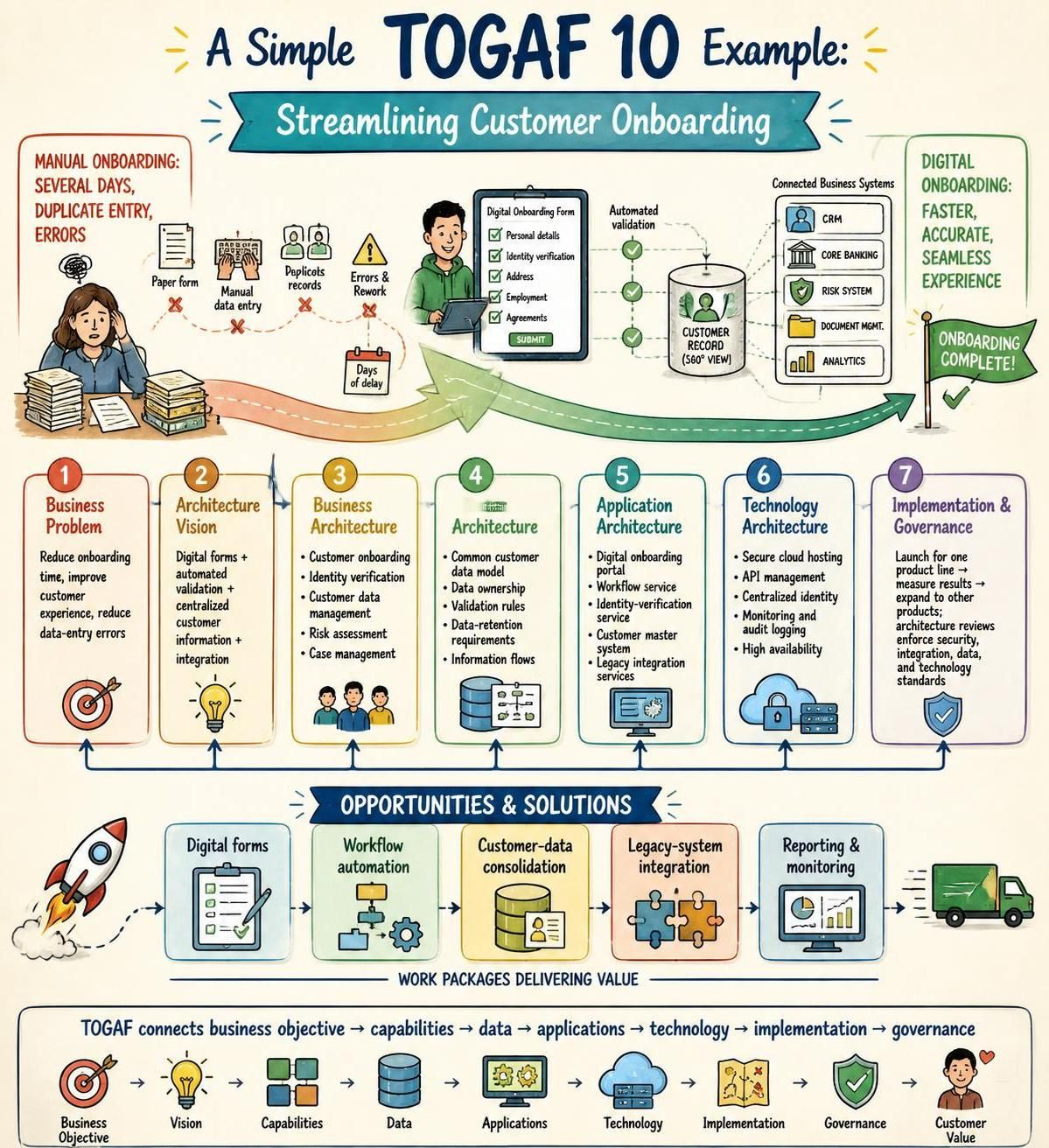
In the complex world of enterprise architecture, few frameworks are as robust or widely recognized as the TOGAF 10 standard. Whether you are a seasoned architect or a student of system design, understanding how to translate a vague business problem into a concrete technical solution is the ultimate skill. This tutorial breaks down a practical, real-world scenario—Streamlining Customer Onboarding—to demonstrate the power of the Architecture Development Method (ADM).
The Challenge: Manual Onboarding Bottlenecks
Imagine a company where bringing a new customer on the books takes several days. Why? Because the process relies on manual data entry into multiple disconnected systems. This leads to duplicate records, significant delays, and data-entry errors that damage the customer experience. The architecture team’s mission is clear: reduce time, improve accuracy, and automate the flow of information.
Phase 1: The Foundation – Problem and Vision
Every successful architecture project starts with Phase A: Architecture Vision. Before drawing a single line, we must define the problem and the goal.
- The Business Problem: The organization wants to eliminate the “days of delay” and “errors & rework” caused by paper forms.
- The Architecture Vision: The goal is to create a streamlined capability featuring digital forms, automated validation, and a centralized customer information repository.
Phase 2: Defining the Architecture Domains
TOGAF divides the architecture into four key domains to ensure nothing is overlooked. Let’s walk through how these domains apply to our onboarding scenario.
Business Architecture: What capabilities do we need?
The Business Architecture defines the high-level capabilities required to achieve the vision. In this case, the organization identifies the following critical capabilities:
- Customer Onboarding
- Identity Verification
- Customer Data Management
- Risk Assessment
- Case Management
Data Architecture: How is information structured?
Data is the lifeblood of this system. The Data Architecture defines the structure of the information assets. Key definitions include:
- A common customer data model: Ensuring everyone speaks the same language regarding customer attributes.
- Validation rules: Automated checks to prevent bad data entry.
- Information flows: Mapping how data moves from the onboarding portal to downstream systems.
Application Architecture: Which software solves the problem?
This layer focuses on the specific software components. The target application environment includes:
- A Digital Onboarding Portal for the customer.
- A Workflow Service to manage the process steps.
- An Identity-Verification Service.
- A Customer Master System (the “360-degree view” of the customer).
Technology Architecture: Where does it run?
Finally, we address the infrastructure. The Technology Architecture design might require:
- Secure cloud hosting for scalability.
- API management for connecting legacy systems.
- Monitoring and audit logging to ensure compliance.
Phase 3: Execution and Governance
With the architecture defined, we move to Opportunities and Solutions. Here, we identify work packages such as “Digital Forms,” “Workflow Automation,” and “Legacy-system Integration.”
The implementation strategy suggests a phased approach: launch the solution for one product line first, measure the results, and then expand. Throughout this process, Implementation Governance ensures that all projects adhere to the approved security, integration, and data standards.
Bringing it to Life with Visual Paradigm
While the theory is robust, the practice requires the right tools. To visualize these complex relationships effectively, architects often turn to the Recommended tooling of Visual Paradigm TOGAF ADM Tool.
Using a specialized tool like Visual Paradigm allows architects to model the ADM cycle dynamically. It helps in creating the specific diagrams required for the Customer Master System and the Information Flows described above. By utilizing the tooling features within Visual Paradigm, teams can simulate the “Customer Record (360 View)” flow, ensuring that the integration between the Digital Onboarding Portal and the Risk System is seamless before a single line of code is written.
Conclusion
This example demonstrates the full power of TOGAF. It connects a business objective (faster onboarding) with capabilities, data, applications, and technology, finally delivering to implementation and governance. By following this structured approach, organizations can transform chaotic manual processes into streamlined digital experiences.
Related posts:
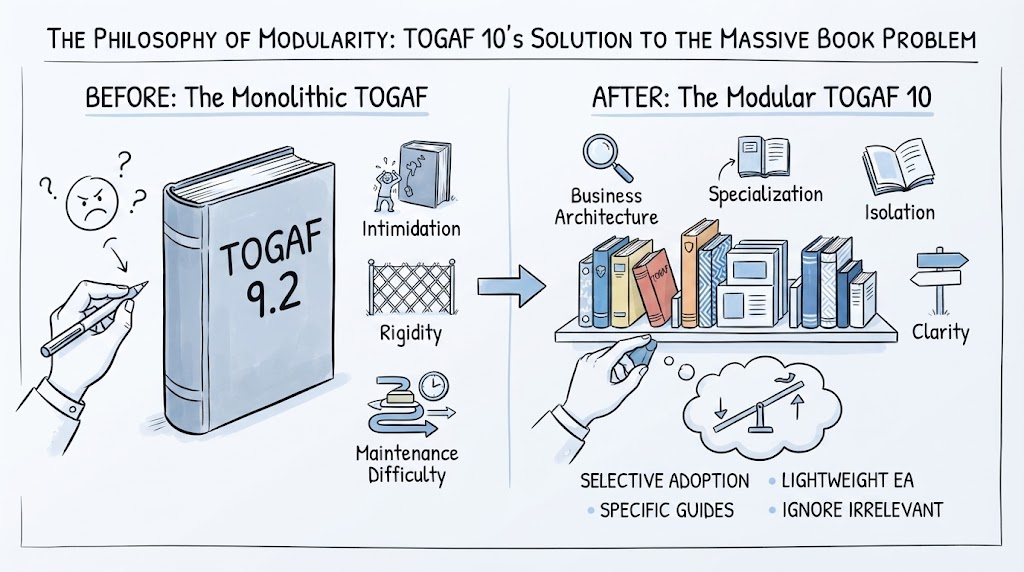 Mastering Modularity: How TOGAF 10 Solves the “Massive Book Problem” with Strategic Flexibility
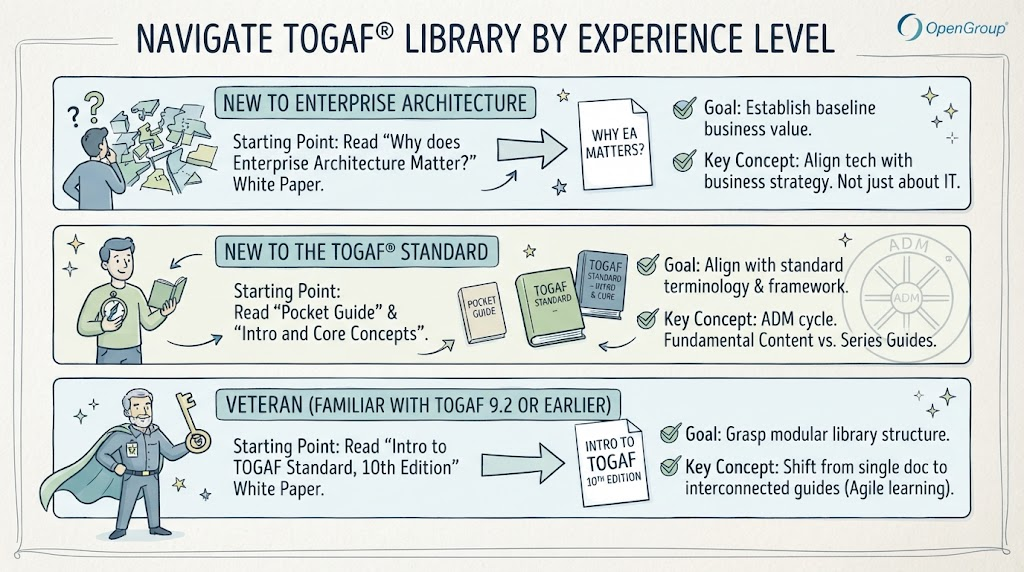 Navigating the TOGAF® Library: A Tiered Approach to Enterprise Architecture Mastery
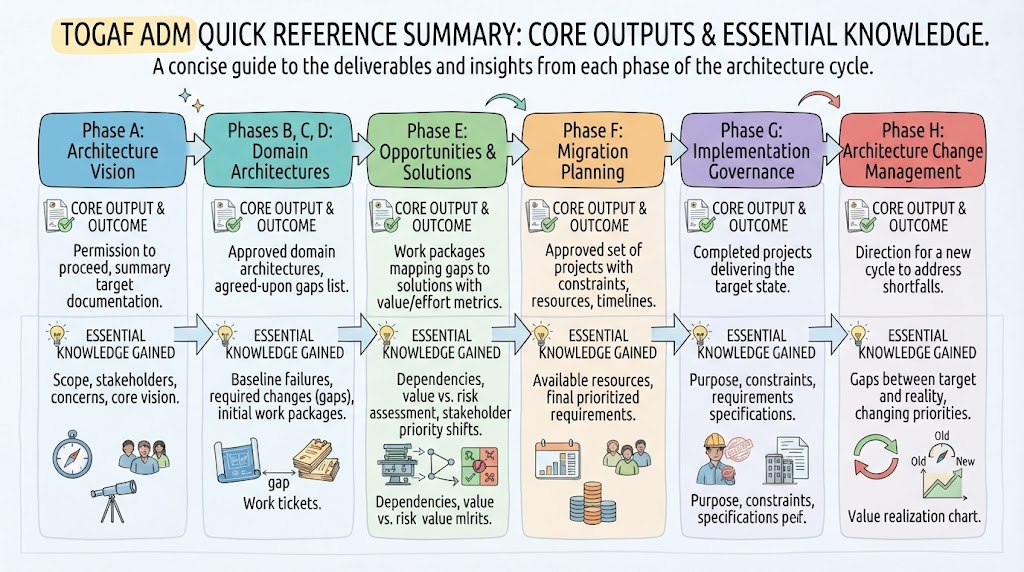 Mastering the TOGAF ADM Cycle: A Visual Guide to Architecture Outputs and Outcomes
 Accelerating Enterprise Architecture: Why Visual Paradigm is the Ideal Companion for TOGAF 10