


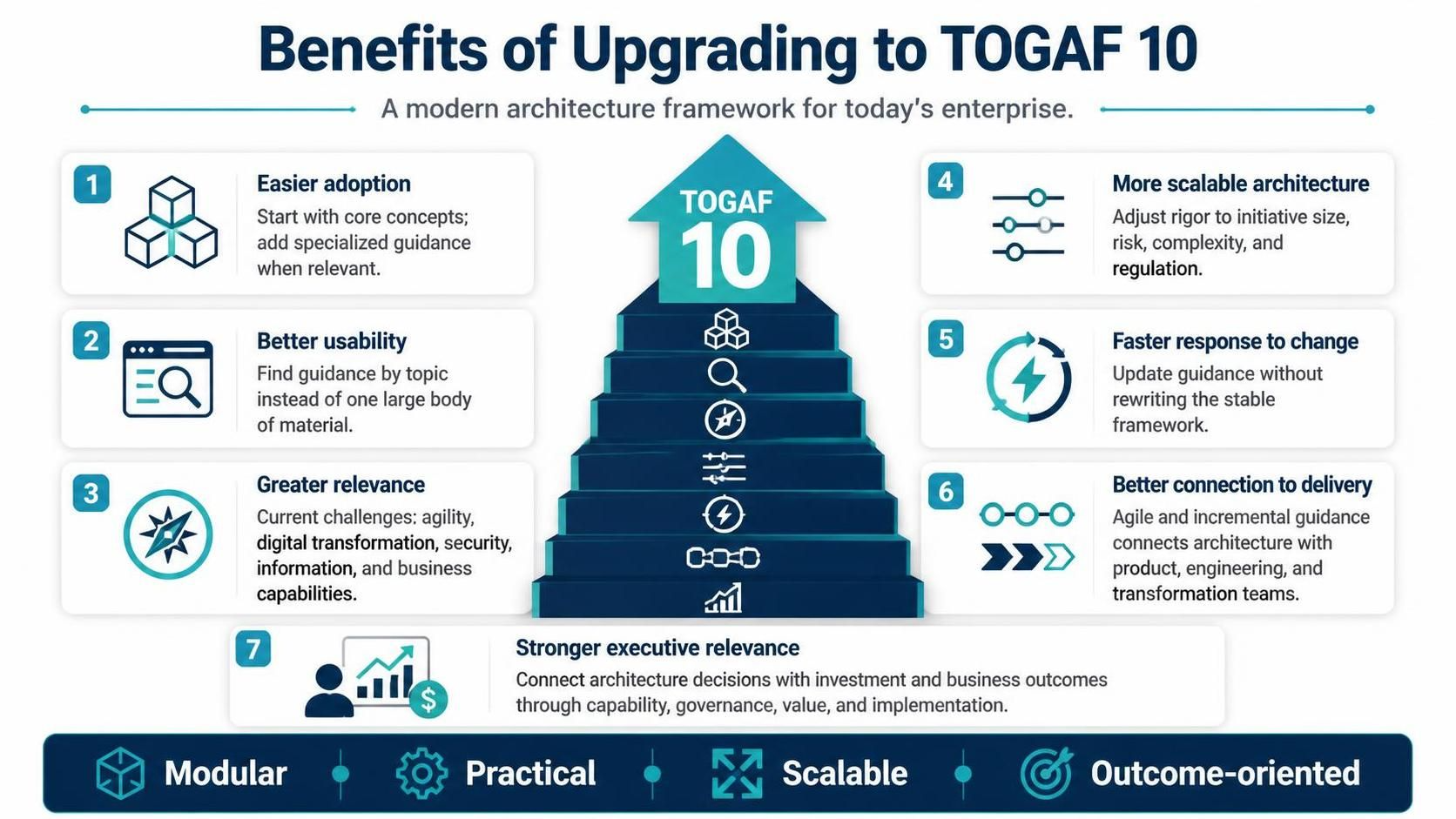
Enterprise Architecture (EA) is the backbone of modern digital transformation, serving as the blueprint that aligns business strategy with IT execution. However, as the business landscape shifts toward agility and rapid change, legacy frameworks often struggle to keep pace. The transition to TOGAF 10 represents a paradigm shift in how organizations approach architecture. It moves away from rigid, monolithic documentation toward a modular, scalable, and value-driven ecosystem.
In this tutorial, we will dissect the core architectural improvements of TOGAF 10. We will walk through the seven strategic pillars outlined in the framework’s modernization, explaining how these changes transform the role of an Enterprise Architect from a documenter of requirements to a strategic partner in business value.
The Modular Foundation: Reimagining Architecture
At the heart of the TOGAF 10 upgrade is a fundamental shift in structure. Previous versions of the framework were often viewed as a massive, singular “body of material” that required the entire organization to digest at once. TOGAF 10 reimagines this as a modular system.
Consider the architecture of a modern operating system. You don’t need to install every driver and feature to boot the machine; you install the core kernel and add specialized drivers as needed. TOGAF 10 adopts this philosophy:
- Core Concepts First: Organizations can begin with the foundational principles of architecture without being overwhelmed by the entirety of the methodology.
- Specialized Guidance: As specific challenges arise, architects can “plug in” specialized guidance modules. This easier adoption reduces the barrier to entry and allows for a gradual, organic evolution of architectural maturity.
Usability and Navigation: The Topic-Based Approach
One of the most significant user experience (UX) improvements in TOGAF 10 is the move away from linear reading to topic-based navigation.
In the past, finding a specific answer often meant searching through hundreds of pages of dense text. TOGAF 10 addresses this through better usability. The framework is now structured so that practitioners can find guidance by specific topic. This is akin to having a well-organized library where books are categorized by subject matter rather than volume number, allowing architects to quickly locate the tools they need for the task at hand.
Relevance: Addressing Modern Challenges
A framework is only as good as its ability to solve current problems. The world of 2024 is vastly different from the enterprise landscape of a decade ago. TOGAF 10 ensures greater relevance by addressing today’s specific architecture challenges directly.
The framework now integrates guidance on critical modern pillars, including:
- Agility: Supporting rapid iteration and change.
- Digital Transformation: Guiding the shift from legacy systems to cloud-native architectures.
- Security & Information: Embedding security and data governance into the design phase.
- Business Capabilities: Focusing on what the business can do, rather than just what software it owns.
Scalability: Adapting Rigor to Context
One size does not fit all in architecture. A small, low-risk internal tool requires a different architectural approach than a mission-critical, highly regulated banking application. TOGAF 10 introduces a more scalable architecture.
The framework allows you to adjust rigor based on the context of the initiative. You can define the level of formality and documentation required based on:
- Size: The scale of the project.
- Risk: The potential impact of failure.
- Complexity: The technical interdependencies.
- Regulatory Environment: Compliance requirements.
Agility and Continuous Evolution
In the fast-paced world of software development, frameworks that require a “complete rewrite” to update are obsolete. TOGAF 10 prioritizes faster response to change.
The new structure allows for new guidance to be added or updated without destabilizing the core framework. This ensures that the EA function remains current with industry trends and technological advancements without requiring a massive overhaul of the organization’s architectural standards.
Bridging the Gap: From Architecture to Delivery
Historically, a disconnect often exists between the “strategic” architecture team and the “tactical” product/engineering teams. TOGAF 10 aims to create a better connection to delivery.
By emphasizing agile and incremental guidance, the framework helps architecture teams work more effectively with product, engineering, and transformation teams. Instead of acting as a gatekeeper that slows down development, the architecture becomes an enabler that provides guardrails for agile delivery.
The Executive Connection: Value and Outcomes
Finally, architecture must prove its worth to the C-Suite. TOGAF 10 establishes stronger executive relevance by shifting the focus from abstract diagrams to concrete business outcomes.
The framework emphasizes capability, governance, value, and implementation. This ensures that architecture decisions are directly connected to investment and business results. When an architect presents a solution, they are now better equipped to articulate how it drives value, rather than just describing the technical stack.
Conclusion
The upgrade to TOGAF 10 is not merely a version update; it is a strategic modernization. By becoming modular, practical, scalable, and outcome-oriented, TOGAF 10 empowers organizations to build architectures that are robust enough to handle complexity but flexible enough to embrace the future.
Related posts:
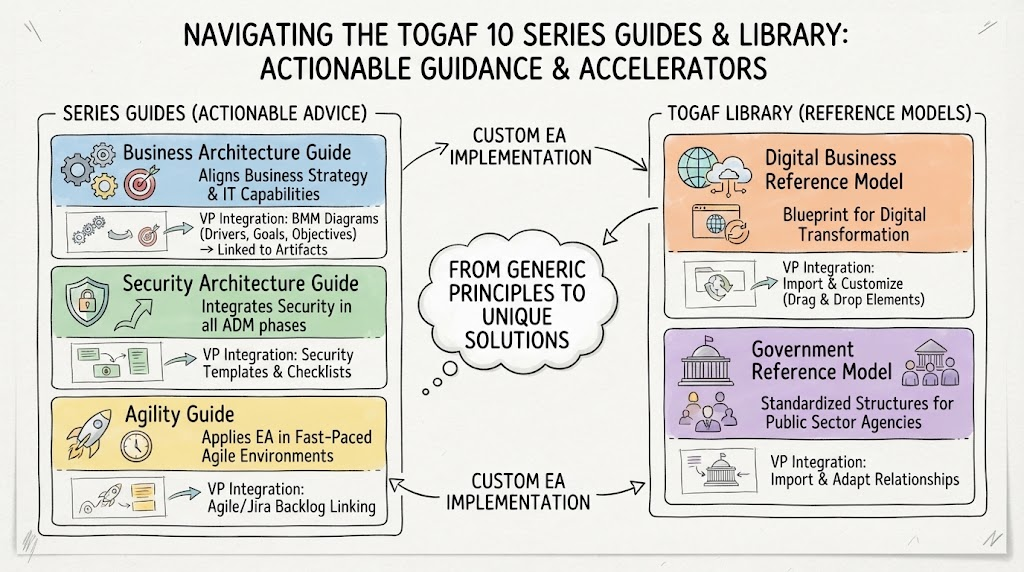 Navigating the TOGAF 10 Series Guides & Library: Actionable Guidance & Accelerators
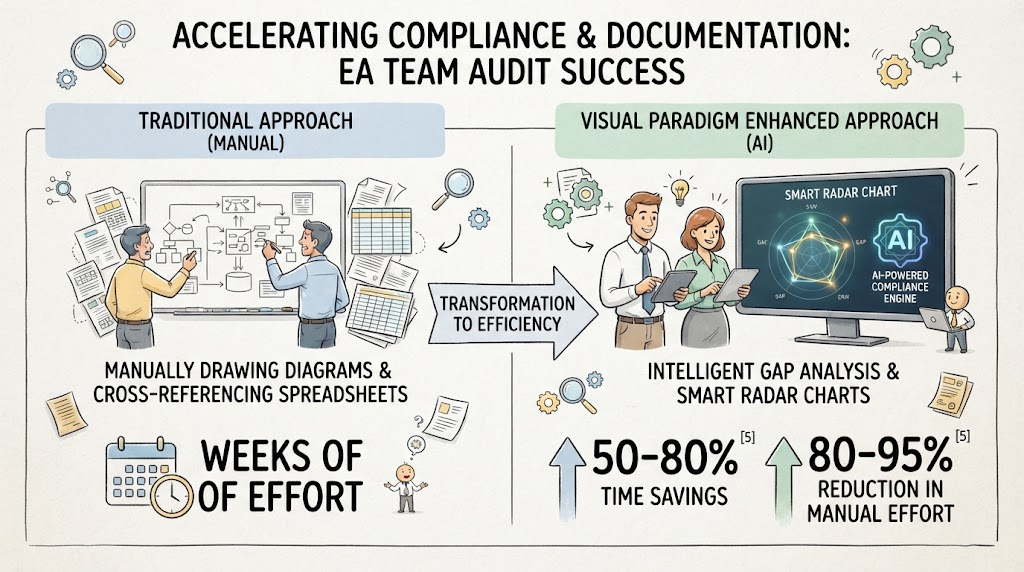 Accelerating Compliance & Documentation: Mastering the EA Audit Workflow with AI
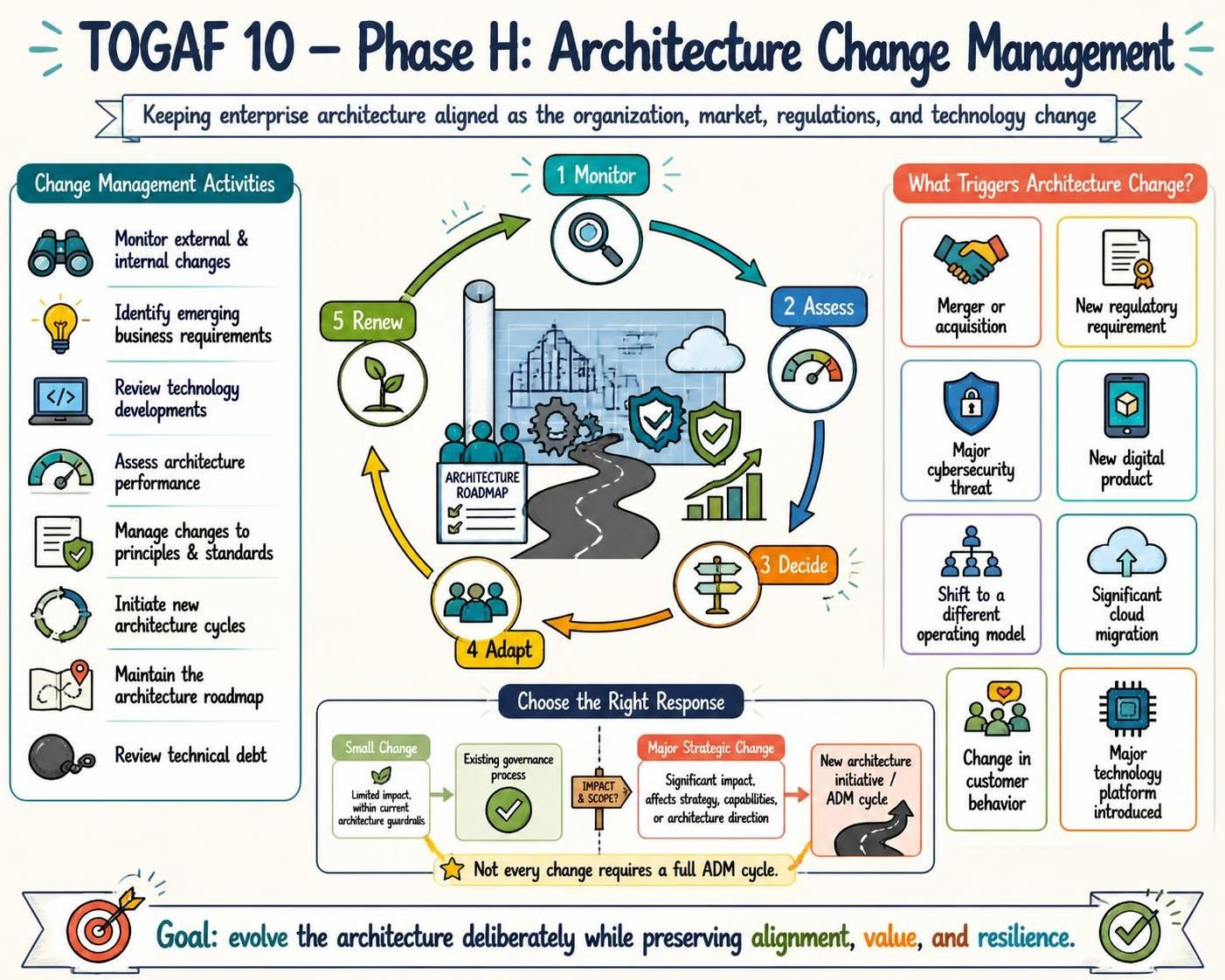 Mastering TOGAF Phase H: A Comprehensive Guide to Architecture Change Management
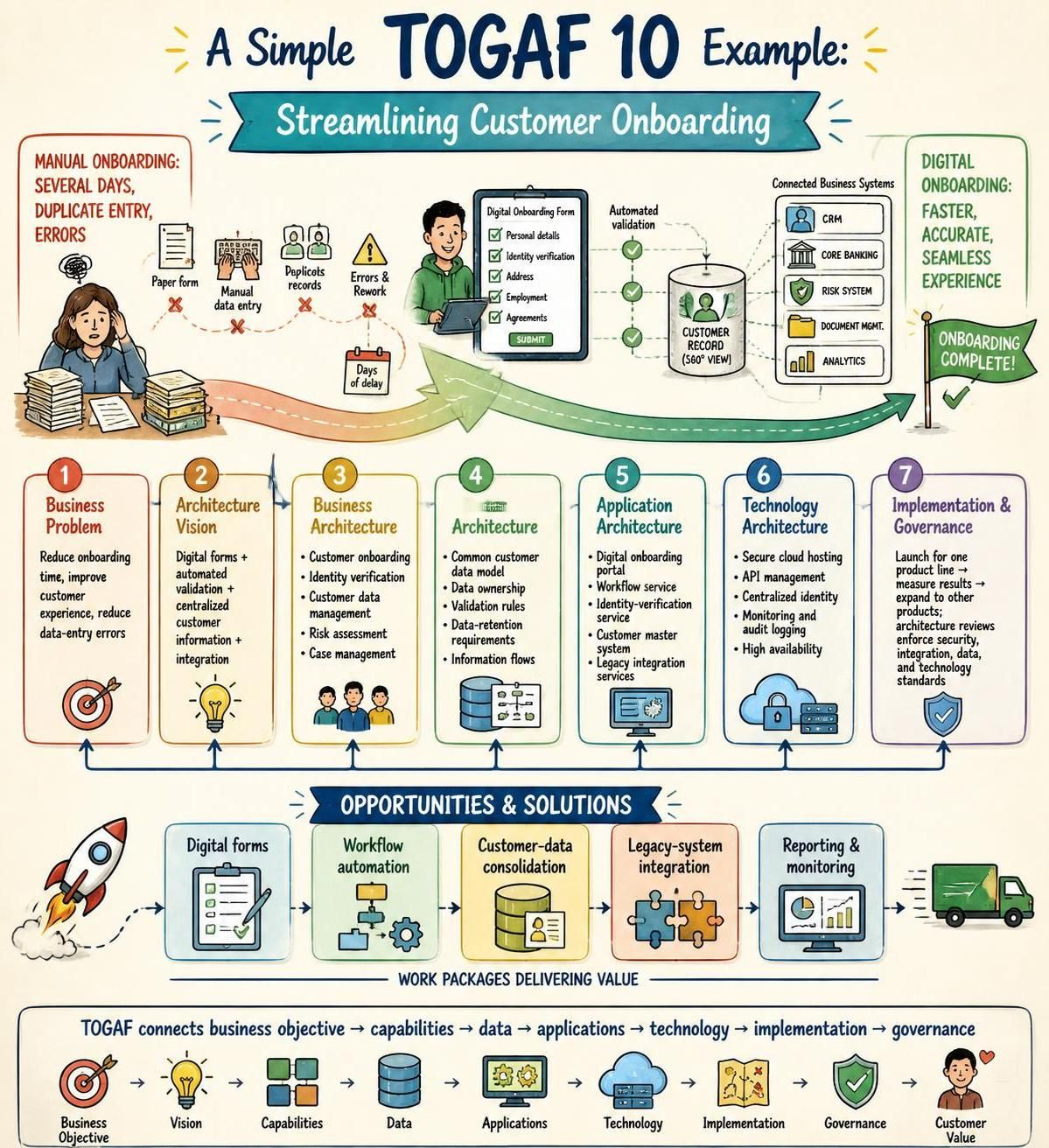 A Simple TOGAF 10 Tutorial: Mastering the Architecture Development Method with Customer Onboarding