


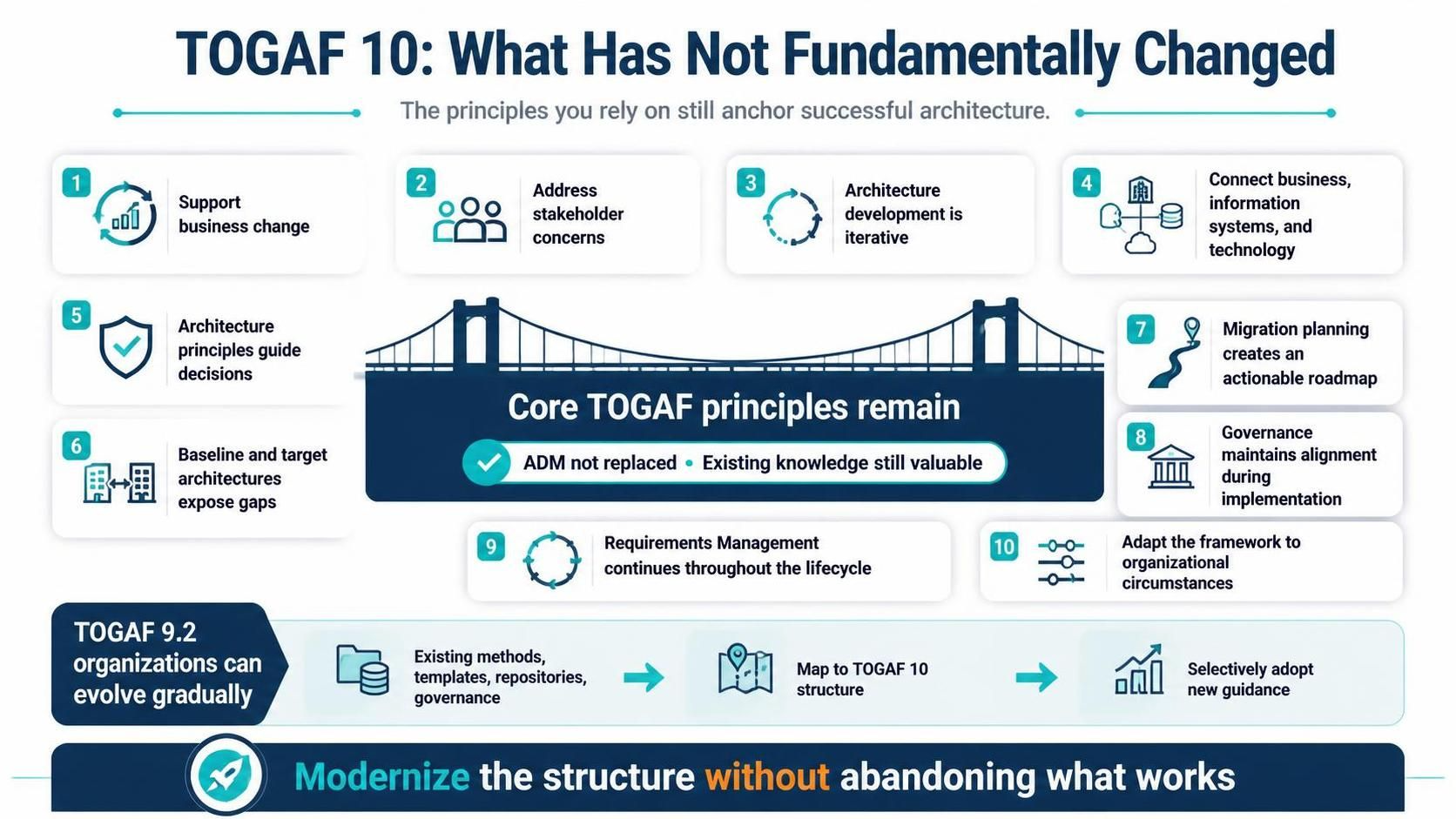
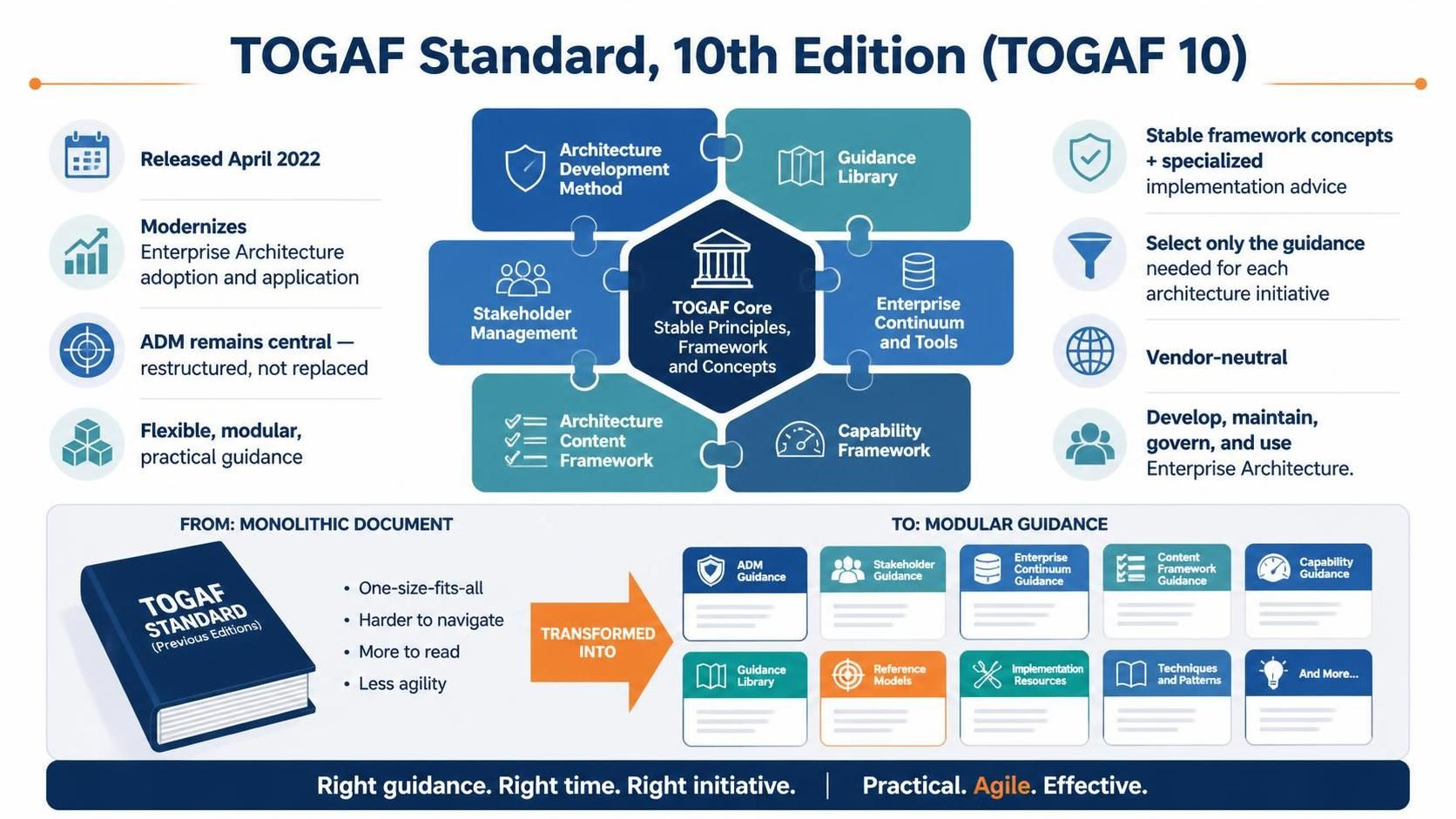
Transitioning from TOGAF 9.2 to TOGAF 10 is a significant milestone for any enterprise architect. However, a common misconception is that the new version requires a complete overhaul of established methods. The infographic provided clarifies that the transition is evolutionary, not revolutionary. This tutorial breaks down the core principles that remain unchanged and outlines a strategic path for modernizing your architecture structure without discarding existing investments.
The Backbone of Architecture: Unchanged Principles
At the heart of the TOGAF 10 framework is the belief that certain architectural truths are universal. Regardless of the specific version of the framework you use, the fundamental mechanics of successful architecture remain constant. The image highlights ten key concepts that anchor successful architecture, acting as the “pillars” of the framework.
1. The Human and Business Context
The first three points emphasize that architecture is not just about technology; it is about people and business outcomes.
- Support Business Change: Enterprise Architecture (EA) must be dynamic. It serves as a strategic asset to enable business transformation rather than a static set of documents.
- Address Stakeholder Concerns: The architecture must be relevant to the decision-makers. If it does not answer the specific questions of the stakeholders, it has failed its primary purpose.
- Iterative Development: Architecture is rarely a “one-and-done” linear process. It requires an iterative approach where the model is refined and updated as more information becomes available.
2. The Technical and Governance Ecosystem
The remaining points detail the structural and procedural elements that ensure the architecture is implemented correctly.
- Connect the Strands: A siloed architecture is a failed architecture. You must connect business, information systems, and technology concerns to create a cohesive view.
- Principles and Gaps: Architecture principles act as the guardrails for decision-making. Simultaneously, comparing the Baseline (current state) and Target (future state) architectures is the primary method for exposing gaps that need to be filled.
- Execution and Governance: The gap between design and reality is bridged by Migration Planning, which creates an actionable roadmap. Furthermore, Governance is essential to maintain alignment during implementation, ensuring the final build matches the design.
- Adaptability: The framework itself is not rigid. It should be adapted to the specific organizational circumstances. This adaptability ensures that the EA practice fits the organization, not the other way around.
From TOGAF 9.2 to TOGAF 10: An Evolutionary Strategy
For organizations currently operating under TOGAF 9.2, the most daunting aspect of the update is often the fear of losing previous work. The bottom section of the infographic provides a clear roadmap for a gradual evolution.
- Do Not Abandon: You do not need to discard existing methods, templates, repositories, or governance structures. These assets have value.
- Map to the New Structure: Instead of rebuilding, map your existing practices to the new TOGAF 10 structure. This allows you to leverage current knowledge while aligning with new standards.
- Selectively Adopt: Adopt new guidance selectively. Identify where the new version offers significant improvements and integrate those specific changes.
Modernizing the Structure with the Right Tools
To successfully navigate this transition, you need tools that can handle the complexity of mapping old to new while visualizing the core concepts of the ADM (Architecture Development Method). As you modernize your structure, it is highly recommended to utilize Visual Paradigm TOGAF ADM Tool.
This tooling solution is particularly effective for this task because:
- Unified Modeling: It allows you to create diagrams that clearly visualize the connection between business, information systems, and technology, adhering to the core principle of connectivity.
- Iterative Capability: It supports the iterative nature of the ADM, allowing you to refine your baseline and target architectures as the project evolves.
- Customization: You can easily adapt the framework to your organization’s circumstances, ensuring the tool supports your specific governance and requirements management needs.
By combining the strategic insights of TOGAF 10 with powerful tooling like Visual Paradigm, you can ensure that your architecture practice evolves efficiently, maintaining alignment and value throughout the lifecycle.
Related posts:
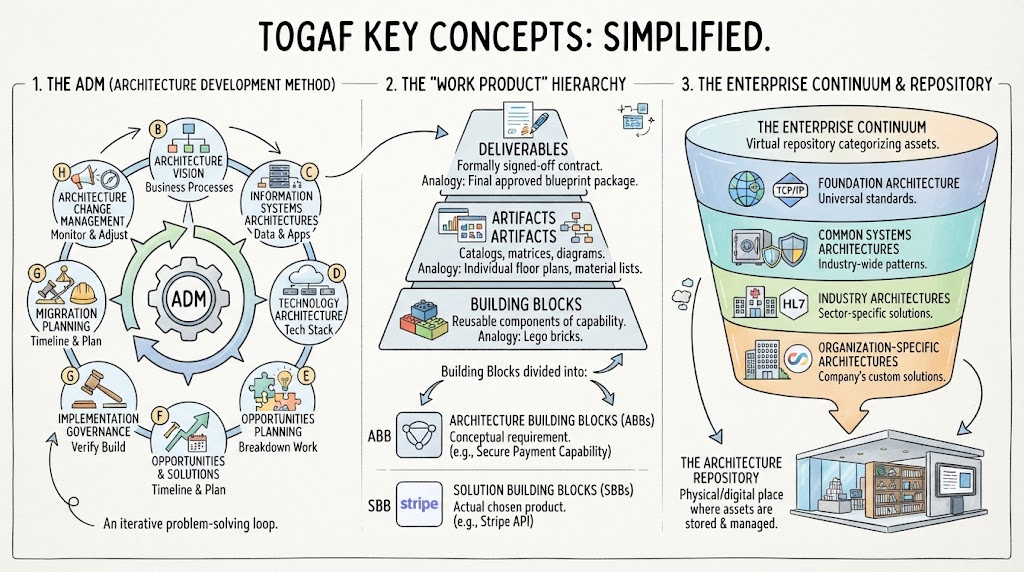 Mastering TOGAF: A Step-by-Step Guide to the ADM Cycle and Enterprise Architecture
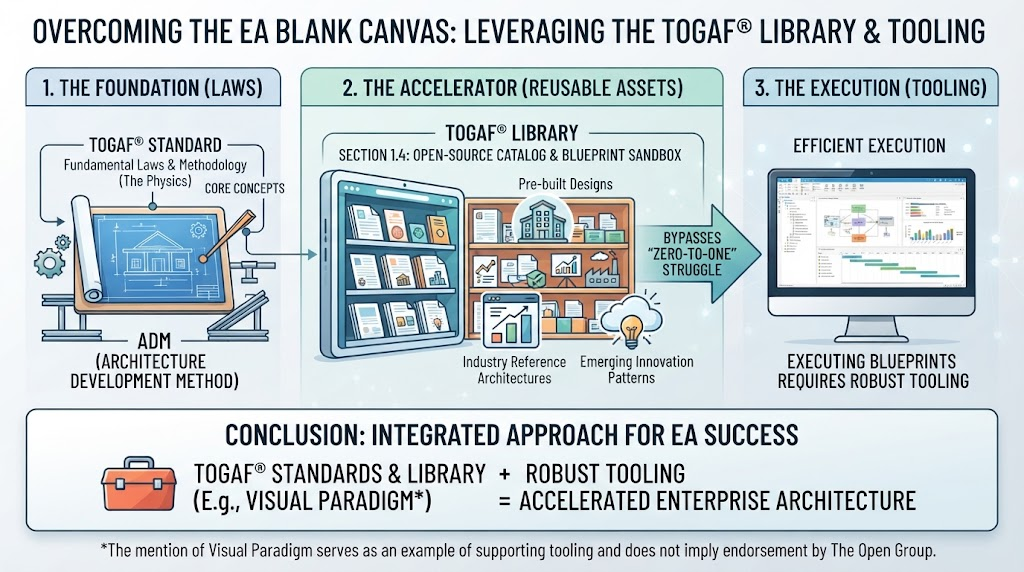 Overcoming the EA Blank Canvas: Leveraging the TOGAF Library & Tooling
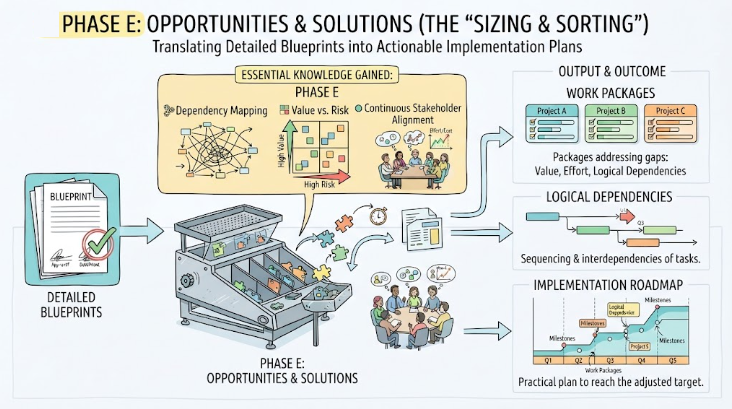 Mastering Phase E: Opportunities & Solutions in Enterprise Architecture
 Mastering the TOGAF Standard 10th Edition: A Modular Approach to Enterprise Architecture