


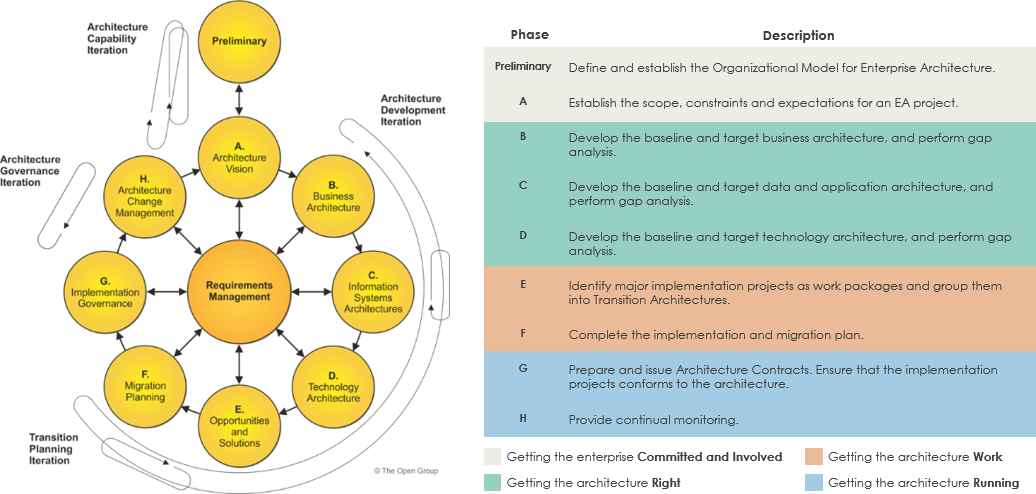
In the complex landscape of enterprise technology, the TOGAF (The Open Group Architecture Framework) Architecture Development Method (ADM) stands as the gold standard for aligning business strategy with IT capabilities. This tutorial breaks down the iterative cycle depicted in the standard ADM diagram, explaining how organizations move from initial vision to implemented reality.
1. The Preliminary Phase: Setting the Stage
The process does not begin with a specific project, but with organizational preparation. The Preliminary Phase is about defining the “rules of the game.”
- Define the Model: Establish the organizational model for Enterprise Architecture (EA).
- Principles: Define the scope, constraints, and expectations for the EA project.
- Standards: Tailor the ADM to the specific needs of the organization.
This phase ensures that the organization is ready to engage in architecture development.
2. The Core Architecture Phases (A through D)
The heart of the ADM involves developing the architecture across four distinct domains. These phases are color-coded in the diagram to represent a logical progression: Getting the architecture Right (Blue/Green).
Phase A: Architecture Vision
This phase sets the high-level direction. It involves identifying stakeholders, defining the scope, and obtaining approval to proceed. It answers the question: “What is the business goal and what is the architecture trying to achieve?”
Phase B: Business Architecture
Here, we model the business. This involves developing the baseline and target business architecture. It includes:
- Business processes and capabilities.
- Organizational structures.
- Gap analysis: Comparing the current state to the desired future state.
Phase C: Information Systems Architectures
Phase C is divided into two parts to address the “Information Systems” requirement:
- Data Architecture: Managing the data assets of the enterprise.
- Application Architecture: Defining the application portfolio and their interactions.
Both parts focus on developing the baseline and target architectures and performing gap analysis.
Phase D: Technology Architecture
This phase focuses on the hardware, software, and network infrastructure required to support the data and applications. It ensures the technical foundation is robust enough to support the business goals defined in Phase B.
3. Opportunities, Solutions, and Migration (E and F)
Once the target architecture is defined, the focus shifts to execution. This is often where the most significant work happens to bridge the gap between the current state and the future state.
Phase E: Opportunities and Solutions
This phase is about identifying the major implementation projects required. These projects are grouped into Transition Architectures. It moves from “what we need” to “what we will build.”
Phase F: Migration Planning
Here, the roadmap is created. The architecture is broken down into manageable work packages. The output is a detailed plan for how to migrate from the baseline to the target architecture.
4. Governance and Change (G and H)
The final phases ensure that the work gets done correctly and remains relevant over time.
- Phase G: Implementation Governance: This phase prepares and issues Architecture Contracts. It ensures that the implementation projects conform to the architecture. It is about oversight and control.
- Phase H: Architecture Change Management: This phase provides continual monitoring. It handles changes to the architecture that arise after implementation, ensuring the EA remains relevant.
5. The Engine of the Cycle: Requirements Management
In the center of the diagram lies Requirements Management. This is the critical connector. Throughout every phase of the ADM, requirements are managed. They drive the architecture development, and as the architecture evolves, requirements are refined. This ensures that the solution remains aligned with business needs.
6. The Iterative Nature of ADM
The diagram features arrows circling the phases, representing “Iterations.” This highlights that the ADM is not a linear “waterfall” process. It is a cycle.
- Architecture Capability Iteration: Refining the ADM itself.
- Architecture Governance Iteration: Ensuring compliance.
- Transition Planning Iteration: Refining the roadmap.
For example, an organization might move from Migration Planning (F) back to Business Architecture (B) if a proposed roadmap exposes a previously overlooked business constraint.
Recommended Tooling: Visual Paradigm TOGAF ADM Tool
To effectively navigate this complex cycle, architects need robust modeling software. For those looking to implement the TOGAF ADM efficiently, the Visual Paradigm TOGAF ADM Tool is a highly recommended solution. It provides a dedicated environment for mapping out the phases, managing requirements, and generating the necessary documentation and diagrams to support the architecture development process.
Related posts:
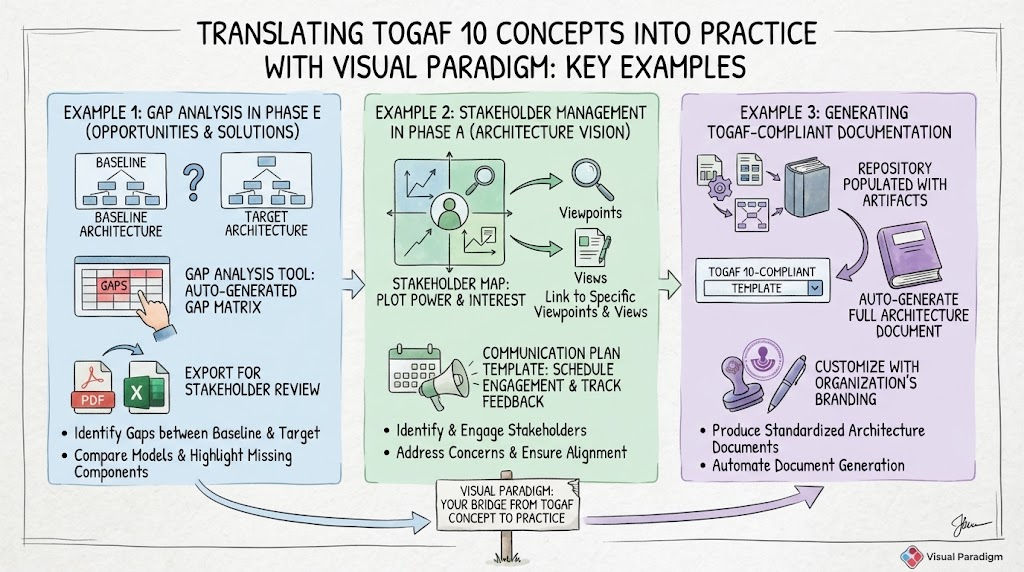 Mastering TOGAF 10 Implementation: A Visual Paradigm Tutorial on Architecture, Stakeholder Management, and Documentation
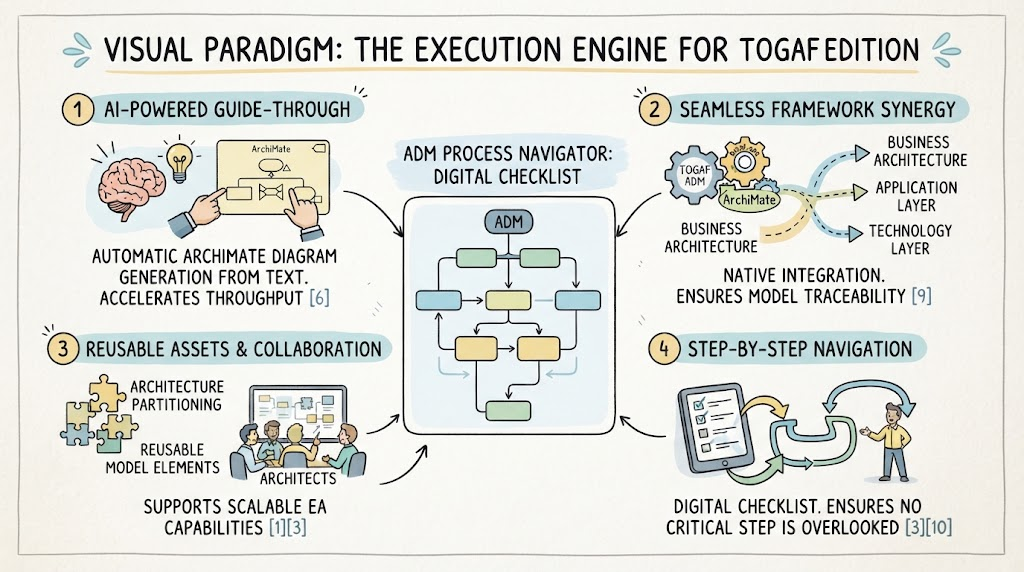 Mastering TOGAF 10 Execution: How Visual Paradigm Bridges the Gap Between Theory and Practice
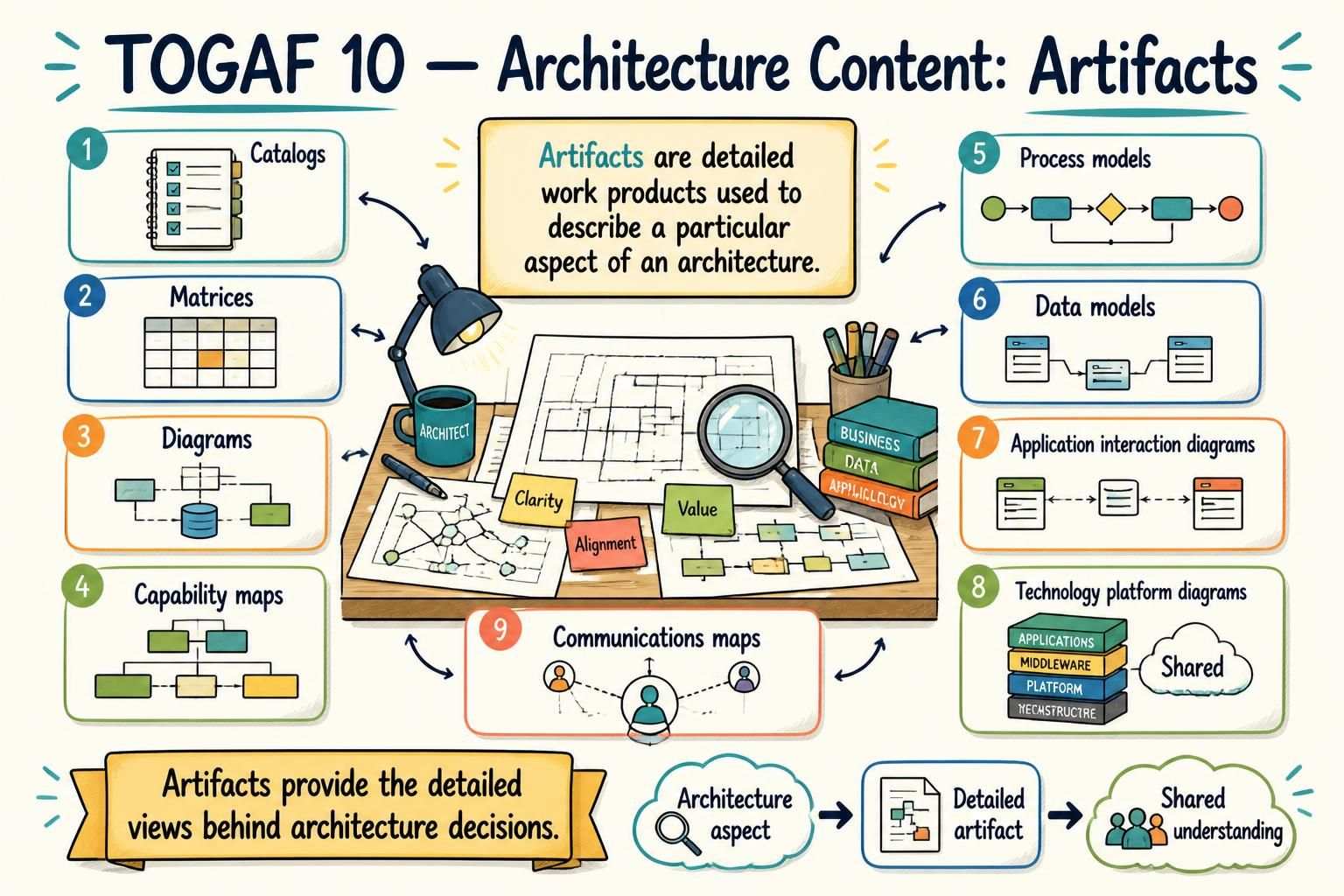 Mastering TOGAF 10: A Deep Dive into Architecture Content and Artifacts
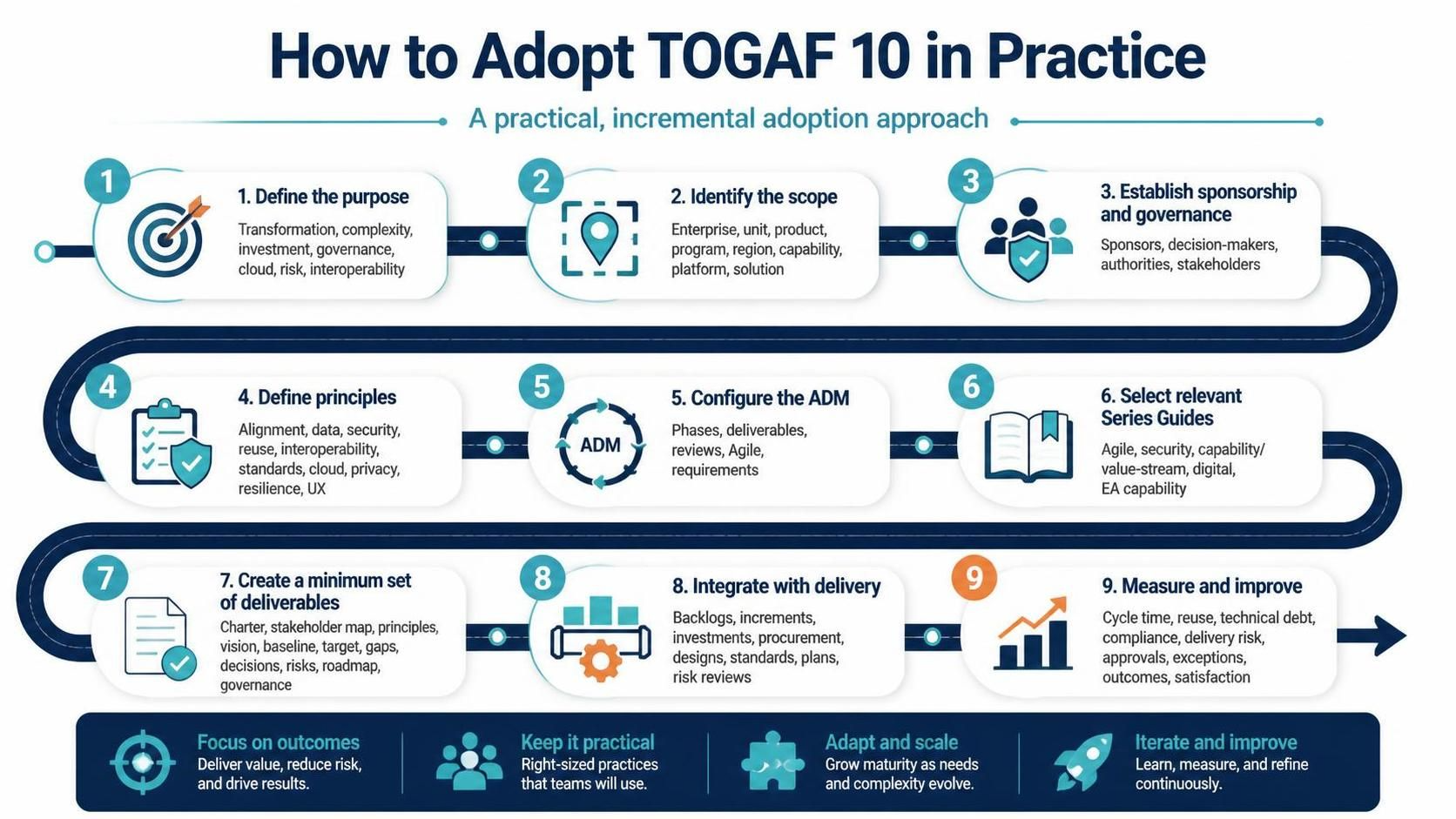 Mastering TOGAF 10: A Practical 9-Step Guide to Enterprise Architecture Adoption