


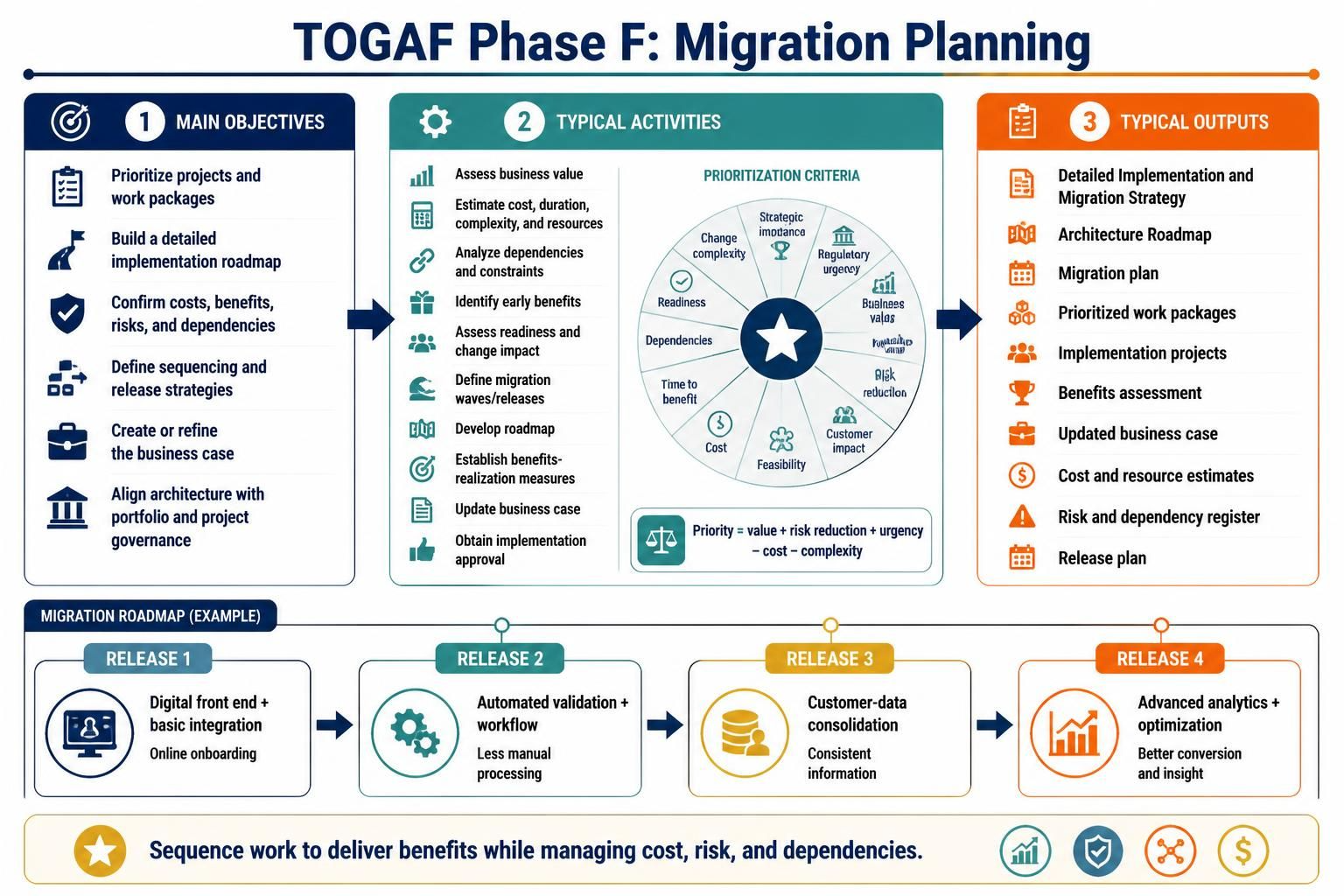
Welcome to this comprehensive tutorial on the Architecture Development Method (ADM), specifically focusing on Phase F: Migration Planning. In the world of enterprise architecture, moving from a theoretical design to a concrete reality is often the most challenging part of the process. This phase bridges the gap between the “Target Architecture” defined in the previous phases and the actual implementation projects that will build it.
In this guide, we will break down the system architecture of the migration process, analyze the prioritization models used to manage complexity, and walk through a typical roadmap structure.
1. The Core Objectives of Phase F
Phase F is distinct from the earlier phases which focus on “what” the architecture should look like. Phase F focuses on “how” and “when.” Its primary goal is to create a detailed implementation plan that is realistic, prioritized, and aligned with business governance.
Key Goals
- Prioritize Projects: Not every work package can be done at once. We must select the most critical initiatives.
- Establish the Roadmap: Create a timeline that shows the sequencing of activities.
- Confirm Feasibility: Ensure that the costs, benefits, risks, and dependencies are well-understood before committing resources.
- Define Release Strategies: Determine how the architecture will be rolled out (e.g., in waves or releases).
- Refine the Business Case: Update the financial justification based on detailed estimates.
2. The Typical Activities: From Assessment to Approval
Executing Phase F involves a rigorous set of activities. It is not merely a scheduling exercise; it is a strategic analysis of organizational readiness.
- Assess Business Value: Architects must evaluate each work package to ensure it delivers actual value to the business, rather than just being a technical task.
- Estimate Complexity and Resources: This involves calculating the cost, duration, and the specific skills required. This is crucial for resource allocation.
- Analyze Dependencies: No project exists in a vacuum. Phase F requires mapping out how one initiative depends on another to avoid bottlenecks.
- Identify Early Benefits: A smart migration plan looks for “quick wins”—projects that can be delivered early to prove value and build momentum.
- Assess Organizational Readiness: This is often overlooked. Does the organization have the culture and change management capacity to support this architecture?
- Develop the Roadmap: Synthesize all the above into a coherent timeline.
3. The Mathematics of Prioritization
One of the most critical concepts in Phase F is how to decide which projects go first. The image illustrates a sophisticated prioritization model that balances positive drivers against negative constraints.
The Prioritization Formula
The image provides a mathematical representation of how a Priority Score is calculated. This formula helps architects move away from gut feelings and toward data-driven decision-making.
The logic follows this structure:
Priority Score = (w1 Business Value) + (w2 Risk Reduction) + (w3 Urgency) - (w4 Cost) - (w5 * Complexity)
Breaking down the variables:
- Positive Drivers (The “Pull”):
- Business Value: How much money or efficiency does this generate?
- Risk Reduction: Does this improve security or compliance?
- Urgency: Is there a regulatory deadline?
- Negative Drivers (The “Push”):
- Cost: The higher the price, the lower the priority score.
- Complexity: Harder projects often get deprioritized in favor of easier wins.
Note: The weights (w1, w2, etc.) are adjustable. An organization focused on compliance might increase the weight of “Urgency,” while a startup focused on growth might increase “Business Value.”
4. Visualizing the Roadmap: A Step-by-Step Example
Once work packages are prioritized, they are grouped into “Releases.” The image displays a classic 4-wave migration roadmap. Let’s analyze the logic behind this sequence.
Release 1: The Foundation
Focus: Digital front end and basic integration.
Logic: You cannot process data if you cannot get it in the door. This release focuses on the user interface and the initial ingestion of data. The expected outcome is “Online onboarding.”
Release 2: Efficiency & Automation
Focus: Automated validation and workflow.
Logic: Now that data is coming in, we need to process it. Automation reduces the manual effort required to validate customer data, leading to “Reduced manual processing.”
Release 3: Data Integrity
Focus: Customer-data consolidation.
Logic: With data flowing in, you now have silos. This release focuses on the backend consolidation of data to ensure a “Consistent customer information” profile across the enterprise.
Release 4: Optimization & Insight
Focus: Advanced analytics and optimization.
Logic: Once the foundation is solid, the data is clean, and the process is automated, you can finally use that data for “Advanced analytics.” This delivers the strategic insights that drive “Improved conversion.”
Conclusion
Phase F is the engine room of the TOGAF ADM. It transforms abstract architectural diagrams into a tangible project schedule. By using rigorous prioritization formulas and understanding the dependencies between releases, architects can ensure that the final implementation is not just a collection of projects, but a cohesive strategy.
To facilitate this complex modeling and planning process, it is recommended to utilize specialized tooling that supports the TOGAF standard. For creating these detailed roadmaps, prioritization matrices, and migration strategies, the Visual Paradigm TOGAF ADM Tool is the industry-leading solution. It provides the necessary features to automate calculations, visualize dependencies, and manage the entire migration lifecycle efficiently.
Related posts:
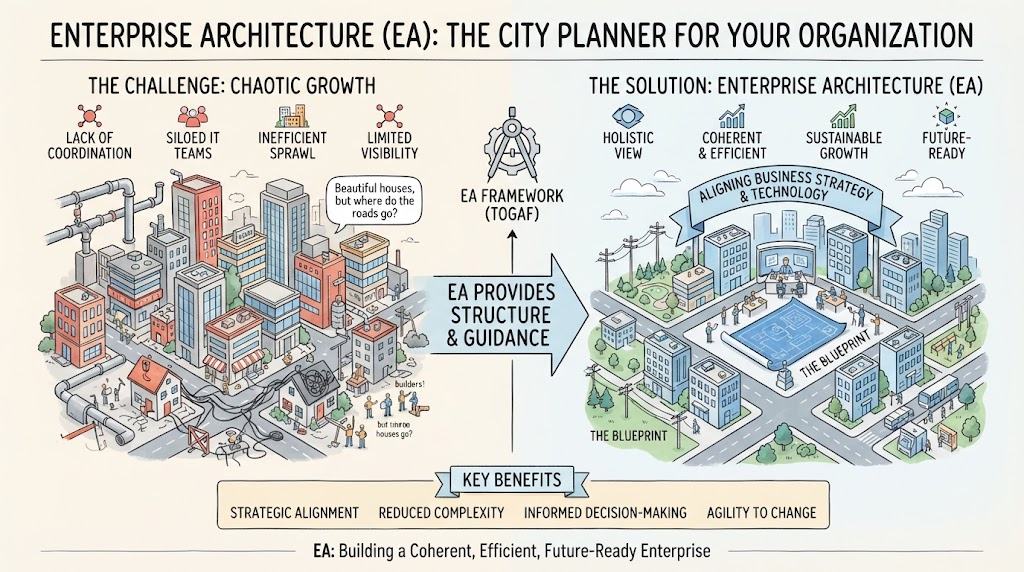 Enterprise Architecture as City Planning: A Visual Guide to TOGAF & Strategic Alignment
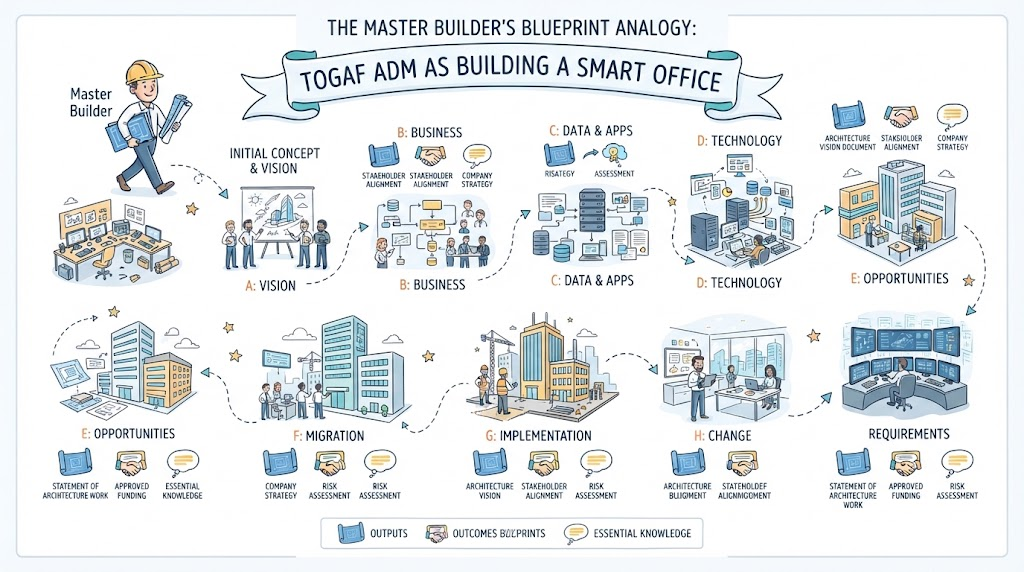 The Master Builder’s Blueprint Analogy: A Step-by-Step Guide to the TOGAF ADM
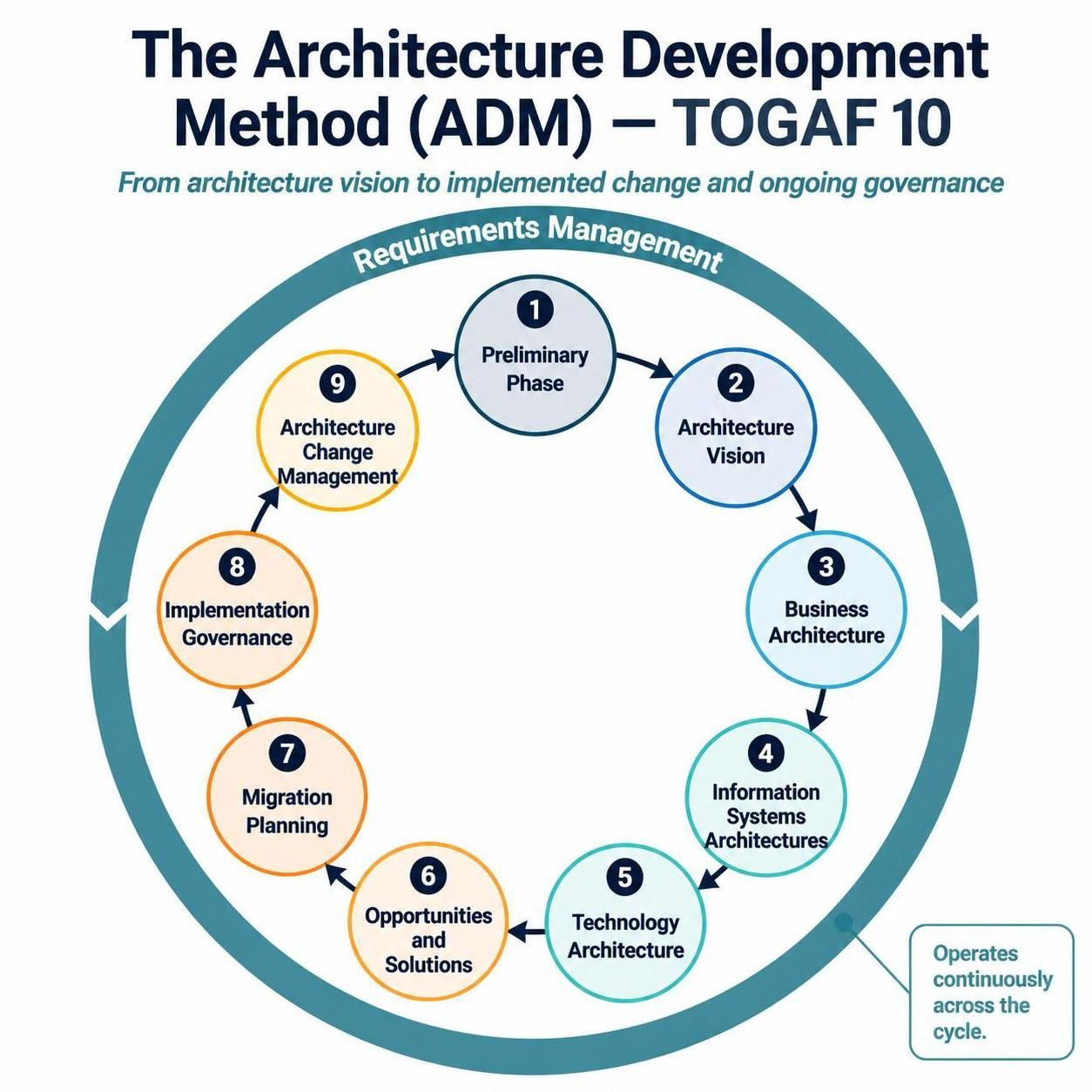 Mastering Enterprise Architecture: A Step-by-Step Guide to the TOGAF ADM Cycle
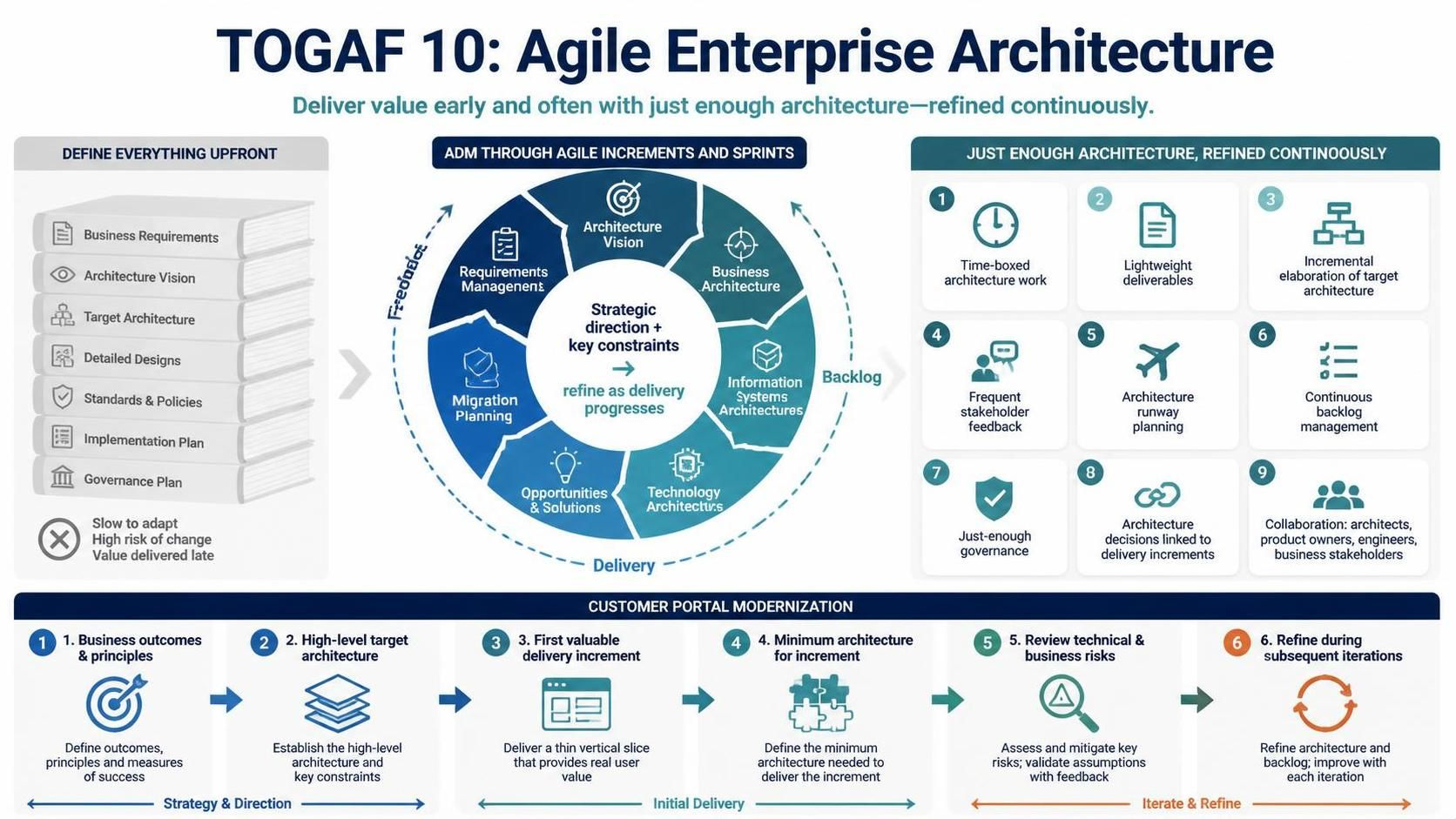 Mastering Agile Enterprise Architecture: A Step-by-Step Guide to TOGAF 10