


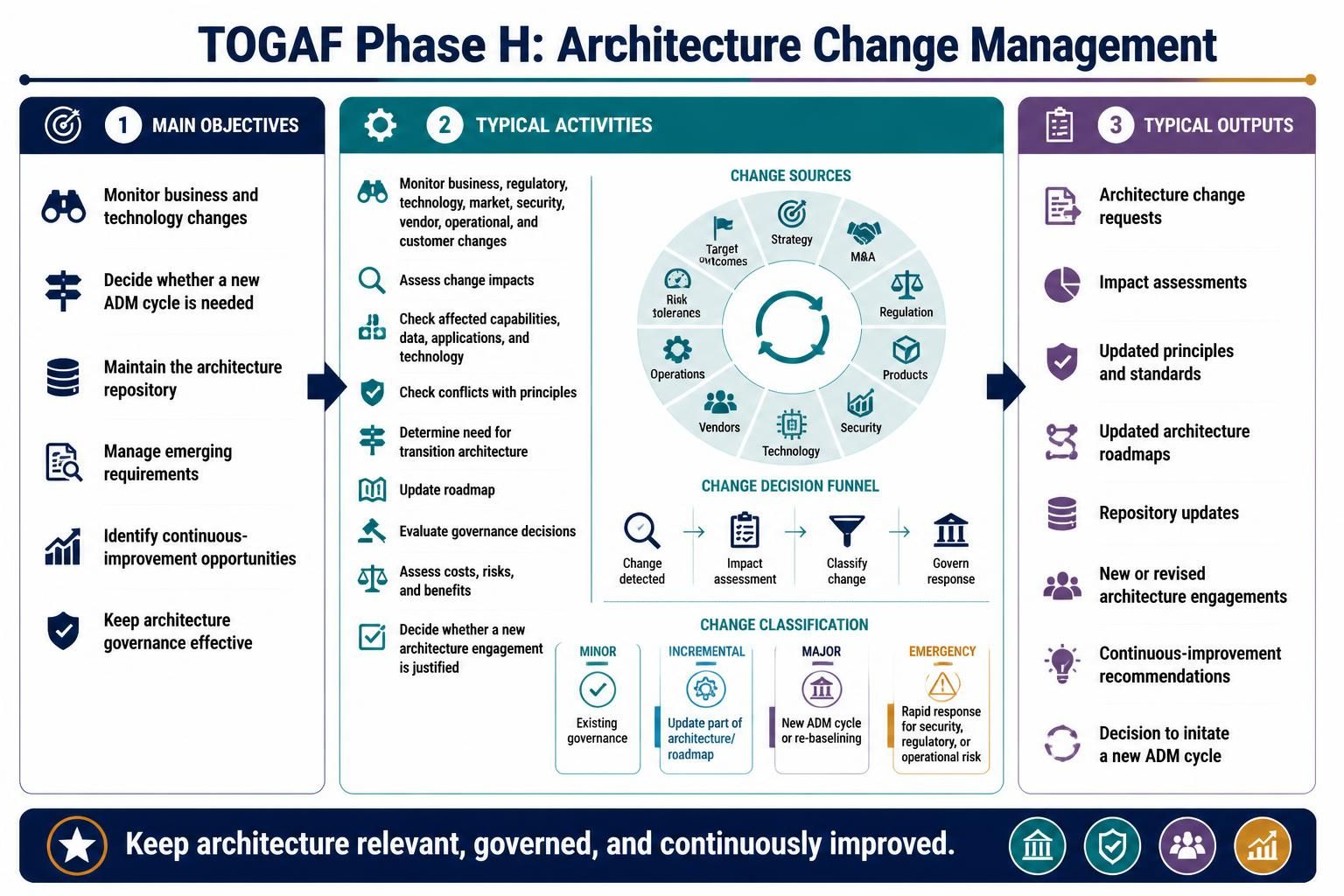
In the dynamic world of Enterprise Architecture, the journey does not end once the initial architecture is designed and implemented. The environment in which organizations operate is fluid, driven by new laws, shifting market strategies, and rapid technological advancements. This reality brings us to the critical final stage of the TOGAF Architecture Development Method (ADM): Phase H – Architecture Change Management.
This tutorial provides a comprehensive breakdown of Phase H, explaining the system architecture behind managing change, the modeling concepts of change classification, and how to effectively govern an evolving enterprise.
1. The Core Philosophy: Why Change Management?
Organizations are not static entities. They operate in changing environments where factors such as acquisitions, new technologies, competitors, and regulatory requirements constantly shift. Phase H is designed to maintain the relevance and effectiveness of the enterprise architecture after implementation begins.
The primary goal is to ensure that the architecture remains a living asset that guides the business, rather than a static document that becomes obsolete. This is achieved through a continuous loop of monitoring, assessing, and governing.
2. Main Objectives of Phase H
To successfully navigate Phase H, an organization must focus on six specific objectives that serve as the foundation for all activities:
- Monitor Changes: Actively scan the business and technology environment for shifts.
- Decision Gate: Determine rigorously whether a minor tweak is sufficient or if a full new ADM cycle is required.
- Maintain the Repository: Ensure the central archive of architectural knowledge is always up to date.
- Manage Requirements: Handle emerging requirements that arise from the chaos of business operations.
- Continuous Improvement: Identify opportunities to make the architecture better, not just different.
- Effective Governance: Ensure that the rules and decision-making processes for architecture remain robust.
3. The Architecture of Change: Sources and Triggers
Change does not happen in a vacuum. In the TOGAF model, we look at “Change Sources” to understand what triggers a need for architectural adjustment. These sources can be categorized into several key areas:
- Strategic Shifts: New business strategies, mergers and acquisitions (M&A), or changes in risk tolerance.
- External Pressures: Regulatory changes, market disruption, or new competitor products.
- Operational Factors: Customer feedback, vendor changes, or operational failures.
- Technical Evolution: New technology capabilities or security incidents.
When any of these sources are identified, the architecture team must initiate the Change-Impact Assessment. This is a critical modeling step where the team evaluates the ripple effects of a proposed change.
The Change-Impact Assessment
Before approving a change, architects must answer a specific set of diagnostic questions:
- Which business capabilities are affected?
- Which data, applications, and technologies are impacted?
- Does the change conflict with existing architecture principles?
- Does it require a new transition architecture?
- Does it alter the established roadmap?
- Does it require new governance decisions?
- What are the costs, risks, and benefits?
4. Change Classification: The Decision Funnel
Not all changes are created equal. The “Change Decision Funnel” in Phase H helps categorize changes based on their severity and impact. This classification dictates the response mechanism.
A. Minor Changes
These are low-impact adjustments. A minor change can be handled entirely within the existing architecture governance framework without needing to escalate the issue.
B. Incremental Changes
These changes require updates to specific parts of the architecture or the roadmap. While they don’t break the system, they do require formal updates to ensure alignment with the long-term vision.
C. Major Changes
When a change is significant enough to alter the foundation of the enterprise, it is classified as Major. This typically requires a new ADM cycle or significant re-baselining of the architecture.
D. Emergency Changes
These must be handled with speed, often due to critical security vulnerabilities, regulatory compliance failures, or operational risks. The priority here is rapid response to mitigate risk.
5. Typical Outputs and Deliverables
The successful execution of Phase H results in a set of tangible outputs that feed back into the wider organization:
- Architecture Change Requests: Formal documentation of the proposed change.
- Impact Assessments: Detailed analysis of the risks and benefits.
- Updated Principles and Standards: The architectural rules of the road may need to evolve.
- Updated Roadmaps: Future plans are adjusted to reflect the new reality.
- Repository Updates: The central data store is synchronized with new models.
- Decisions to Initiate New ADM Cycles: Formal authorization for new development phases.
6. Conclusion: Keeping Architecture Relevant
The ultimate goal of Phase H is to keep the architecture relevant, governed, and continuously improved. By systematically monitoring triggers, assessing impacts, and classifying changes, organizations can ensure their IT landscape supports their business goals effectively.
To facilitate this complex process of tracking changes, managing repositories, and visualizing the impact on the architecture, it is highly recommended to use specialized tooling. The Visual Paradigm TOGAF ADM Tool is an industry-leading solution that automates many of these workflows. It allows architects to model the “Change Decision Funnel,” track change requests against the ADM cycle, and maintain a synchronized repository, ensuring that Phase H is executed with precision and efficiency.
Related posts:
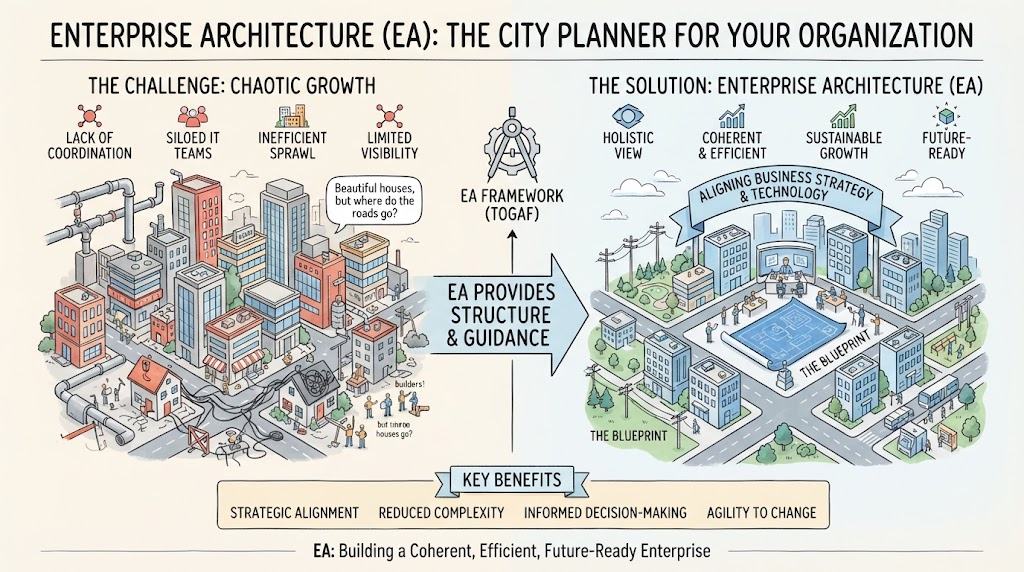 Enterprise Architecture as City Planning: A Visual Guide to TOGAF & Strategic Alignment
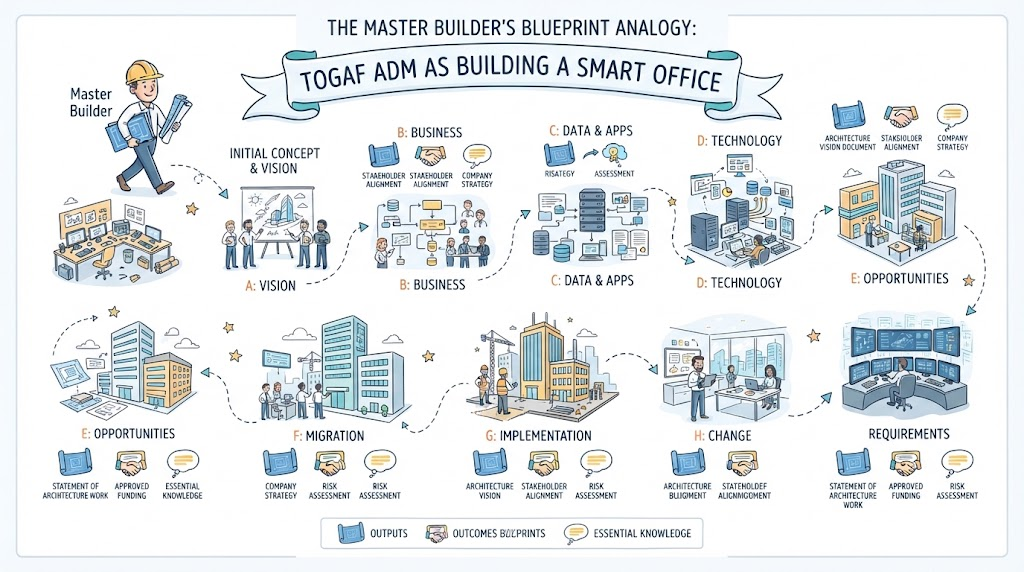 The Master Builder’s Blueprint Analogy: A Step-by-Step Guide to the TOGAF ADM
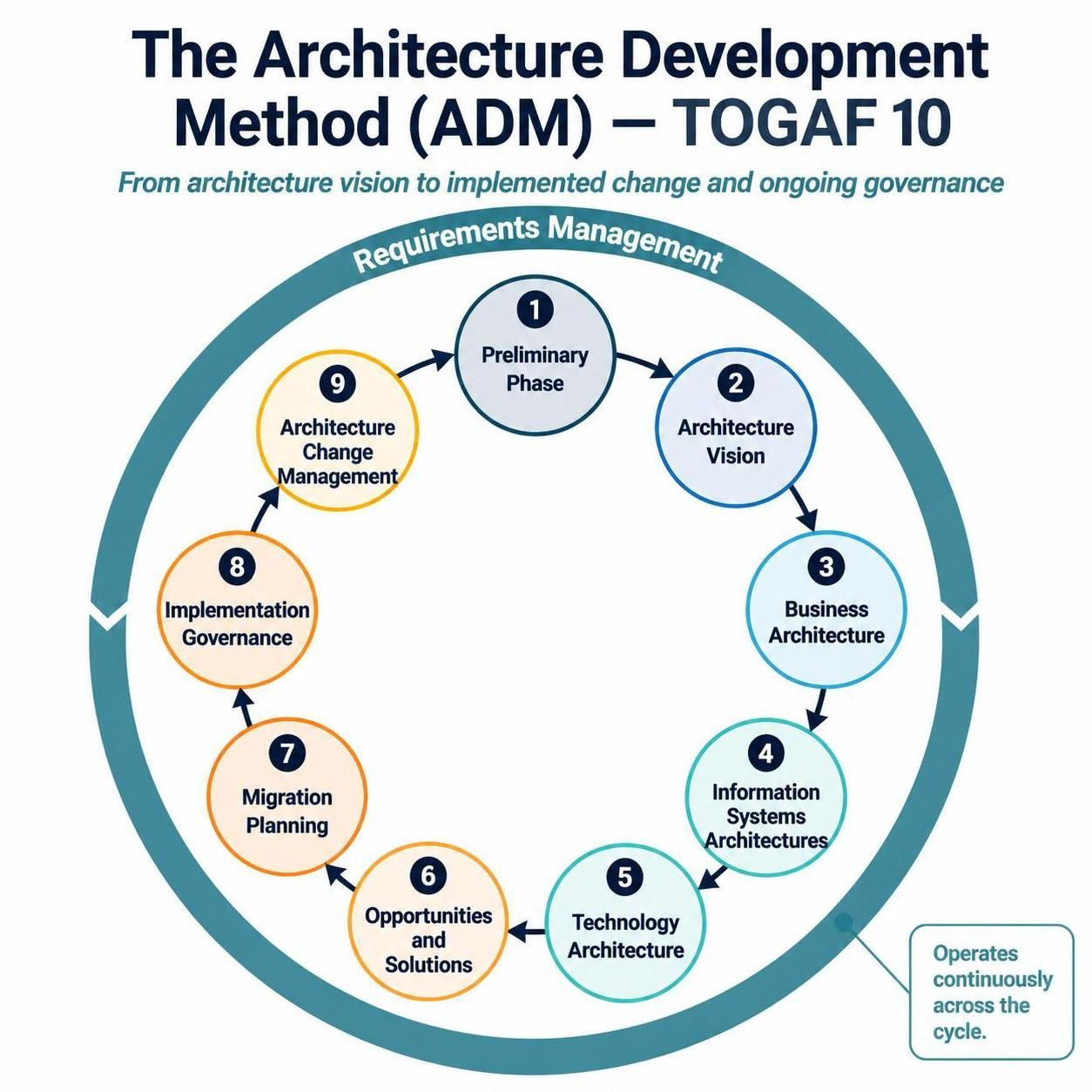 Mastering Enterprise Architecture: A Step-by-Step Guide to the TOGAF ADM Cycle
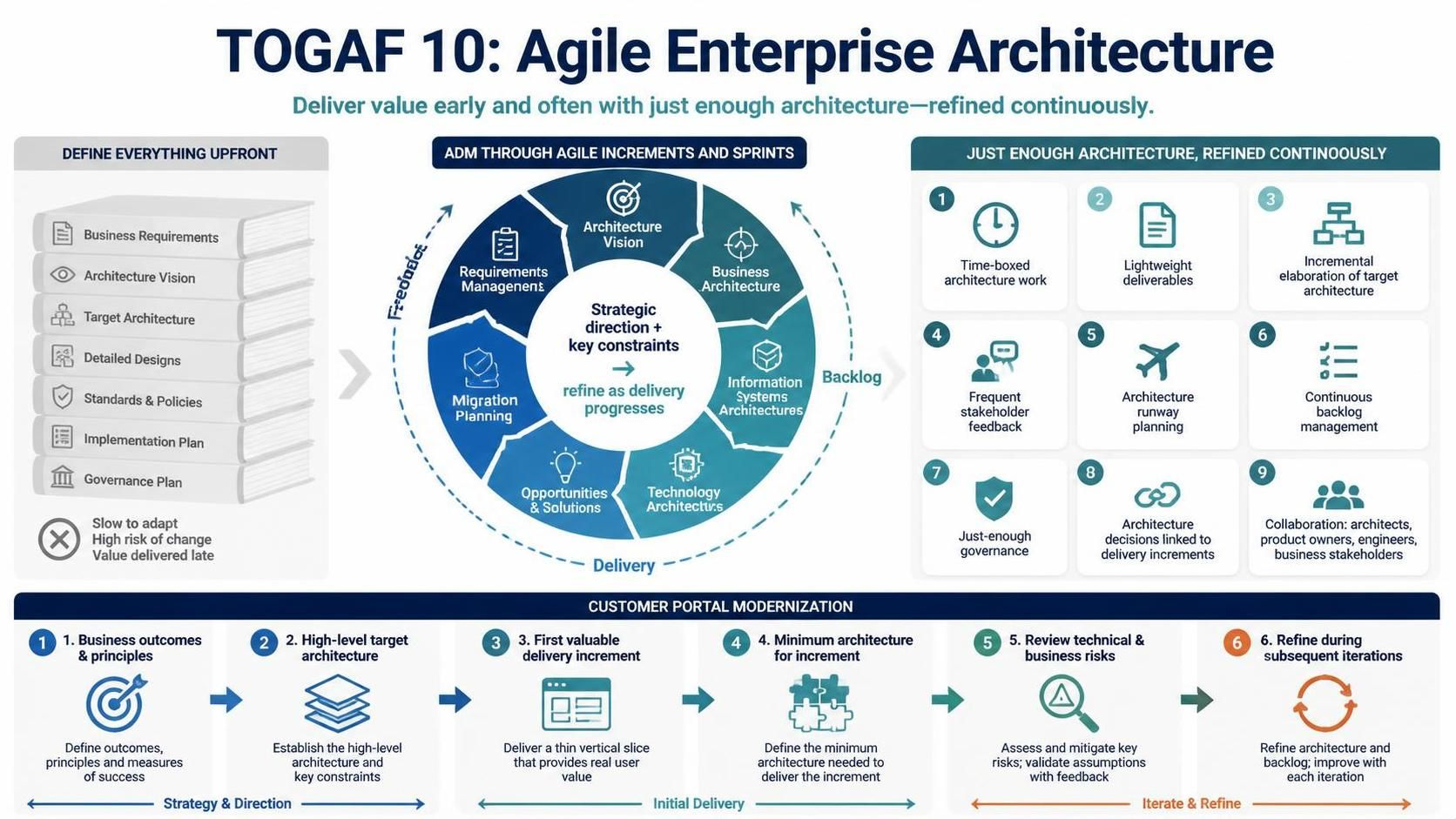 Mastering Agile Enterprise Architecture: A Step-by-Step Guide to TOGAF 10