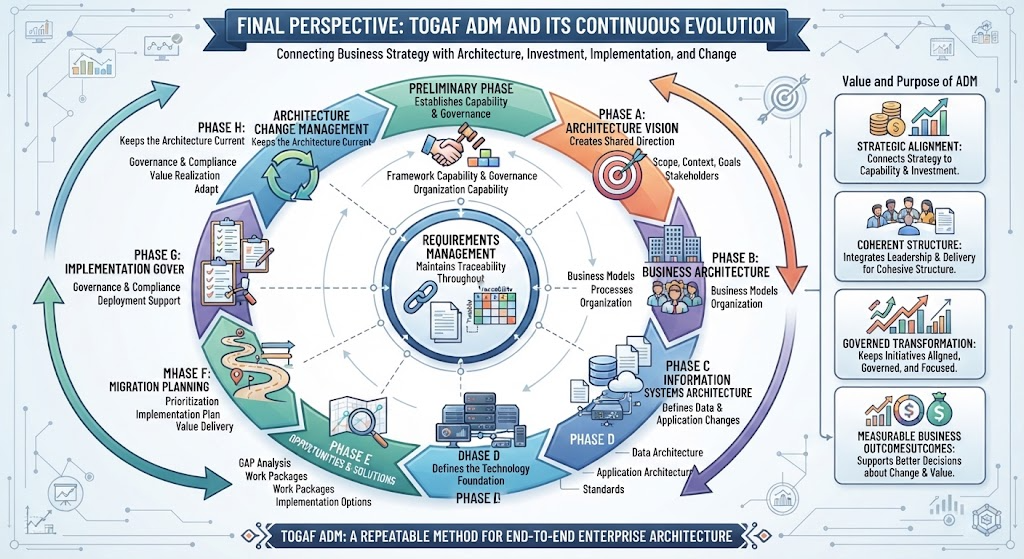
In the complex landscape of modern enterprise IT, bridging the gap between high-level business strategy and technical implementation is a perennial challenge. The TOGAF ADM (Architecture Development Method) offers a proven, repeatable framework to solve this problem. Based on the comprehensive visual model provided, this tutorial explores the “Final Perspective” of the ADM, guiding you through the cyclical nature of architecture development, from preliminary governance to the continuous evolution of the system.
Understanding the Core Philosophy: A Repeatable Cycle
The diagram illustrates that the TOGAF ADM is not merely a linear checklist but a continuous cycle. The overarching goal, as highlighted in the banner, is Connecting Business Strategy with Architecture, Investment, Implementation, and Change. The value of the ADM lies in the relationships between its phases. By following this cycle, organizations ensure that their investments are aligned with their strategic goals and that the resulting technology solutions are sustainable.
The Central Pillar: Requirements Management
At the very heart of the ADM cycle lies the Requirements Management phase. This central hub is critical because it maintains traceability throughout the entire process. As the diagram shows, requirements do not sit in a vacuum; they influence and are influenced by every other phase. Whether you are defining the Business Architecture or planning the Migration, the requirements act as the anchor, ensuring that every decision made in the architecture can be traced back to a specific business need or stakeholder goal.
Step-by-Step Walkthrough of the Phases
The ADM is divided into distinct phases, each serving a specific purpose in the evolution of the enterprise architecture. Let’s break down the flow as depicted in the infographic.
Phase 0: The Preliminary Phase
Before any specific architecture work begins, the organization must establish its capability. This phase is about Establishing Capability & Governance. It involves defining the organization’s architecture capability, setting up the governance structure, and ensuring that the organization has the necessary tools and skills to perform architecture development.
Phase A: Architecture Vision
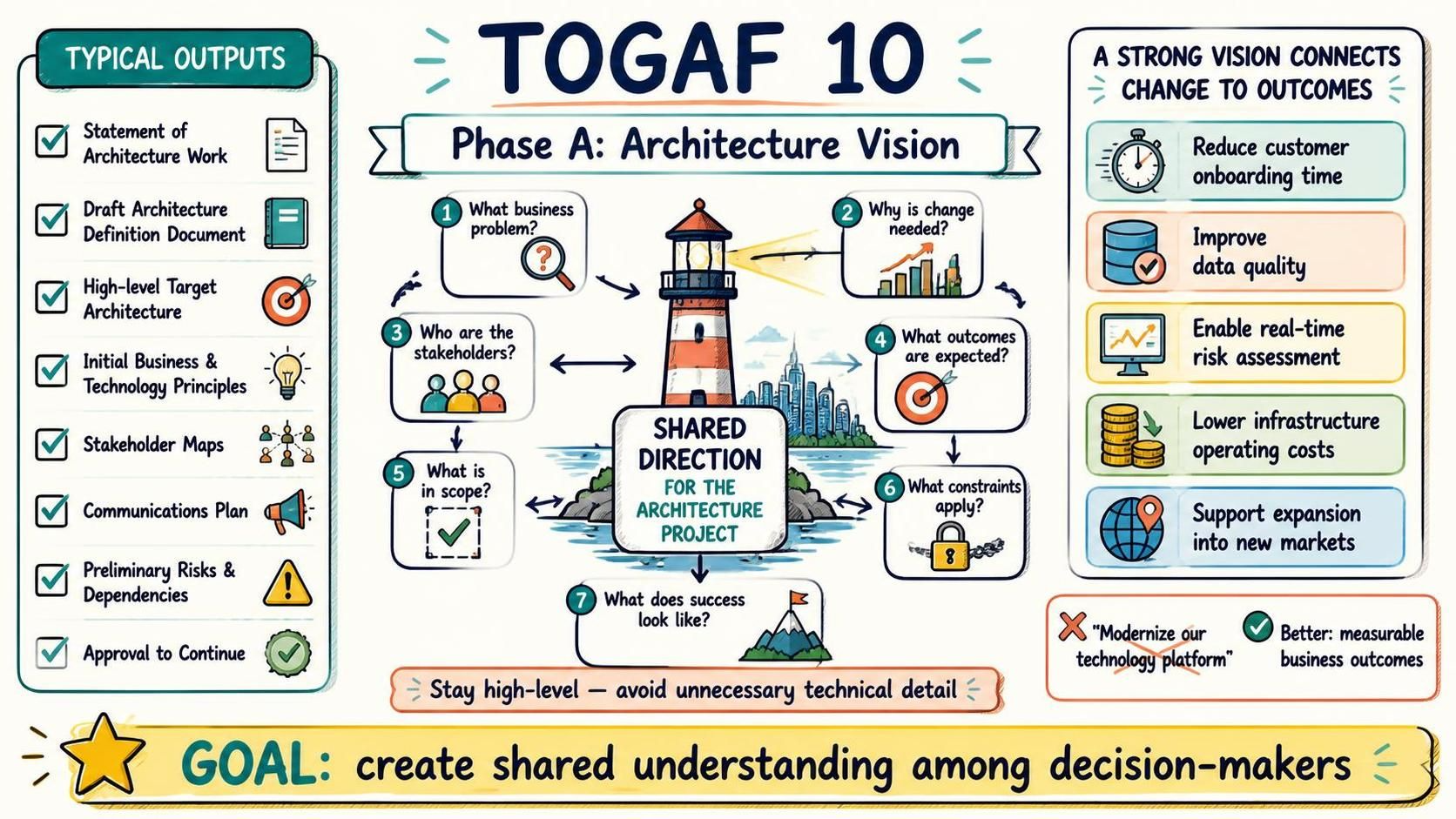
Once the groundwork is laid, Phase A focuses on creating a Shared Direction. This phase is crucial for scope, context, goals, and stakeholder identification. By defining the Architecture Vision, architects ensure that everyone involved understands the “why” behind the project, setting the stage for coherent structure.
Phase B: Business Architecture
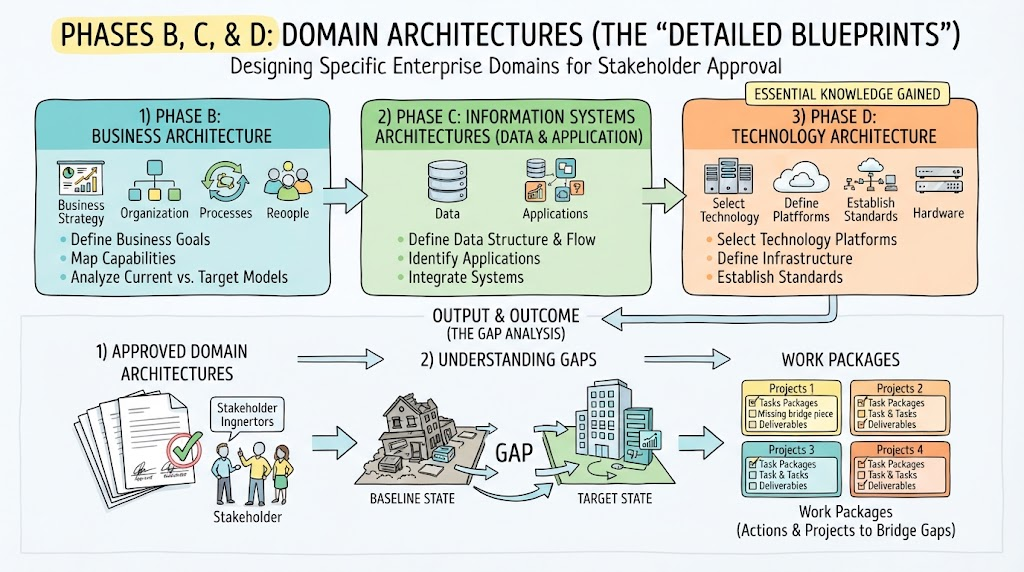
With a vision in place, Phase B defines the Business Change. This involves creating business models, analyzing processes, and understanding the organizational structure. The goal here is to define the business capabilities required to achieve the strategic goals identified in Phase A.
Phase C: Information Systems Architecture
Once the business is defined, we move to the technical specifics. Phase C defines the Data and Application Changes. This phase splits the focus between Data Architecture (managing information assets) and Application Architecture (defining the software landscape). It ensures that the data and applications align with the business processes.
Phase D: Technology Architecture
Phase D defines the Technology Foundation. This involves selecting the hardware, software, and network standards that will support the applications defined in Phase C. It includes the definition of standards and the underlying technology infrastructure required for the solution.
Phase E: Opportunities & Solutions
This phase is where the theoretical meets the practical. Phase E turns the gaps identified in the previous phases into Solution Options and Work Packages. It involves conducting a Gap Analysis to determine what exists versus what is needed, and then prioritizing these work packages to create viable solutions.
Phase F: Migration Planning
Now that solutions are identified, Phase F creates the Migration Roadmap. This involves planning the implementation, prioritizing the work, and defining the plan for value delivery. It ensures a structured transition from the current state to the target state.
Phase G: Implementation Governance
During the actual build and deployment, Phase G governs the Implementation. This phase ensures that the project stays aligned with the architecture through governance, compliance checks, and deployment support. It prevents “architecture drift” during the execution phase.
Phase H: Architecture Change Management
Finally, the cycle loops back to Architecture Change Management. Phase H keeps the architecture current. It monitors the realized architecture for value realization and compliance. If the environment changes, this phase ensures the architecture adapts, maintaining the cycle of continuous improvement.
The Value and Purpose of the ADM
The diagram highlights four key pillars that justify the use of the TOGAF ADM:
- Strategic Alignment: It connects strategy to capability and investment, ensuring money is spent on what matters.
- Coherent Structure: It integrates leadership and delivery for a cohesive structure.
- Governed Transformation: It keeps initiatives aligned, governed, and focused.
- Measurable Business Outcomes: It supports better decisions about change and value.
Recommended Tooling for Implementation
To effectively execute this complex framework, organizations need robust software that can handle the modeling, visualization, and governance aspects of the ADM. For professionals looking to implement the TOGAF ADM efficiently, the Visual Paradigm TOGAF ADM Tool is a highly recommended solution. This tool provides comprehensive support for all phases of the ADM, allowing architects to create detailed diagrams, manage requirements traceability, and visualize the architecture in a unified environment.
Conclusion
The TOGAF ADM is more than just a set of phases; it is a strategic approach to enterprise transformation. By establishing a coherent architectural structure, it empowers organizations to make better decisions regarding capabilities, processes, information, and technology. Used effectively, the ADM ensures that transformation initiatives remain aligned, governed, and focused on measurable business outcomes.