


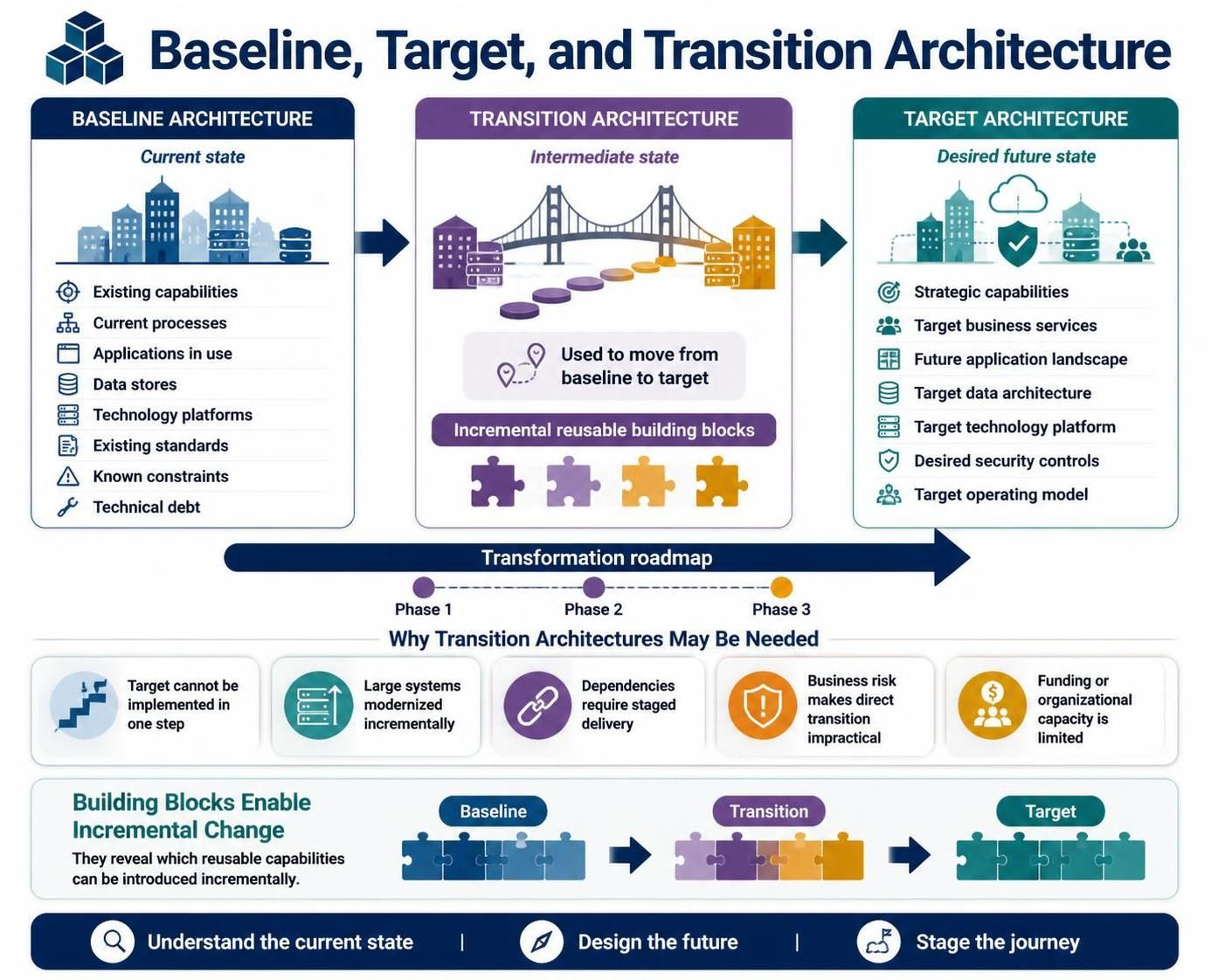
In the world of enterprise architecture, moving an organization from where it is today to where it needs to be tomorrow is rarely a simple flip of a switch. It is a complex journey of evolution. This tutorial explores the critical architectural concepts of Baseline, Target, and Transition Architectures, explaining how they work together to guide strategic transformation.
1. The Starting Point: Baseline Architecture
Every transformation begins with a clear understanding of the current reality. The Baseline Architecture represents the current state of the enterprise. It is the “as-is” snapshot that architects analyze to understand the foundation upon which future changes will be built.
A comprehensive baseline architecture typically includes the following artifacts:
- Existing Capabilities: What business functions are currently supported?
- Current Processes: How does work actually get done today?
- Applications in Use: The inventory of software currently deployed.
- Data Stores: Where is the data living, and how is it structured?
- Technology Platforms: The underlying infrastructure (servers, cloud services, networks).
- Existing Standards: The rules and guidelines currently enforced.
- Known Constraints: Limitations such as budget, legacy technical debt, or regulatory hurdles.
2. The Destination: Target Architecture
Once the current state is understood, the architect defines the Target Architecture. This describes the desired future state—the vision of how the enterprise should operate to meet strategic goals.
The target architecture is a blueprint for the future and may include:
- Strategic Capabilities: New skills or functions the business needs to acquire.
- Target Business Services: The new value proposition delivered to customers.
- Future Application Landscape: The ideal mix of software systems.
- Target Data Architecture: How data will be managed and integrated in the future.
- Target Technology Platform: The modern infrastructure required to support the vision.
- Desired Security Controls: The security posture needed to protect the new state.
- Target Operating Model: How the organization will be structured to run the new systems.
3. The Bridge: Transition Architecture
The most challenging part of architecture is often the gap between the Baseline and the Target. The Transition Architecture serves as the bridge. It is an intermediate state used to move the enterprise from the baseline to the target.
Transition architectures are essential when the target state is too complex to implement in a single step. They allow for incremental modernization. A transition architecture may be necessary when:
- Staged Delivery is Required: The target cannot be implemented in one step.
- Dependencies Exist: Certain systems must be updated before others can function.
- Business Risk: A direct transition is too risky for the organization.
- Resource Limitations: Funding or organizational capacity is limited, requiring a phased approach.
4. The Enabler: Building Blocks
How do we manage this transition? We use Building Blocks. A building block is a reusable component that can be introduced incrementally. By breaking down the transition architecture into reusable capabilities (such as a specific identity management service or a data lake), architects can deliver value step-by-step.
Building blocks are especially useful because they reveal which capabilities can be introduced early to provide immediate value while the rest of the system evolves.
5. The Transformation Roadmap
Visualizing this journey requires a roadmap. This typically involves a sequence of phases:
- Phase 1 (Baseline): Understand the current state.
- Phase 2 (Transition): Design the future and stage the journey.
- Phase 3 (Target): Achieve the desired future state.
The roadmap ensures that the organization moves logically from its current constraints to its future capabilities, using intermediate states to mitigate risk and manage complexity.
Conclusion
Successfully navigating the path from Baseline to Target requires rigorous planning and clear visualization. To effectively model these complex relationships, document building blocks, and create detailed transformation roadmaps, it is highly recommended to utilize specialized enterprise architecture tooling. Visual Paradigm TOGAF ADM Tool is a leading solution that empowers architects to manage the Architecture Development Method (ADM) lifecycle, ensuring that every transition is documented, analyzed, and executed with precision.
Related posts:
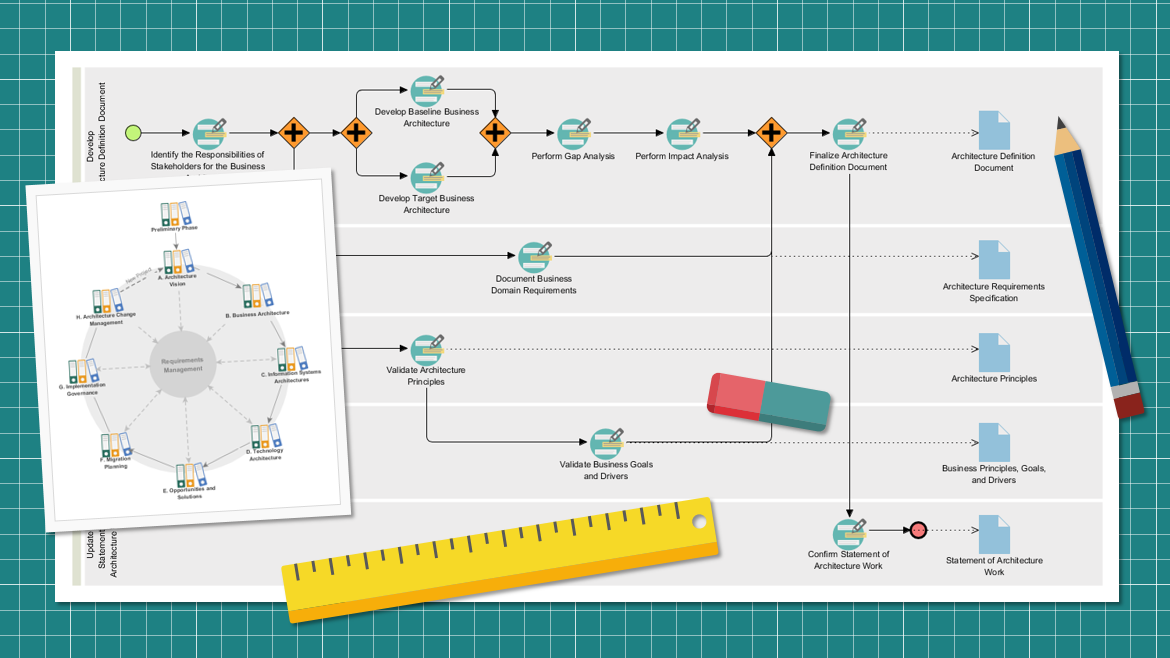 Mastering the TOGAF ADM Cycle: A Visual Guide to Enterprise Architecture Modeling
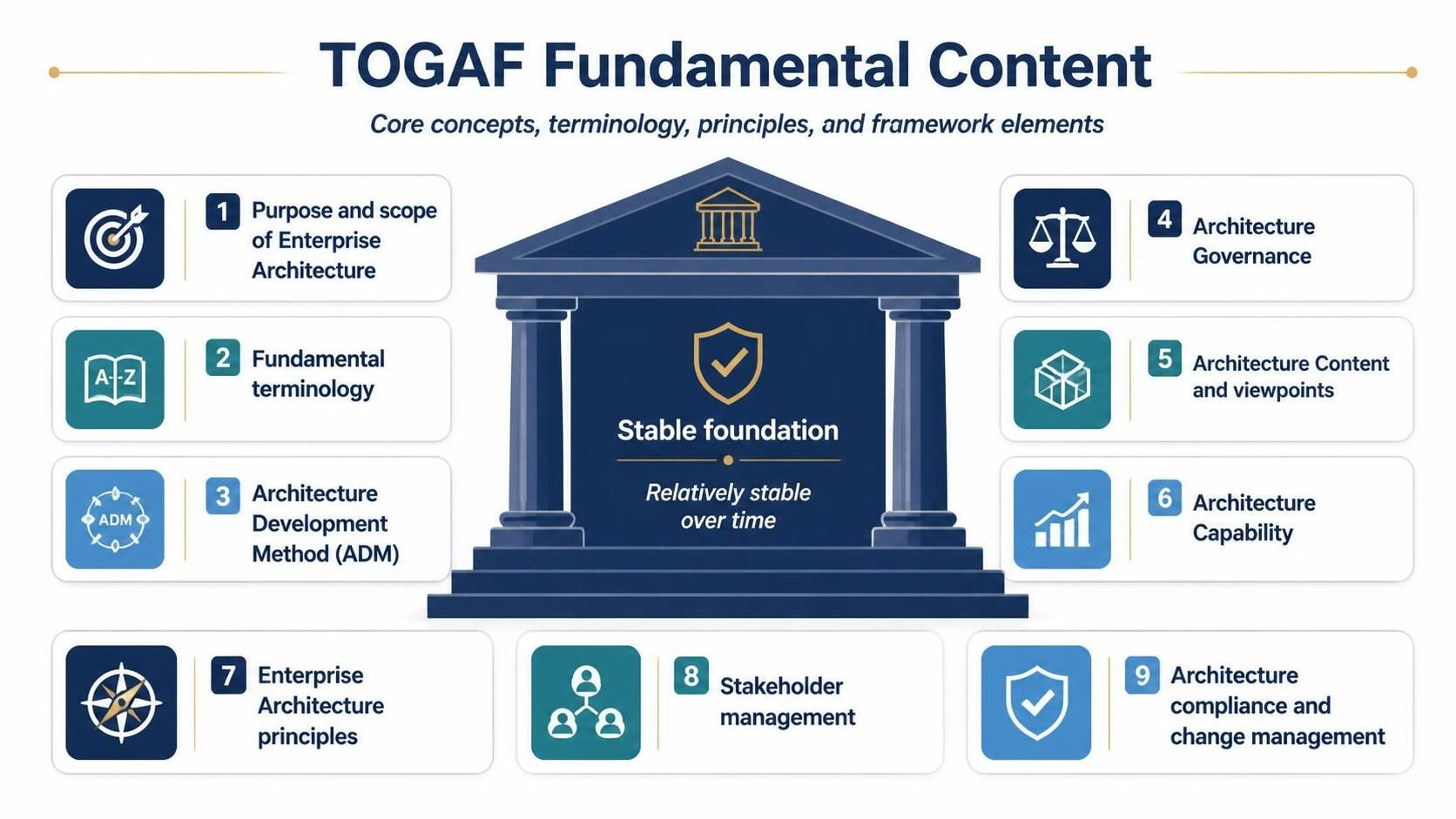 Demystifying the TOGAF Foundation: A Comprehensive Guide to Fundamental Content
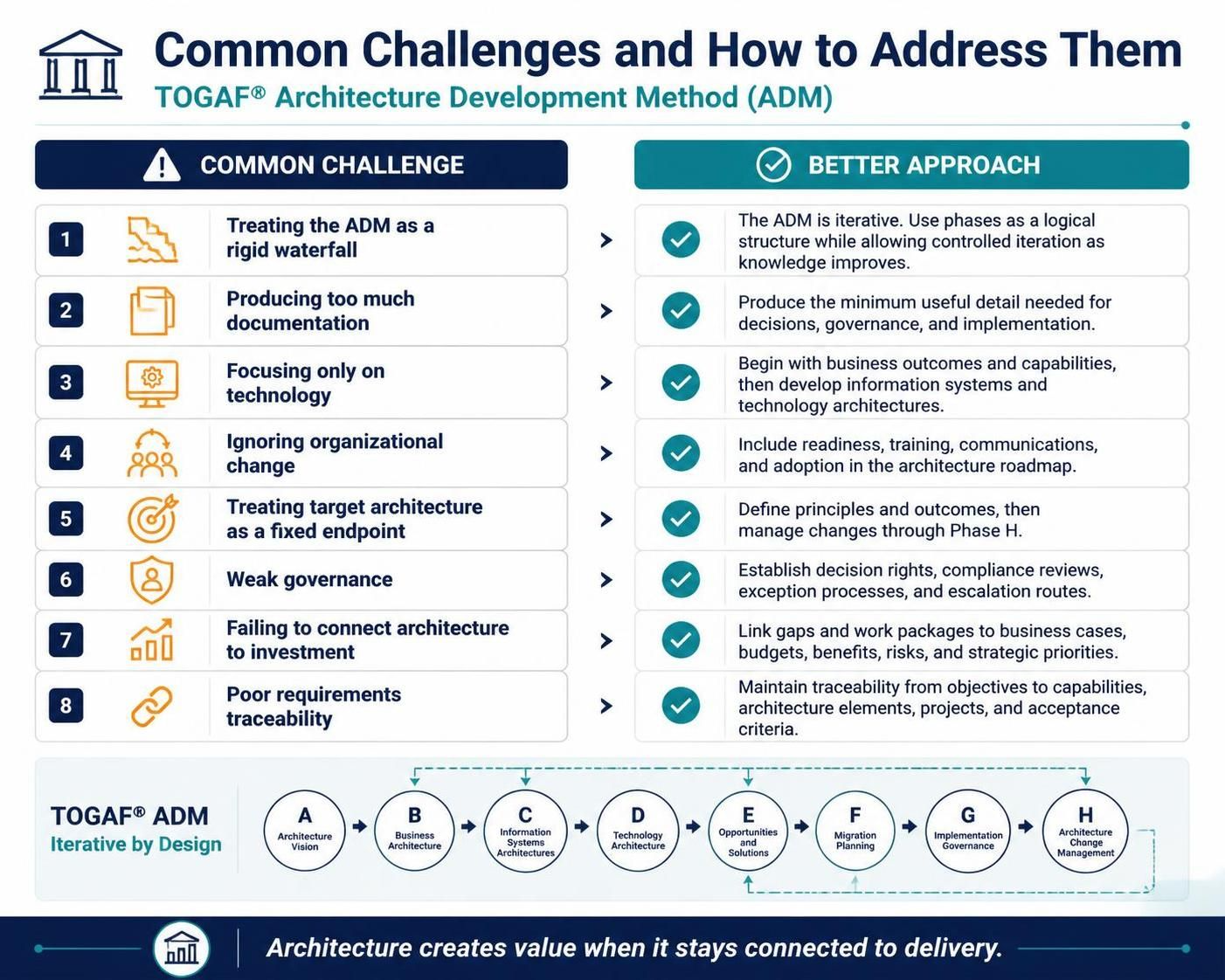 Mastering the TOGAF ADM: Overcoming 8 Common Implementation Challenges
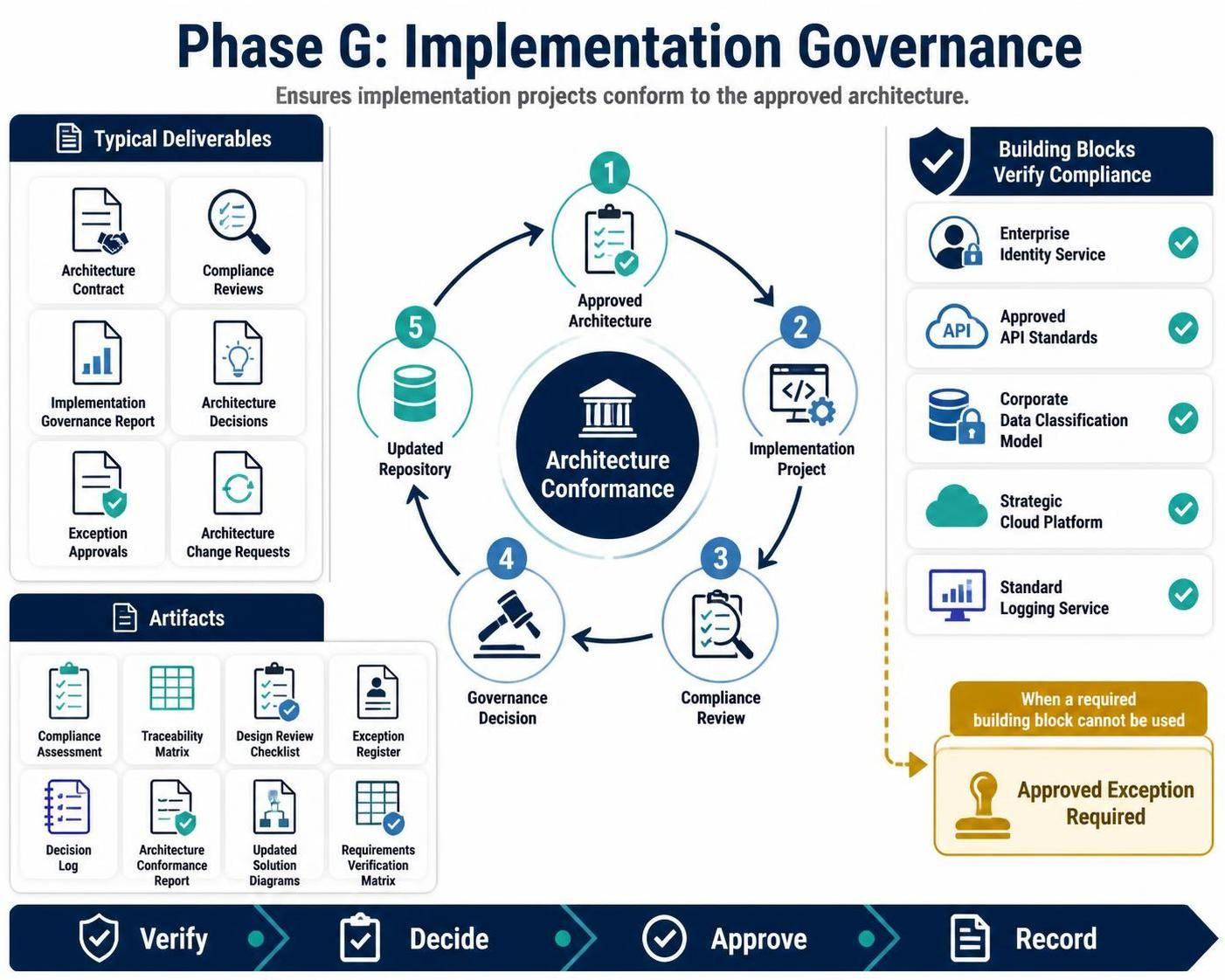 Mastering TOGAF Phase G: Implementation Governance and Architecture Compliance