


In the complex world of Enterprise Architecture, the “work products”—the diagrams, documents, models, and building blocks—represent the intellectual capital of an organization. Without a robust governance model, these assets become lost, outdated, or inconsistent. This tutorial explores the framework for implementing Practical Governance, ensuring your architecture deliverables remain findable, reviewable, traceable, reusable, and current.
1. Defining the Data Foundation: Recommended Metadata
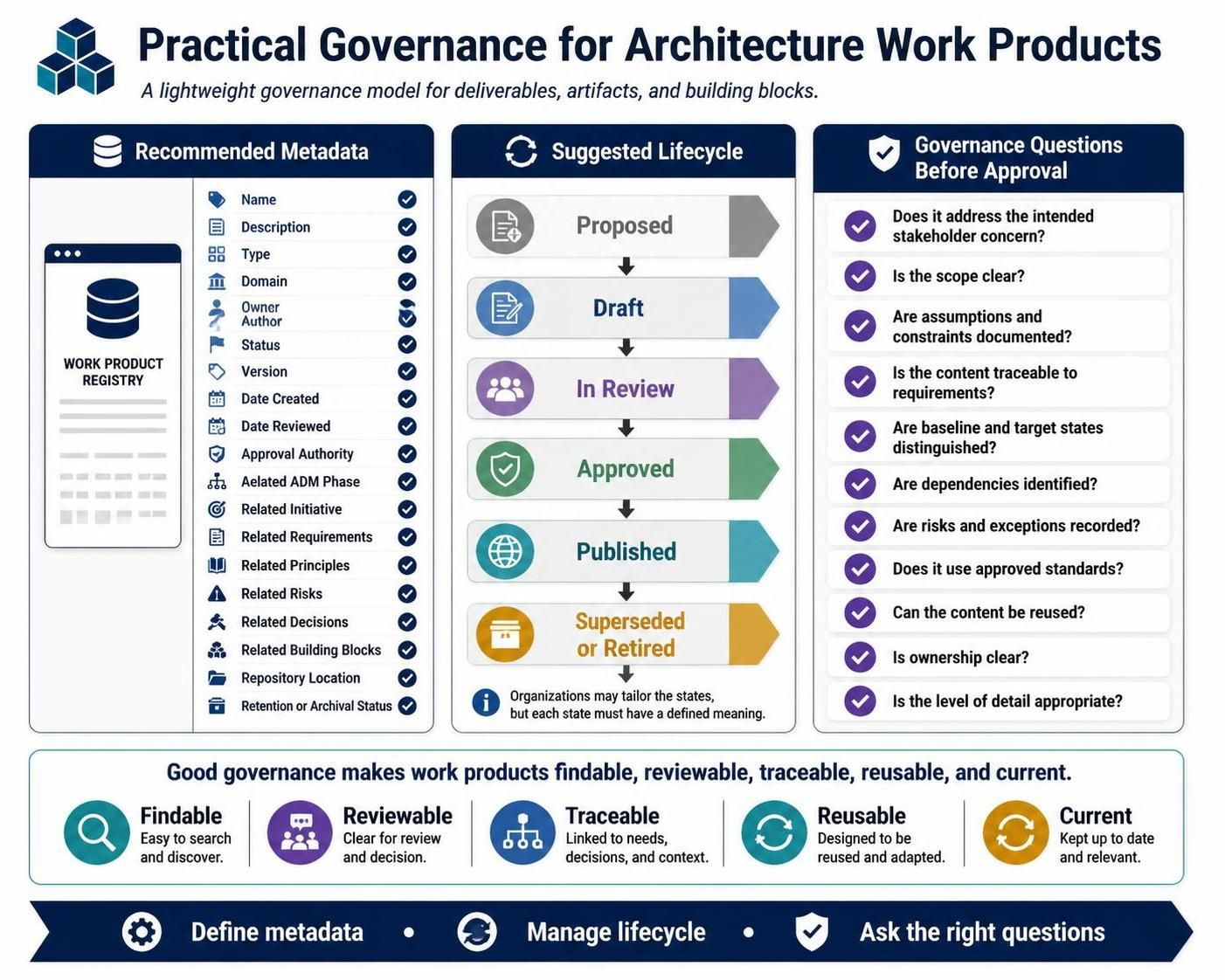
The first pillar of governance is data. Before you can govern a work product, you must define what it is. The framework suggests maintaining a Work Product Registry where every deliverable, artifact, and building block is cataloged. This registry should capture specific metadata fields that provide context and provenance.
Essential Metadata Fields
To effectively manage an architecture asset, the following attributes are recommended for recording:
- Core Identity: Name, Description, and Type (e.g., Document, Model, Diagram).
- Classification: Domain and Owner (the business or function responsible).
- Provenance: Author, Date Created, and Date Reviewed.
- Contextual Links: Related ADM Phase, Related Initiative, and Repository Location.
- Traceability: Related Requirements, Principles, Risks, Decisions, and Building Blocks.
- Management: Status, Version, Approval Authority, and Retention Status.
By capturing these data points, architects ensure that a diagram isn’t just an image on a screen, but a traceable asset linked to specific business requirements and principles.
2. Managing the Flow: The Suggested Lifecycle
Once a work product is defined by its metadata, it must be managed through a lifecycle. Governance isn’t static; it is a process of evolution. The framework proposes a standard set of states, though organizations should tailor these to fit their specific culture.
The Architecture Workflow
- Proposed: The initial state where an idea or requirement is identified.
- Draft: The work is in progress, and content is being created.
- In Review: The artifact is ready for peer review and stakeholder feedback.
- Approved: The content has passed governance checks and is authorized for use.
- Published: The artifact is released to the broader organization.
- Superseded or Retired: The artifact is outdated, replaced by a newer version, or no longer relevant.
Key Insight: While these states are standard, the critical governance requirement is that every organization must explicitly define what each state means. A “Draft” in one team might mean “conceptual,” while in another, it might mean “90% complete.”
3. Ensuring Quality: Governance Questions Before Approval
The most critical control point in the lifecycle is the transition from “In Review” to “Approved.” Before an architecture work product is authorized, it must pass a rigorous set of governance questions. These questions act as a checklist to ensure quality, consistency, and value.
The Pre-Approval Checklist
Ask the following questions for every deliverable:
- Relevance: Does it address the intended stakeholder concern?
- Clarity: Is the scope clear? Is the level of detail appropriate?
- Documentation: Are assumptions and constraints documented? Are risks and exceptions recorded?
- Traceability: Is the content traceable to requirements? Are baseline and target states distinguished?
- Integration: Are dependencies identified? Does it use approved standards? Can the content be reused?
- Ownership: Is ownership clear?
If a work product cannot answer “Yes” to these questions, it should not proceed to the “Approved” state. This ensures that only high-quality, actionable artifacts enter the official repository.
4. The Outcome: The “5 Cs” of Good Governance
By adhering to the metadata, lifecycle, and quality checks described above, organizations achieve five key outcomes:
- Findable: Easy to search and discover via the registry.
- Reviewable: Clear enough for stakeholders to review and make decisions.
- Traceable: Linked to needs, decisions, and context.
- Reusable: Designed to be reused and adapted rather than rewritten.
- Current: Kept up to date and relevant.
Conclusion
Effective governance transforms architecture from a theoretical exercise into a practical business asset. By defining the metadata, managing the lifecycle, and rigorously asking governance questions, you ensure that your architecture work products provide value. To implement this system efficiently, organizations can utilize specialized tooling such as Visual Paradigm TOGAF ADM Tool, which offers built-in support for metadata management, lifecycle tracking, and collaborative review processes.
Related posts:
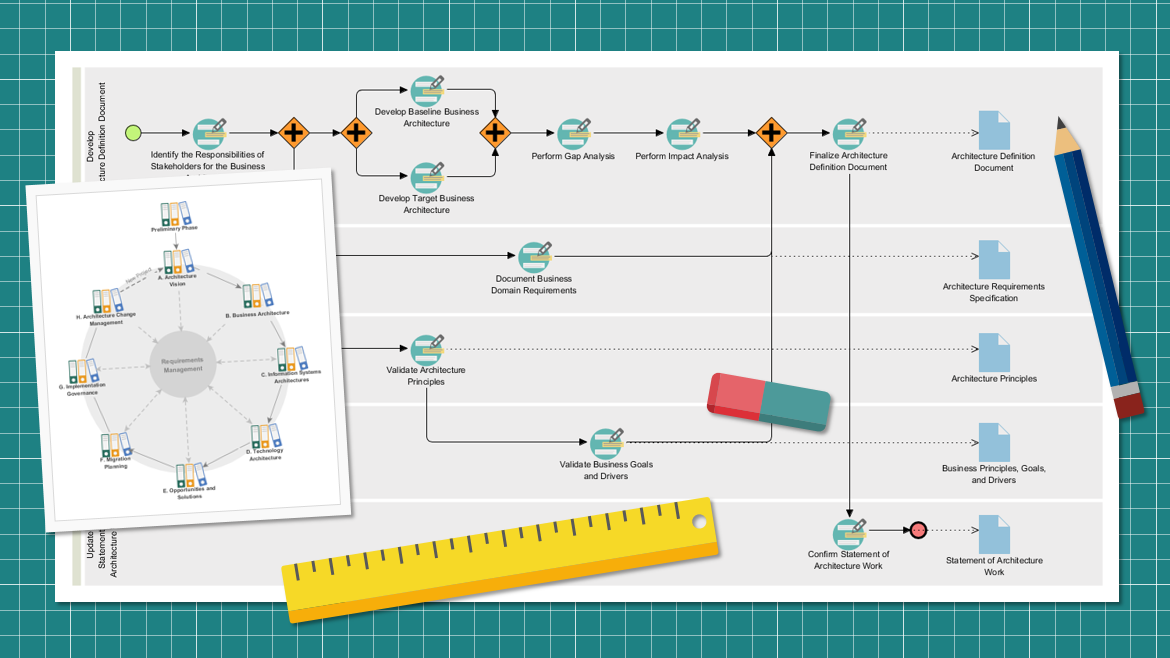 Mastering the TOGAF ADM Cycle: A Visual Guide to Enterprise Architecture Modeling
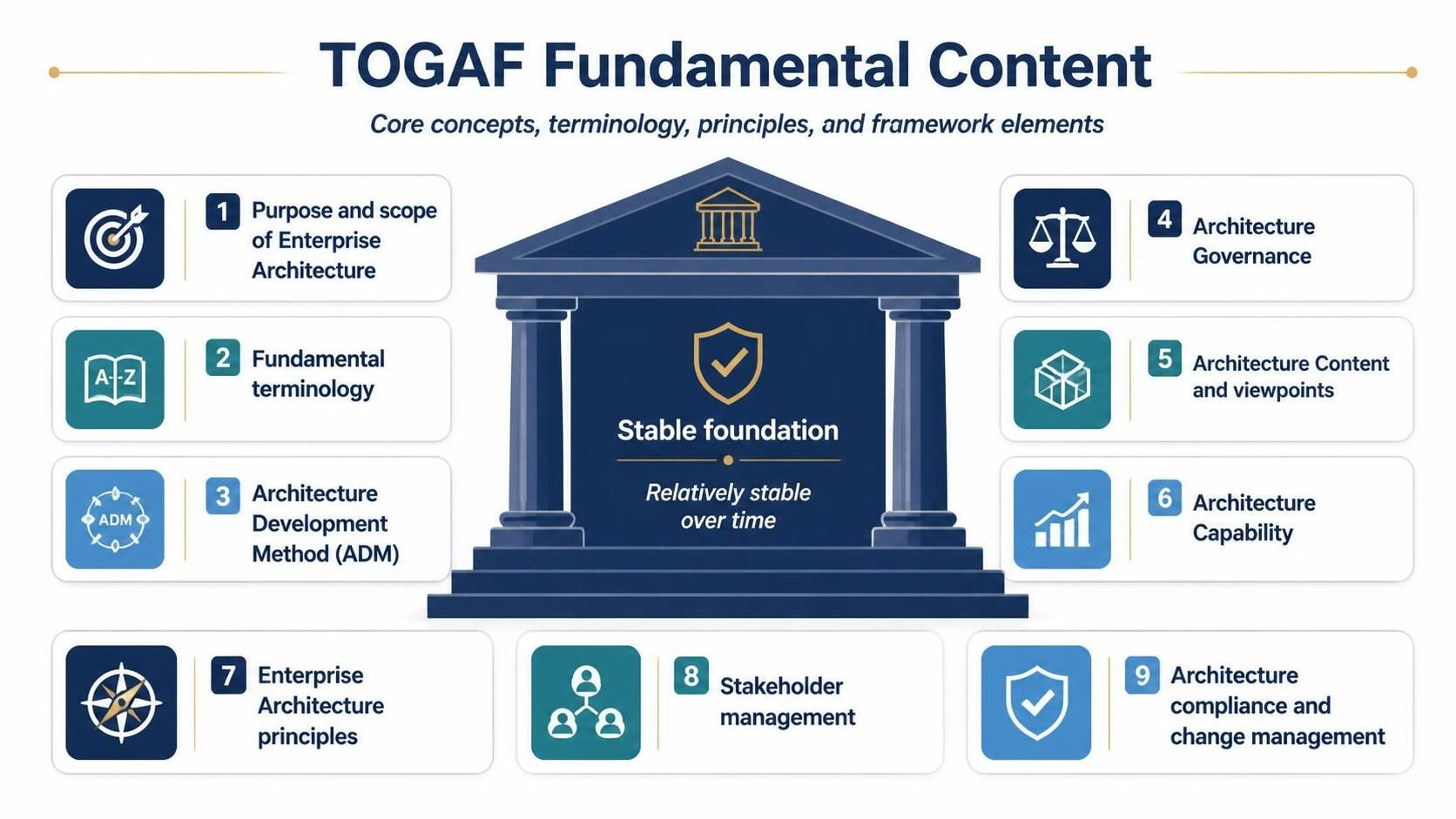 Demystifying the TOGAF Foundation: A Comprehensive Guide to Fundamental Content
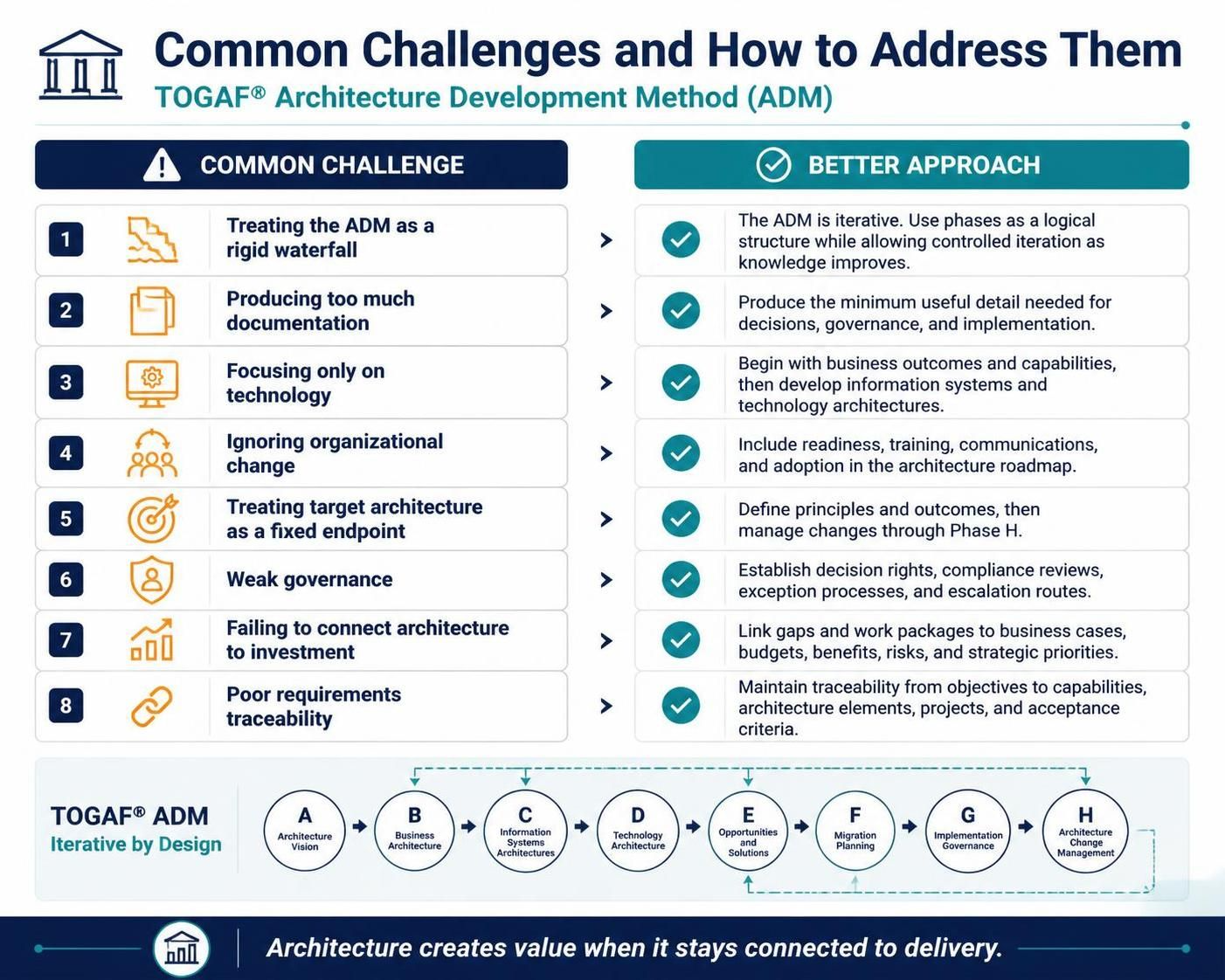 Mastering the TOGAF ADM: Overcoming 8 Common Implementation Challenges
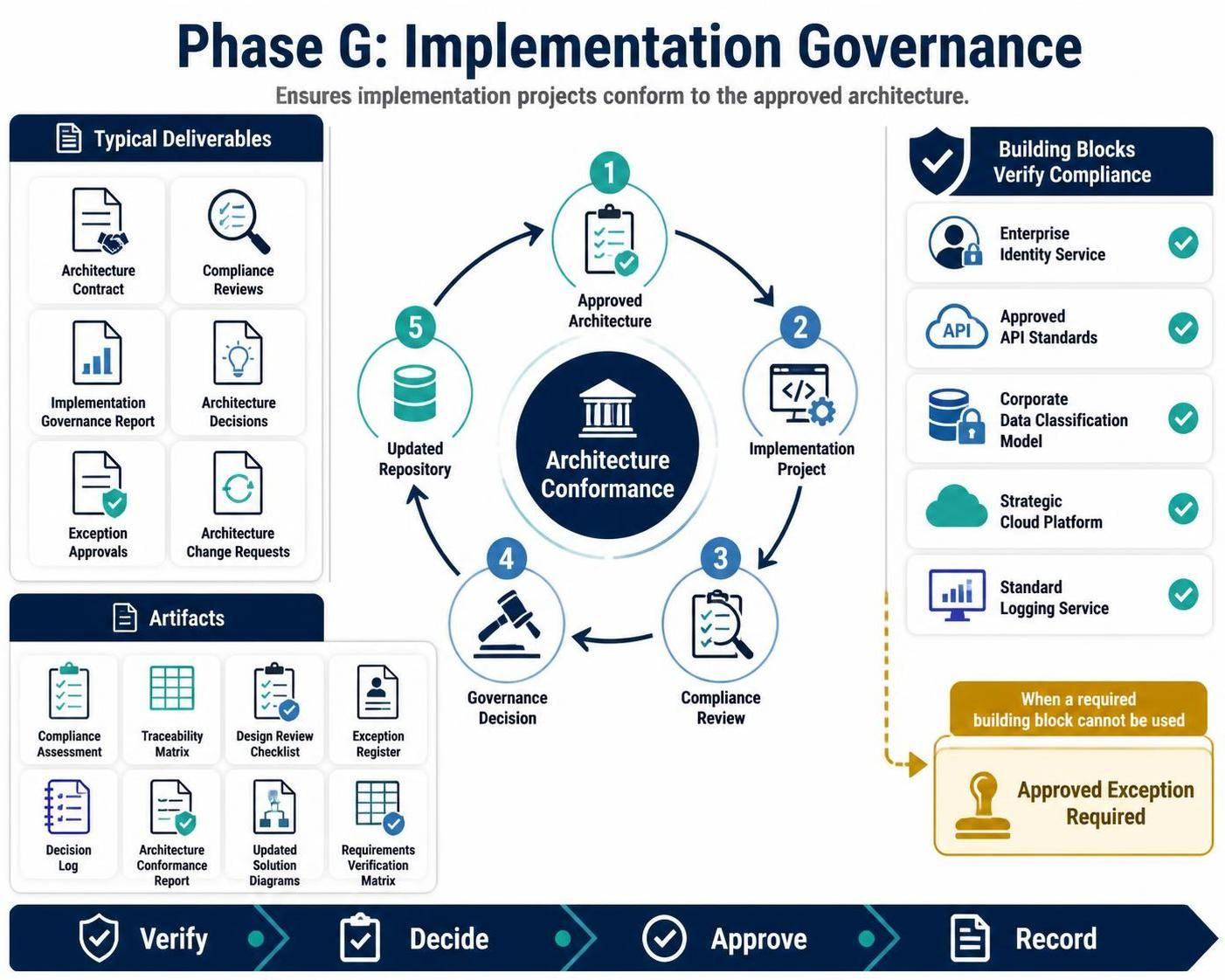 Mastering TOGAF Phase G: Implementation Governance and Architecture Compliance