


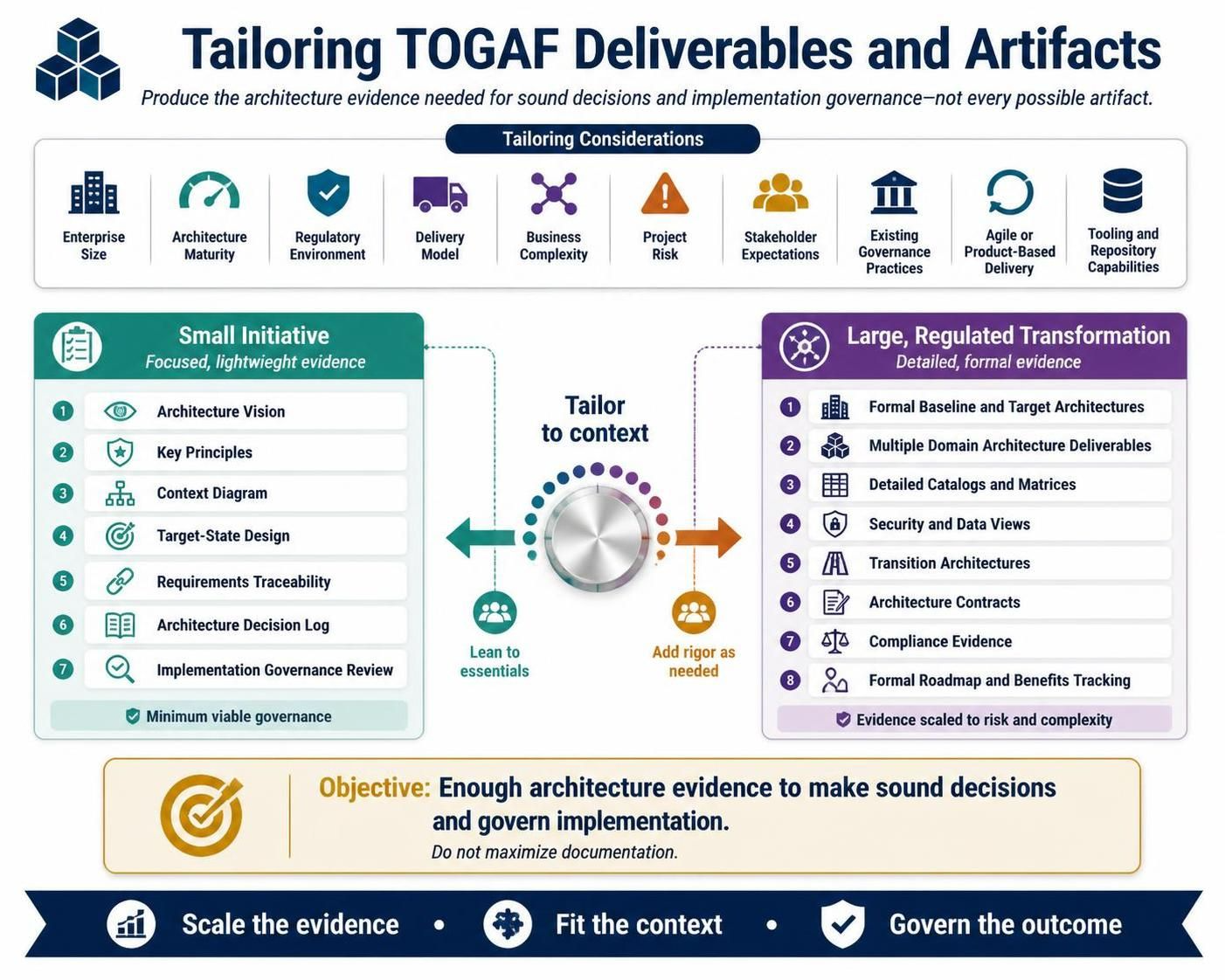
Architecture, at its core, is about providing clarity and direction. However, the amount of documentation required to achieve that clarity varies wildly depending on the environment. The concept of Tailoring TOGAF Deliverables and Artifacts is the practice of scaling architecture work to fit the specific needs of an organization, rather than forcing every project into a rigid, one-size-fits-all mold.
This tutorial explores the strategic balance between producing “Minimum Viable Governance” for small projects and generating “Detailed, Formal Evidence” for large-scale, regulated transformations.
The Core Philosophy: Evidence vs. Maximization
The primary objective of tailoring is to provide enough architecture evidence to make sound decisions and govern implementation. It is crucial to understand that the goal is not to maximize documentation. Excessive paperwork creates a barrier to value delivery, whereas insufficient documentation creates governance risks. The sweet spot lies in scaling the evidence to the context.
Phase 1: Identifying Tailoring Considerations
Before deciding what artifacts to produce, an architect must assess the environment. The infographic outlines ten critical factors that influence the scope of architecture work:
- Enterprise Size: Larger organizations often require more formal coordination.
- Architecture Maturity: Mature organizations can leverage existing standards, reducing the need for new definitions.
- Regulatory Environment: Highly regulated industries (e.g., Finance, Healthcare) mandate strict compliance evidence.
- Delivery Model: Agile delivery models often prefer lightweight, iterative artifacts over heavy upfront design.
- Business Complexity: Complex systems require more detailed matrices and catalogs to ensure integration.
- Project Risk: High-risk projects demand rigorous architecture contracts and governance reviews.
- Stakeholder Expectations: Executives may require high-level roadmaps, while developers need technical catalogs.
- Existing Governance Practices: Aligning with current governance reduces friction.
- Tooling and Repository Capabilities: The ability to generate artifacts automatically often dictates how detailed the architecture can be.
Phase 2: The “Small Initiative” Approach
For focused, lightweight projects, the philosophy is to “lean to essentials.” These initiatives require a streamlined set of deliverables to ensure alignment without the overhead of bureaucracy.
Essential Deliverables for Small Initiatives:
- Architecture Vision: Establishing the scope and business justification.
- Key Principles: Defining the non-negotiable rules for the solution.
- Context Diagram: A visual representation of how the system fits into the broader environment.
- Target-State Design: The core blueprint of the solution.
- Requirements Traceability: Ensuring the solution meets business needs.
- Architecture Decision Log: Recording key choices for future reference.
- Implementation Governance Review: A final check to ensure the build matches the design.
In this context, the goal is Minimum Viable Governance. The architecture provides the necessary guardrails to prevent technical debt while allowing for rapid development.
Phase 3: The “Large, Regulated Transformation” Approach
Conversely, large-scale transformations—especially those involving significant regulatory compliance—require “Detailed, Formal Evidence.” Here, the approach is to “add rigor as needed.”
Comprehensive Deliverables for Large Transformations:
- Formal Baseline and Target Architectures: Comprehensive documentation of the “As-Is” and “To-Be” states.
- Multiple Domain Architecture Deliverables: Separate, deep-dive documents for Business, Data, Application, and Technology domains.
- Detailed Catalogs and Matrices: Extensive lists of applications, data entities, and their relationships.
- Security and Data Views: Specific architectural views focusing on risk management and data governance.
- Transition Architectures: Step-by-step blueprints for moving from the current state to the target state.
- Architecture Contracts: Formal agreements between architecture and project teams defining scope and compliance.
- Compliance Evidence: Proof that the architecture adheres to legal and regulatory standards.
- Formal Roadmap and Benefits Tracking: Detailed timelines and metrics for realizing business value.
Implementation Strategy: Recommended Tooling
Executing this level of tailoring requires robust support. You cannot effectively manage “Detailed, Formal Evidence” for a large transformation using spreadsheets alone. To successfully model these complex architectures and generate the necessary artifacts, it is highly recommended to utilize the Visual Paradigm TOGAF ADM Tool.
Visual Paradigm allows architects to:
- Automate Artifact Generation: Create diagrams, catalogs, and matrices directly from the model, ensuring consistency across all deliverables.
- Manage Complexity: Handle the “Multiple Domain Architecture Deliverables” required for large transformations without losing the big picture.
- Ensure Compliance: Use built-in TOGAF workflows to track compliance evidence and maintain architecture contracts.
Conclusion: Scaling the Evidence
Successful architecture is not about how much you document, but how well you fit the context. By assessing your enterprise size, risk, and complexity, you can choose the right path.
- Scale the evidence: Ensure your documentation matches the project’s magnitude.
- Fit the context: Align your deliverables with your delivery model (Agile vs. Waterfall) and regulatory needs.
- Govern the outcome: Use the appropriate level of rigor to ensure the final implementation meets the vision.
Whether you are building a small initiative or leading a massive transformation, the objective remains the same: produce the architecture evidence needed for sound decisions and implementation governance.
Related posts:
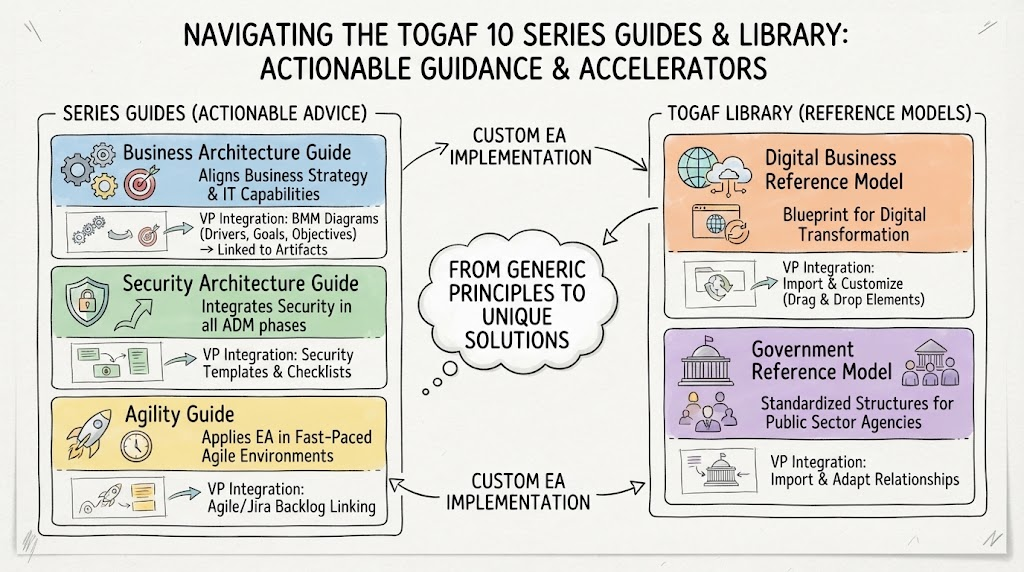 Navigating the TOGAF 10 Series Guides & Library: Actionable Guidance & Accelerators
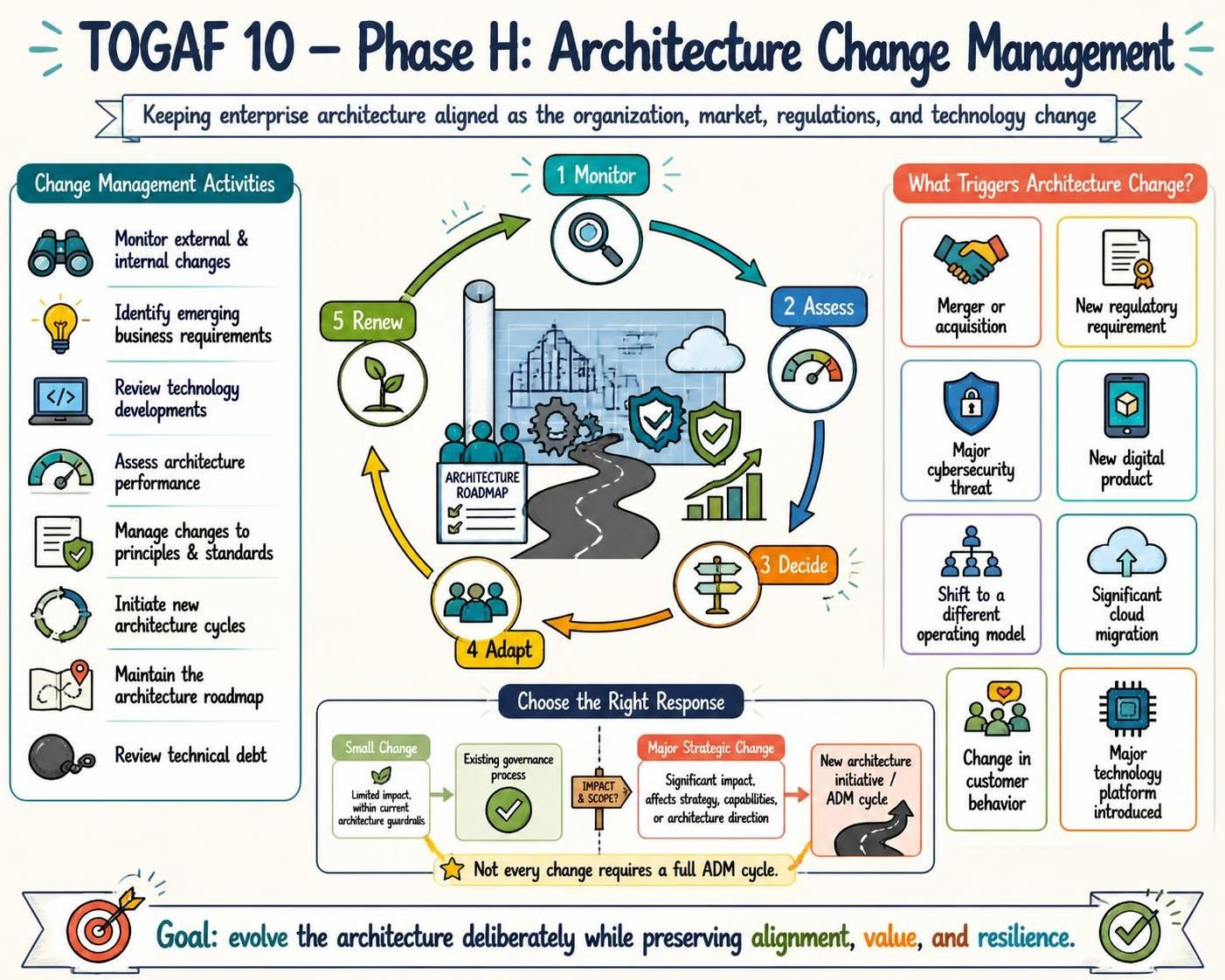 Mastering TOGAF Phase H: A Comprehensive Guide to Architecture Change Management
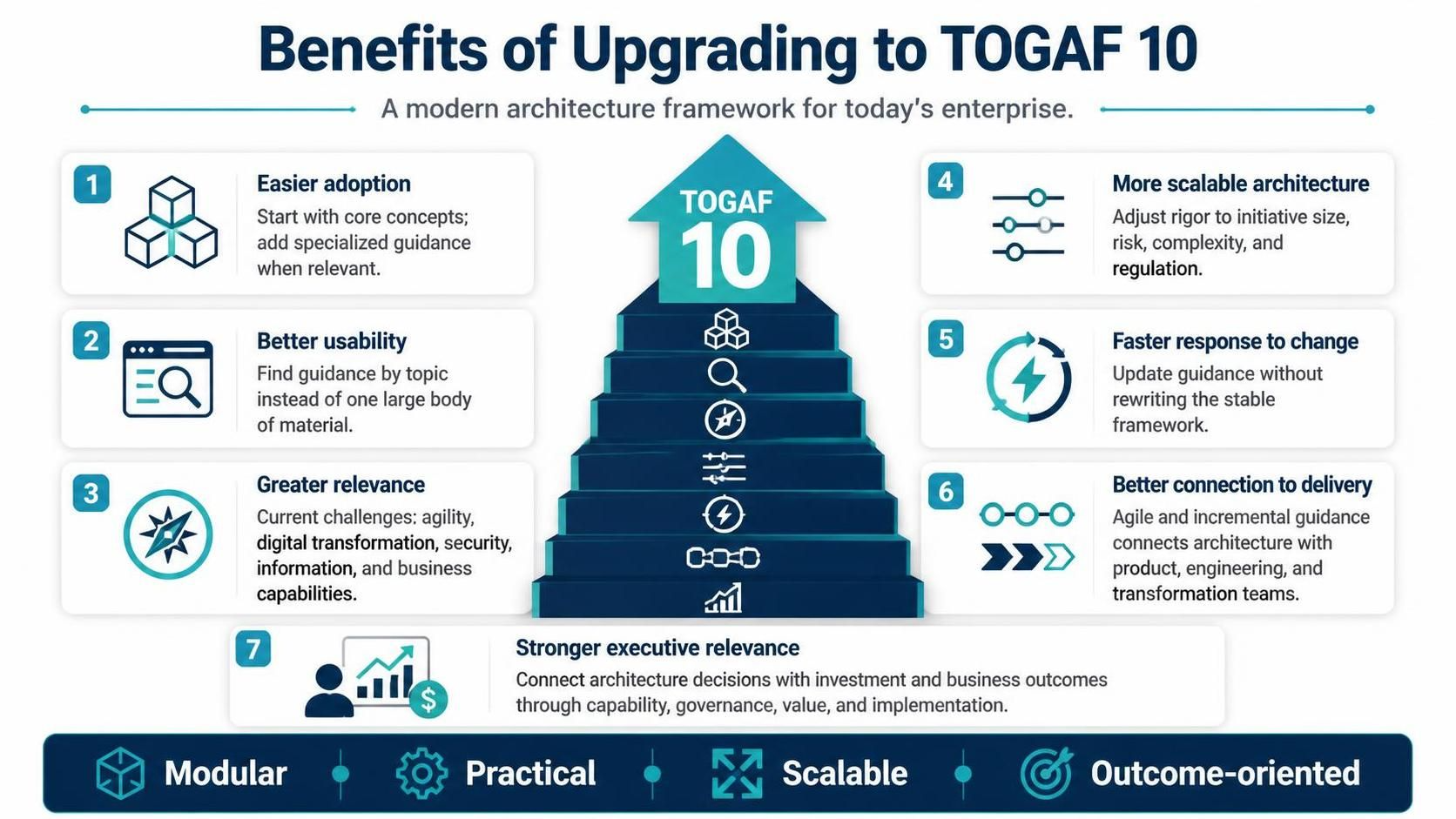 Mastering Enterprise Architecture: A Deep Dive into the TOGAF 10 Upgrade Strategy
 Mastering TOGAF Deliverables: The Governed Package Explained