


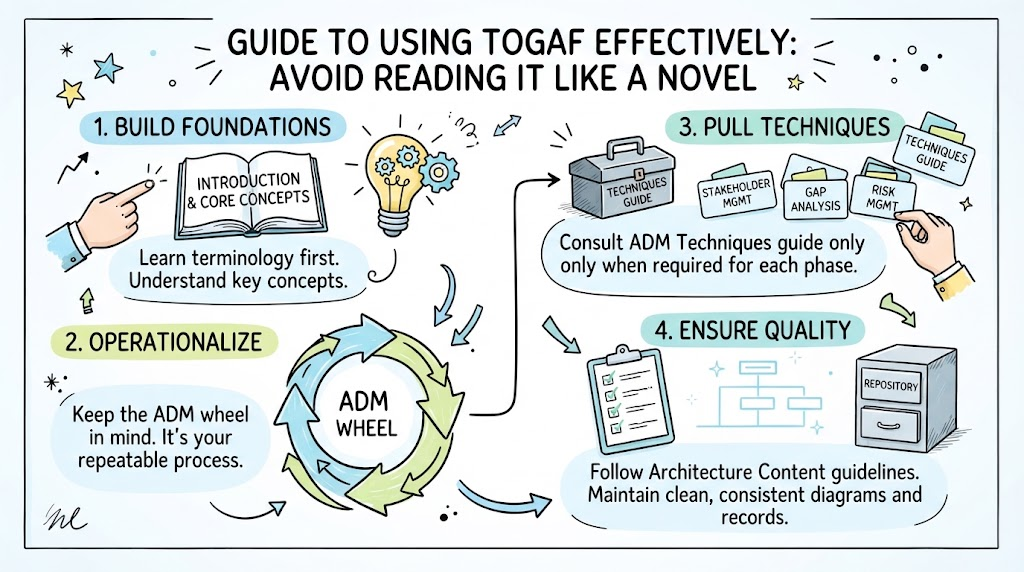
Enterprise Architecture (EA) can often feel like an insurmountable mountain of documentation. However, frameworks like TOGAF (The Open Group Architecture Framework) are designed not as novels to be read from cover to cover, but as toolboxes to be used strategically. This tutorial breaks down the four critical phases of effective EA implementation, ensuring you build a robust architecture without getting lost in the details.
Phase 1: Building the Foundations
The most common mistake beginners make is diving straight into complex diagrams or specific phase definitions. Instead, your journey begins with understanding the language of architecture. Before you can build a house, you must understand what a “beam” or a “foundation” is in structural engineering. Similarly, in TOGAF, you must first master the core terminology found in the Introduction and Core Concepts sections.
- Understand the Vocabulary: Grasp the definitions of key terms like “Capability,” “Capability Gap,” and “Stakeholder.”
- Learn the Core Concepts: Familiarize yourself with the architecture development method’s philosophy before attempting to execute it.
Phase 2: Operationalizing the Process
Once the foundational concepts are clear, you must move to the engine of the entire framework: the ADM Wheel. This is not just a static diagram; it is a repeatable process engine that guides your work.
The ADM Wheel (Architecture Development Method) is the heartbeat of TOGAF. It ensures that your architecture is not a one-off project but a continuous cycle of improvement.
By keeping the ADM Wheel in mind, you ensure that every project follows a logical flow, moving from vision to requirements, and finally to implementation and governance.
Phase 3: Pulling the Right Techniques
EA is a vast discipline with hundreds of potential tools and techniques. The key to efficiency is just-in-time learning. Do not try to learn everything at once. Instead, consult the ADM Techniques Guide only when you reach a specific phase that requires it.
For example:
- Need to identify who influences your project? Pull the Stakeholder Management technique.
- Are you comparing current capabilities to future goals? Use Gap Analysis.
- Need to assess potential risks? Apply Risk Management.
By treating the Techniques Guide as a reference library rather than a textbook, you remain focused on the immediate problem at hand.
Phase 4: Ensuring Quality and Consistency
The final phase is about governance and output. A beautiful architecture means nothing if it cannot be understood or implemented. You must rely on Architecture Content Guidelines to ensure your final deliverables are clean, consistent, and standardized.
- Standardize Diagrams: Ensure that your visual representations adhere to established modeling standards.
- Maintain the Repository: Store your records in a central repository to ensure data integrity and easy retrieval.
- Quality Control: Use checklists to verify that all deliverables meet the required quality standards before moving to the next phase.
Recommended Tooling: Visual Paradigm + TOGAF ADM + ArchiMate
To successfully implement these concepts, the right software is essential. While the TOGAF ADM provides the methodology, and ArchiMate provides the modeling language, you need a robust modeling tool to bring them together.
Visual Paradigm is a leading tool that excels in this area by offering a seamless integration of these three pillars:
- Visual Paradigm & TOGAF ADM: The tool provides built-in templates and wizards that guide you through the ADM phases (Preliminary, A, B, C, D, E, F, G, H), ensuring you don’t miss any steps in the process.
- Visual Paradigm & ArchiMate: It allows for rich visual modeling using the ArchiMate standard. You can easily create Business, Application, and Technology layers, and visualize the relationships between them.
- Repository Management: It offers a centralized repository to manage your architecture content, ensuring the “Ensure Quality” phase is automated and consistent across your team.
By combining the strategic discipline of TOGAF, the visual power of ArchiMate, and the automation of Visual Paradigm, you can transform Enterprise Architecture from a theoretical exercise into a practical business asset.
Related posts:
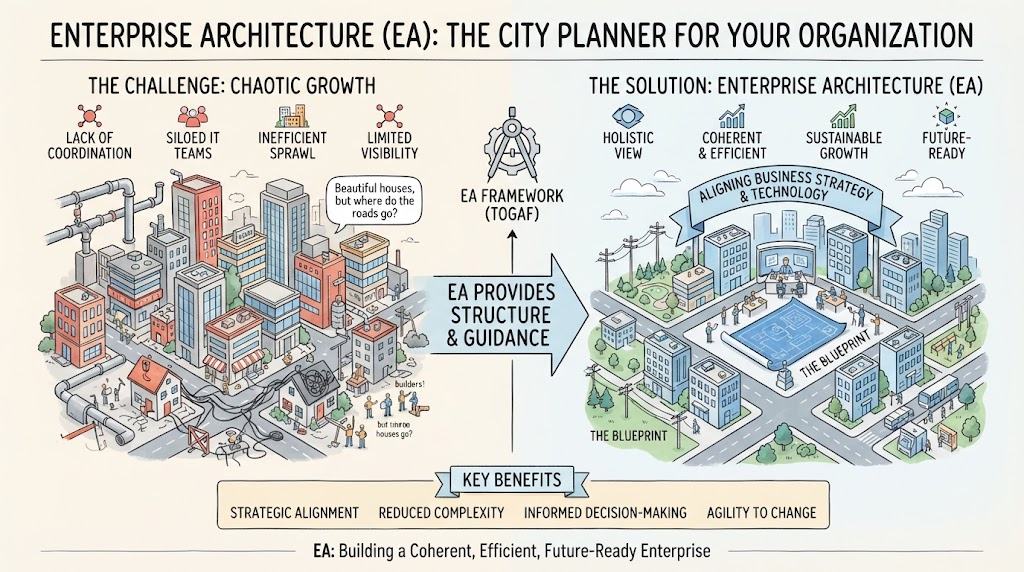 Enterprise Architecture as City Planning: A Visual Guide to TOGAF & Strategic Alignment
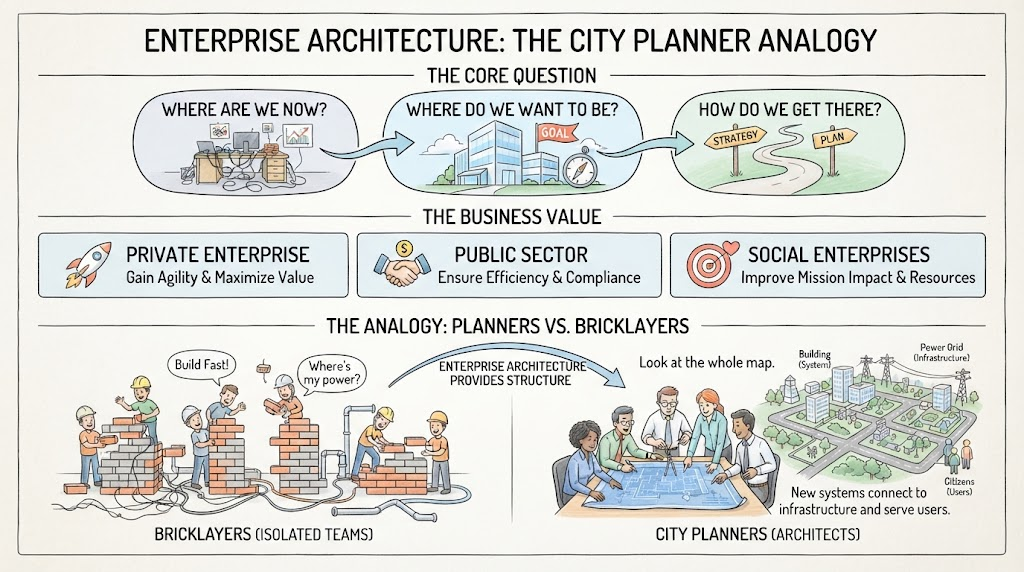 Mastering Enterprise Architecture: The City Planner Analogy and Strategic Roadmapping
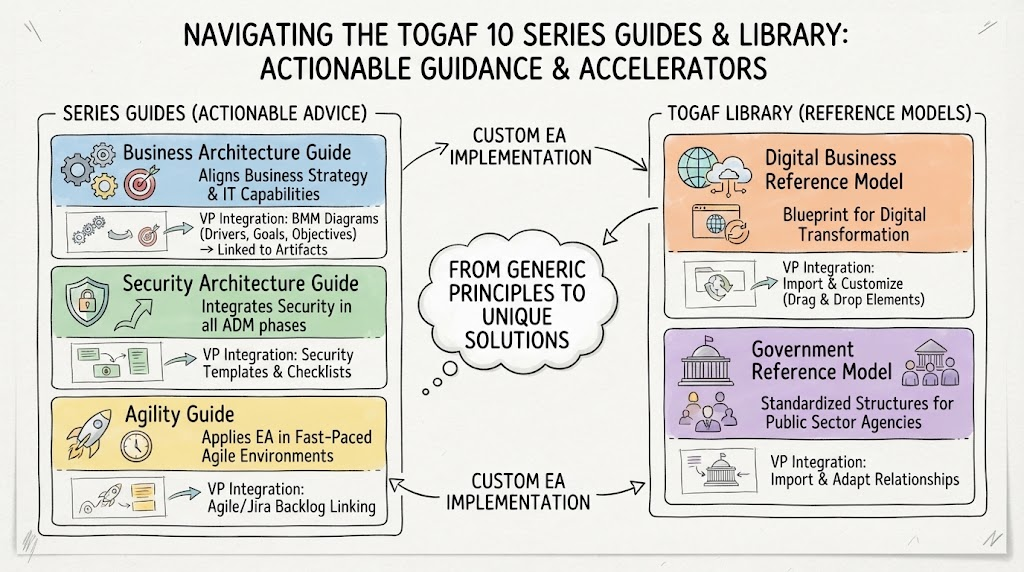 Navigating the TOGAF 10 Series Guides & Library: Actionable Guidance & Accelerators
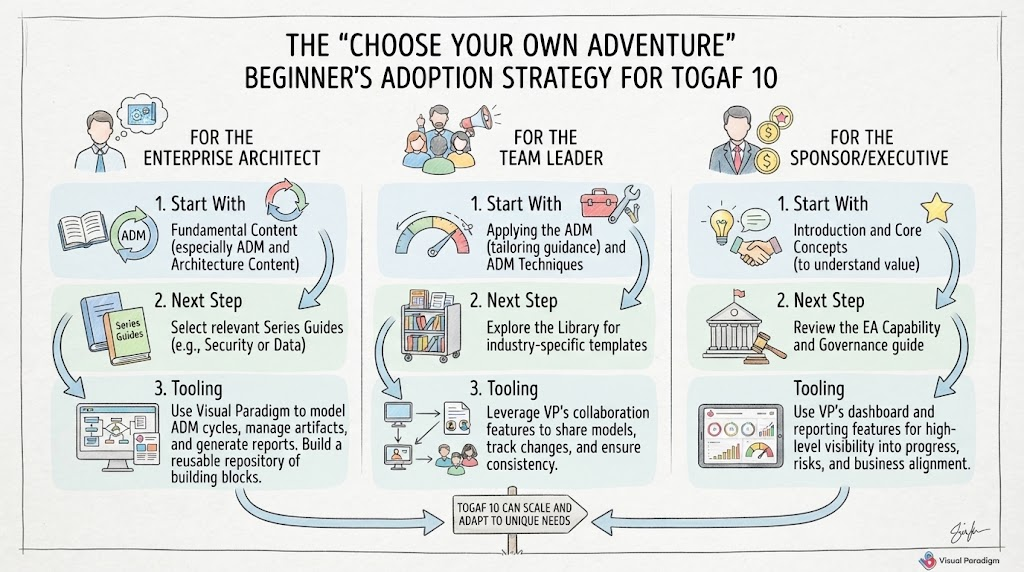 Mastering the “Choose Your Own Adventure” Beginner’s Adoption Strategy for TOGAF 10