


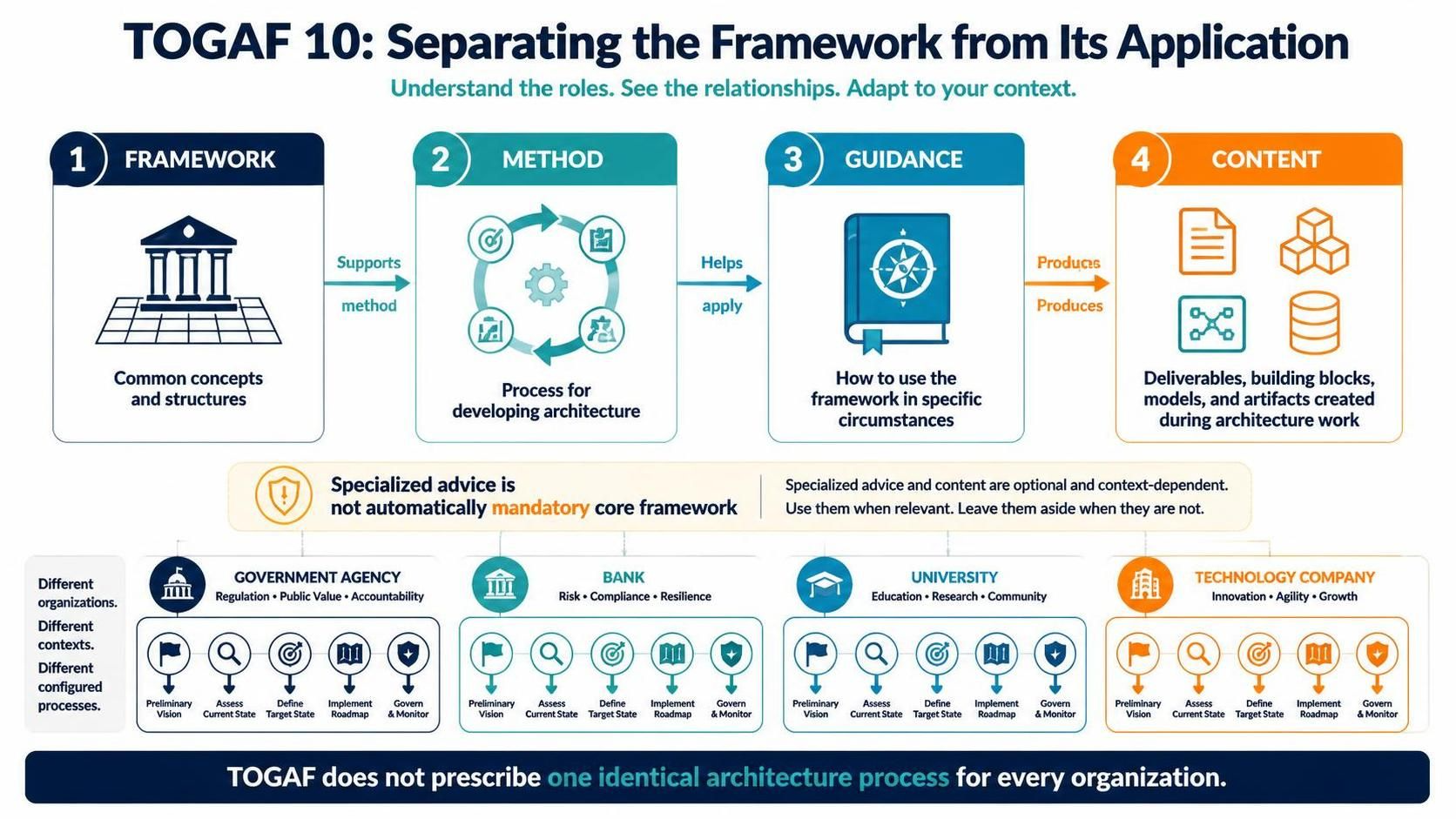
Enterprise Architecture (EA) can often feel like a maze of rigid rules and one-size-fits-all processes. However, the release of TOGAF 10 (The Open Group Architecture Framework) marked a significant paradigm shift. It moved away from a monolithic structure to a modular approach designed to adapt to the unique needs of any organization.
This tutorial will walk you through the core concept of TOGAF 10: Separating the Framework from its Application. We will deconstruct the four pillars of the framework—Framework, Method, Guidance, and Content—and explain why this distinction is crucial for modern enterprise architects.
1. The Four Pillars of TOGAF 10
In previous versions of TOGAF, the “Architecture Development Method” (ADM) was the star of the show, often overshadowing the other components. TOGAF 10 reorganizes these elements into four distinct but interconnected categories. Understanding the flow between them is the key to effective architecture.
The Framework (The Foundation)
The Framework is the starting point. It provides the common concepts and structures that underpin the entire practice of enterprise architecture. Think of this as the architecture of the architecture itself. It includes:
- Core Concepts: Definitions of key terms and principles.
- Structures: The high-level organization of the framework.
- Reference Models: Standardized models like the Technical Reference Model.
The Method (The Process)
If the Framework is the foundation, the Method is the construction process. It provides a proven process for developing architecture. In TOGAF, this is primarily represented by the ADM cycle.
- Purpose: To guide the architect through the steps of planning, analyzing, and designing.
- Relationship: The Framework supports the Method by providing the necessary context and terminology.
The Guidance (The “How-To”)
This is where flexibility comes into play. The Guidance explains how to use the framework in specific circumstances. It does not dictate a single path but offers advice based on industry best practices.
- Contextual Advice: How to handle governance in a government agency vs. a tech startup.
- Specialized Topics: Specific advice on security, data management, or risk.
The Content (The Deliverables)
Finally, the Content consists of the actual outputs created during architecture work. This is the tangible result of applying the method and guidance.
- Deliverables: The final reports and documents.
- Building Blocks: Reusable components of the architecture.
- Models & Artifacts: The visual representations and data structures.
2. The Logic of Separation
The diagram illustrates a clear flow: Framework → Method → Guidance → Content.
Why separate them?
The primary reason for this separation is to prevent specialized advice from appearing to be a mandatory part of the core framework. In the past, organizations often felt forced to adopt every single detail of TOGAF, even if it didn’t fit their specific industry or size.
TOGAF 10 reinforces an important principle: Specialized advice is not automatically mandatory core framework. The content and guidance are optional and context-dependent. You should use them when relevant and leave them aside when they are not.
3. Real-World Application: Context Matters
The bottom section of the diagram demonstrates that “Different organizations. Different contexts. Different configured processes.” TOGAF does not prescribe one identical architecture process for every organization.
Example: The Government Agency
For a Government Agency, the focus is on Regulation, Public Value, and Accountability. Their configuration of the ADM cycle might heavily emphasize the “Govern & Monitor” phase and specific compliance deliverables within the Content component.
Example: The Technology Company
Conversely, a Technology Company focuses on Innovation, Agility, and Growth. Their configuration might streamline the “Assess Current State” phase to move faster toward “Define Target State,” prioritizing rapid prototyping over rigid documentation.
By separating the Framework (the rules) from the Application (the process), TOGAF 10 allows these organizations to keep the core structure while adapting the Method and Content to their unique needs.
Conclusion
Mastering the separation of the Framework, Method, Guidance, and Content is essential for any architect working with TOGAF 10. It transforms the framework from a rigid textbook into a flexible toolkit.
To successfully implement this modular approach in your organization, you need a tool that can handle complex modeling, manage the ADM cycle, and visualize these relationships. For this purpose, the Visual Paradigm TOGAF ADM Tool is the recommended solution. It provides a comprehensive environment to model your architecture, manage your projects, and ensure that your specific application of the TOGAF framework aligns with your organizational goals.
Related posts:
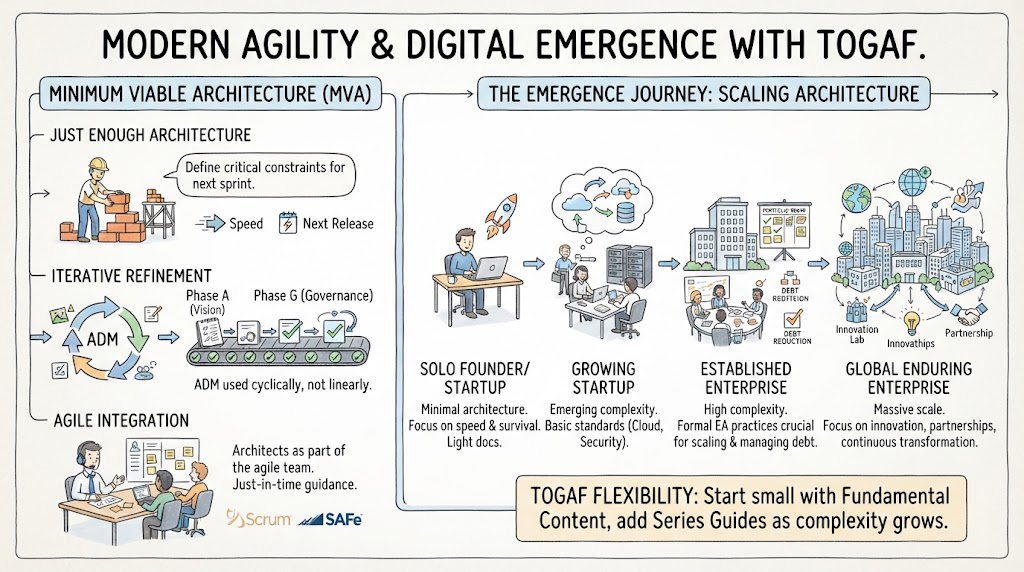 Mastering Modern Agility: A Tutorial on Minimum Viable Architecture and the Digital Emergence Journey
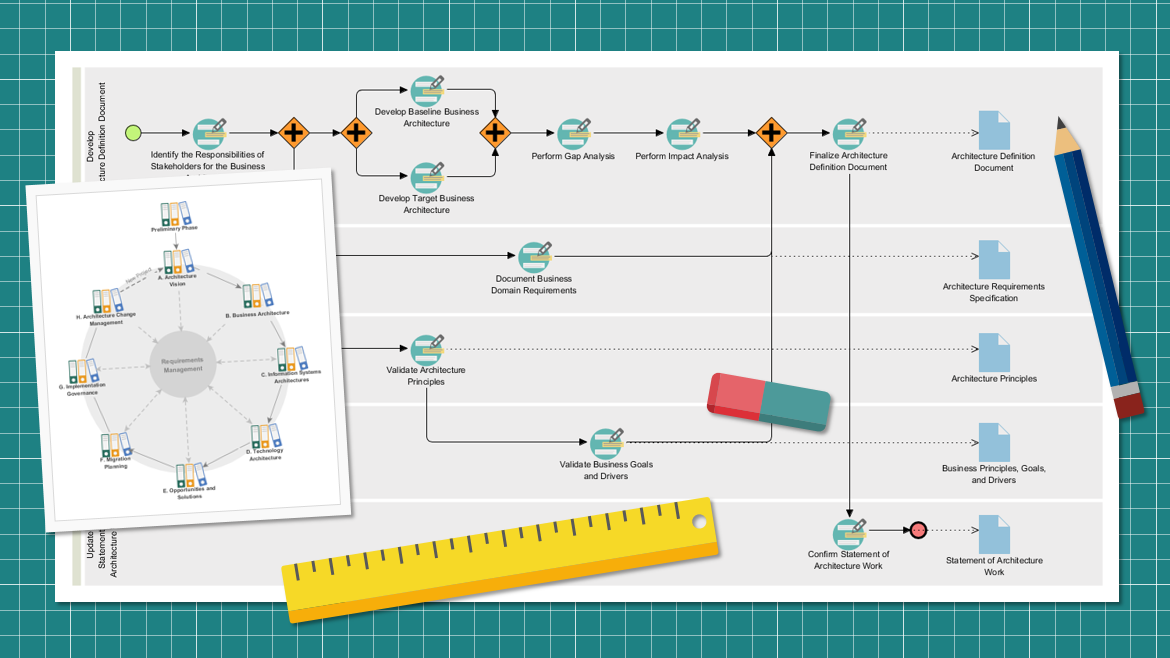 Mastering the TOGAF ADM Cycle: A Visual Guide to Enterprise Architecture Modeling
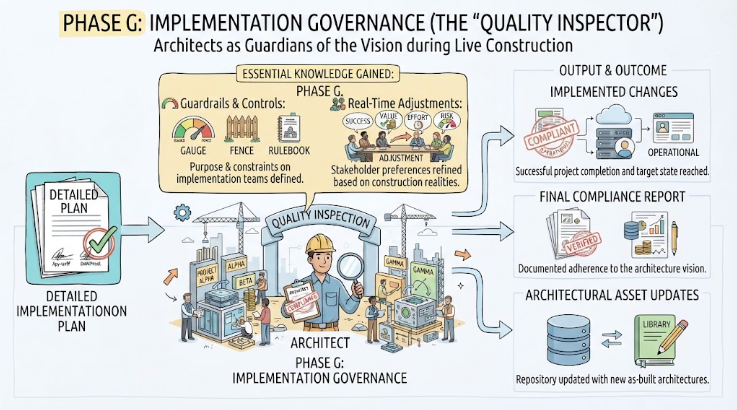 Mastering TOGAF Phase G: Implementation Governance with Visual Paradigm & ArchiMate
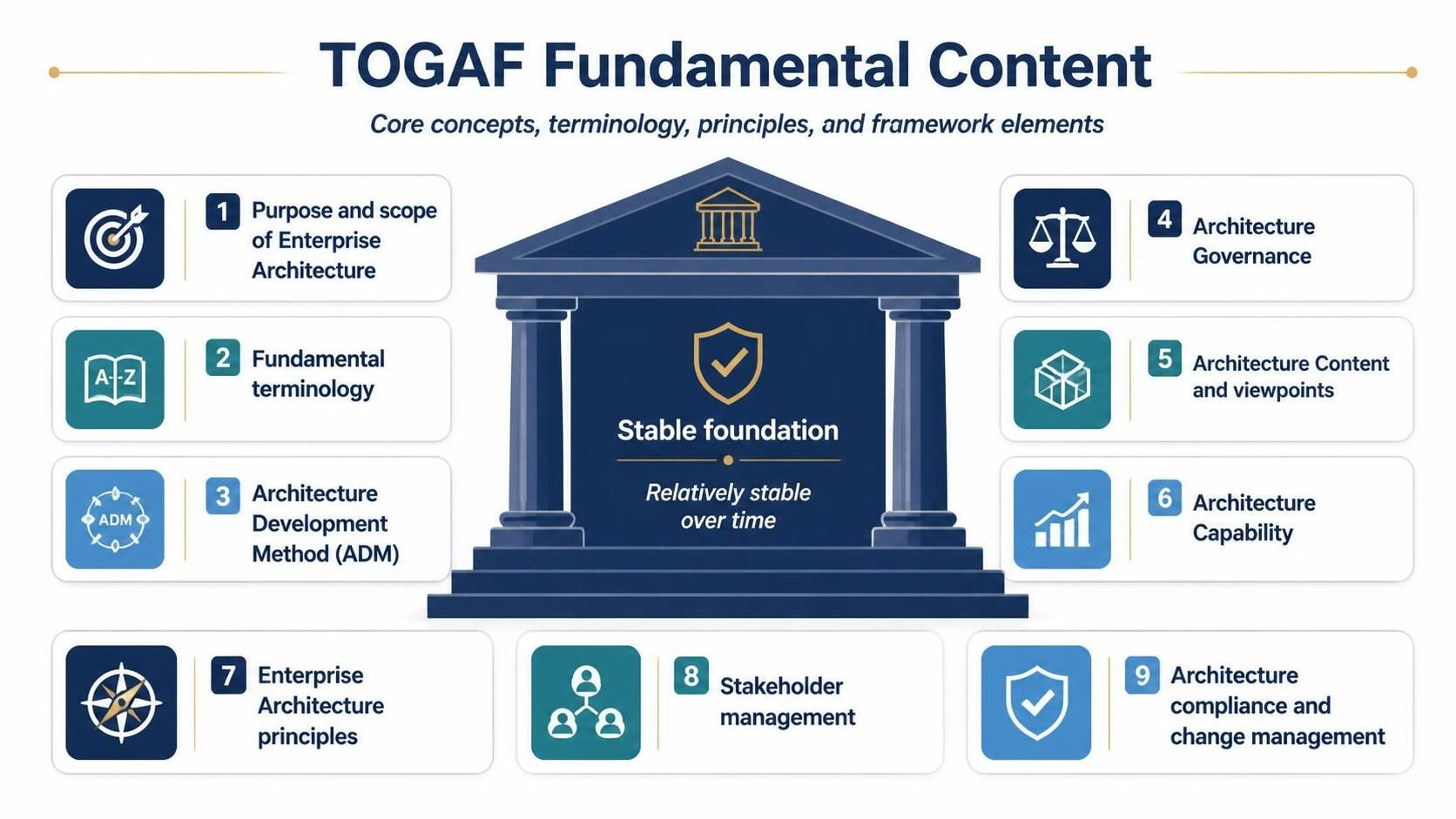 Demystifying the TOGAF Foundation: A Comprehensive Guide to Fundamental Content