


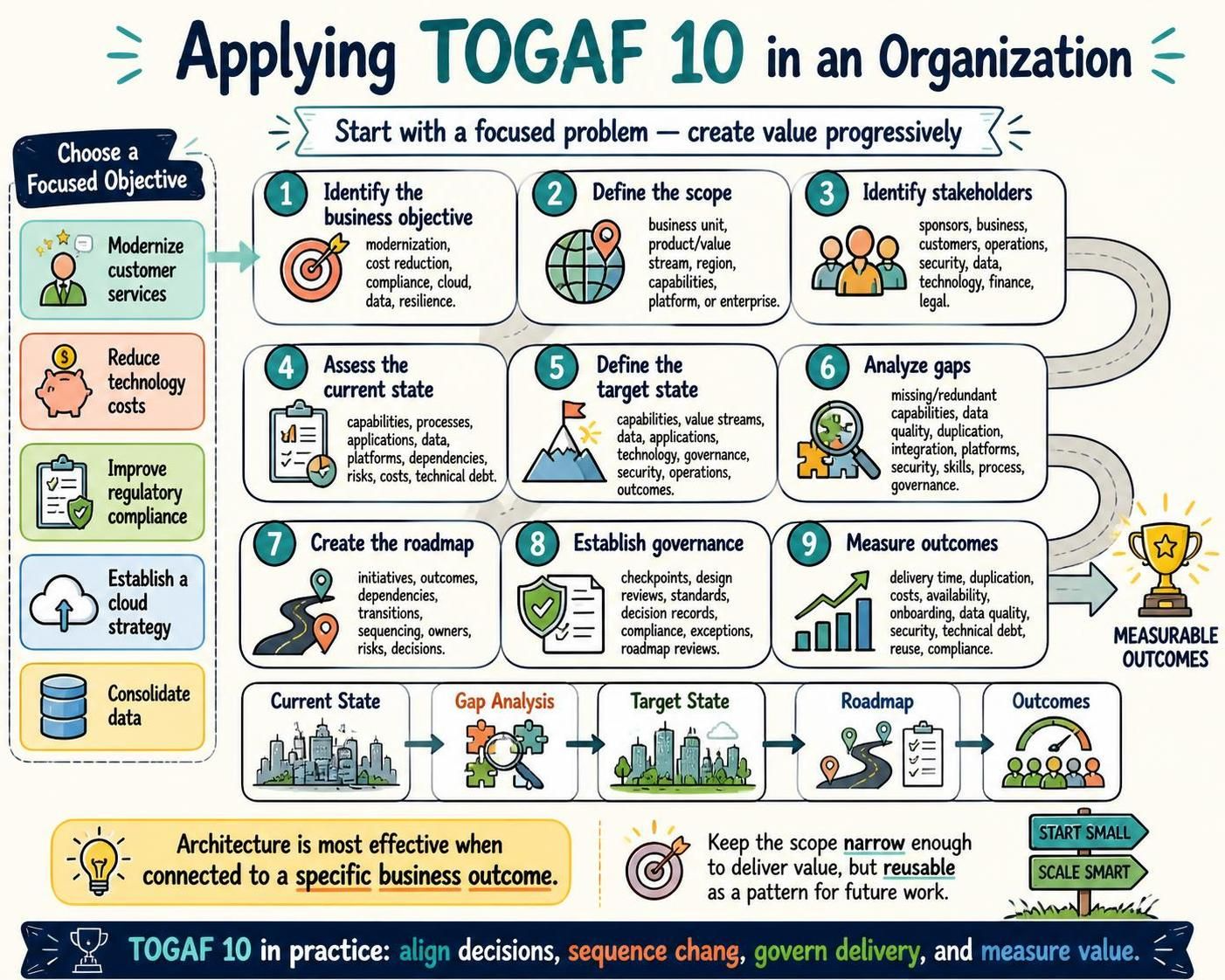
Applying The Open Group Architecture Framework (TOGAF) can often feel overwhelming. Many organizations attempt to deploy the entire framework at once, only to become bogged down in bureaucracy. However, a practical implementation should begin with a focused problem rather than attempting to deploy the entire framework at once. This tutorial breaks down the process into a manageable, iterative cycle of nine steps, designed to create value progressively.
Architecture is most effective when it is connected to a specific outcome. By following the structured approach outlined below, you can align your technical decisions with business strategy.
Phase 1: Preparation and Scoping
Before diving into technical modeling, you must establish the “why” and the “what” of your architecture project.
Step 1: Identify the Business Objective
Start with a clear business need. The framework is a tool, not an end in itself. Common objectives include:
- Modernizing Customer Services: Enhancing user experience through digital transformation.
- Reducing Technology Costs: Consolidating infrastructure and retiring legacy systems.
- Improving Regulatory Compliance: Ensuring data privacy and security standards are met.
- Integrating Acquired Companies: Merging disparate IT landscapes.
- Establishing a Cloud Strategy: Moving from on-premise to cloud-native architectures.
- Consolidating Data: Breaking down silos to create a single source of truth.
- Improving Operational Resilience: Ensuring systems can withstand failures.
Step 2: Define the Scope
Determine the boundaries of your initiative. An overly broad scope can make the work slow and difficult to complete. A narrowly defined scope can provide faster value and create a pattern for future work. Consider if the initiative covers:
- One specific business unit.
- A single product or value stream.
- A particular geographic region.
- A set of business capabilities.
- A platform or technology domain.
- The entire enterprise (only if absolutely necessary).
Step 3: Identify Stakeholders
Every architecture initiative involves a diverse group of people with different concerns. You must identify and engage with them early. Stakeholders may include:
- Executive Sponsors: Focus on outcomes and investment.
- Business Owners: Focus on value streams and customer satisfaction.
- Customers: The end-users of the services.
- Operations Teams: Focus on maintainability and service reliability.
- Product Managers: Focus on feature delivery.
- Security and Risk Teams: Focus on compliance and threat mitigation.
- Data and Application Owners: Focus on data integrity and software lifecycle.
- Infrastructure and Finance Teams: Focus on costs and hardware.
Phase 2: Analysis and Design
Once the scope and stakeholders are defined, you move into the core analysis phase of the architecture lifecycle.
Step 4: Assess the Current State
Document the current architecture at an appropriate level of detail. Avoid documenting every technical detail unless it is relevant to the architecture decision. Focus on information that supports decisions, including:
- Existing Capabilities: What can the business do today?
- Current Processes: How is work actually performed?
- Key Applications: The software landscape.
- Data Sources and Flows: Where does data live and how does it move?
- Technology Platforms: The underlying infrastructure.
- Integration Dependencies: How systems talk to each other.
- Major Risks: What could go wrong?
- Costs and Technical Debt: The financial and technical burden of legacy systems.
Step 5: Define the Target State
Describe the desired future architecture in terms of the business and technology domains. The target state should be ambitious enough to support strategy but realistic enough to implement. Key areas to define include:
- Business Capabilities & Value Streams: How the business will function in the future.
- Data Responsibilities: Governance and ownership.
- Application Services: The functional software required.
- Technology Platforms: The infrastructure strategy.
- Governance & Security: Policies and protection mechanisms.
- Operational Requirements: Performance and availability needs.
- Measurable Outcomes: The KPIs for success.
Step 6: Analyze Gaps
Compare the current and target architectures to identify the “Gap.” Gap analysis should lead to action. Each significant gap should be associated with a potential work package, risk, decision, or further investigation. Typical gap categories include:
- Missing Capabilities: Functions the business needs but does not have.
- Redundant Capabilities: Duplicate efforts that waste money.
- Data-Quality Problems: Inaccurate or inconsistent data.
- Application Duplication: Multiple apps doing the same thing.
- Integration Weaknesses: Brittle or non-existent connections.
- Unsupported Platforms: End-of-life hardware or software.
- Security Gaps: Vulnerabilities in the design.
- Skills Shortages: Lack of talent to manage new systems.
Phase 3: Execution and Measurement
The final phase involves planning the journey from the current state to the target state and ensuring the results are measured.
Step 7: Create the Roadmap
Prioritize initiatives based on value, risk, dependencies, cost, and readiness. A roadmap should show major initiatives, expected outcomes, dependencies, transition architectures, and target dates. It should be treated as a living document rather than a fixed promise.
Step 8: Establish Governance
Define how implementation teams will remain aligned with the architecture. This ensures that the roadmap is executed correctly. Governance mechanisms may involve:
- Architecture Checkpoints: Formal reviews at key milestones.
- Design Reviews: Evaluating specific technical designs.
- Standard Technology Catalogs: Approved lists of software/hardware.
- Architecture Decision Records (ADRs): Documentation of why decisions were made.
- Compliance Assessments: Ensuring adherence to standards.
- Exception Processes: A way to handle necessary deviations.
Step 9: Measure Outcomes
Architecture effectiveness should be assessed through business and operational measures. Did the initiative deliver value? Possible measures include:
- Reduced delivery time.
- Reduced application duplication.
- Lower infrastructure costs.
- Improved system availability.
- Faster customer onboarding.
- Better data quality.
- Fewer security findings.
- Reduced technical debt.
- Increased reuse of shared services.
- Improved compliance.
Practical Tooling for Implementation
To successfully navigate these nine steps, organizations need robust modeling and documentation tools. For a comprehensive TOGAF implementation, the Recommended tooling is the Visual Paradigm TOGAF ADM Tool.
Visual Paradigm offers a unified environment that supports the entire Architecture Development Method (ADM). It allows architects to:
- Visualize Complex Systems: Create detailed diagrams that align with TOGAF standards.
- Manage Stakeholders: Link architectural decisions to specific stakeholder concerns.
- Track Gaps: Maintain a clear log of gaps between current and target states.
- Collaborate: Facilitate communication between business and technical teams.
By using the right tooling alongside this structured 9-step approach, you can ensure your architecture efforts are not just theoretical, but practical, measurable, and value-driven.
Related posts:
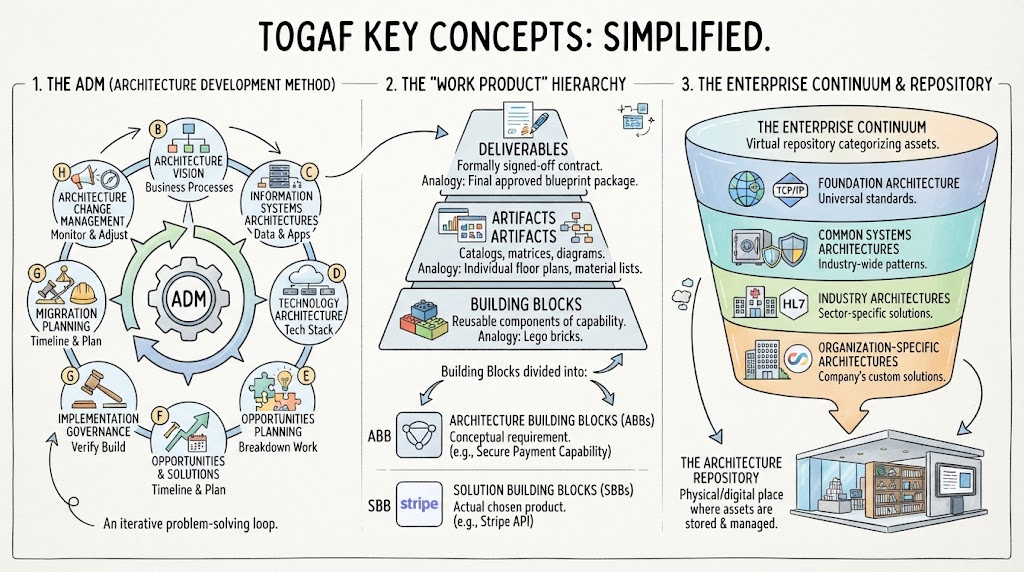 Mastering TOGAF: A Step-by-Step Guide to the ADM Cycle and Enterprise Architecture
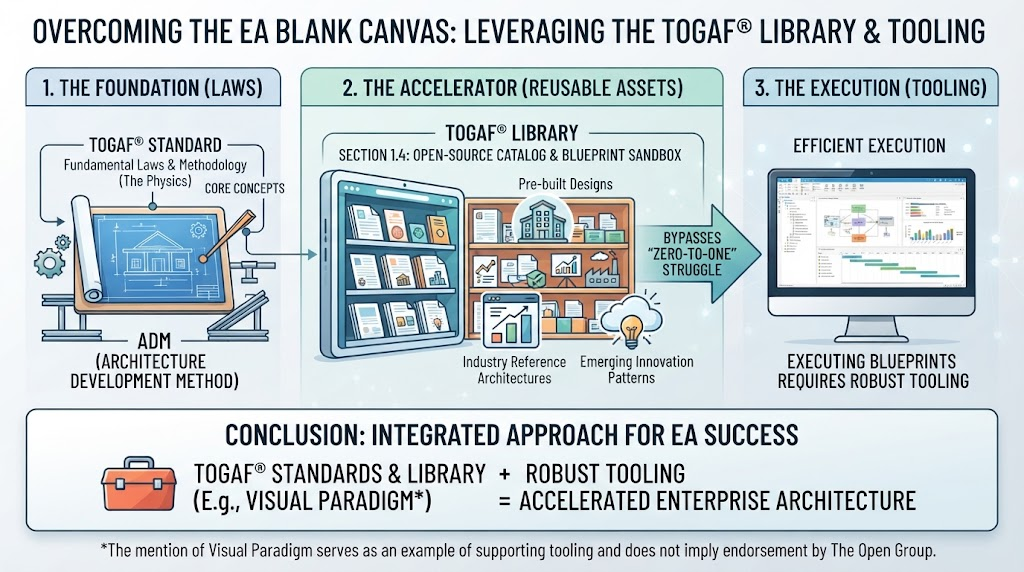 Overcoming the EA Blank Canvas: Leveraging the TOGAF Library & Tooling
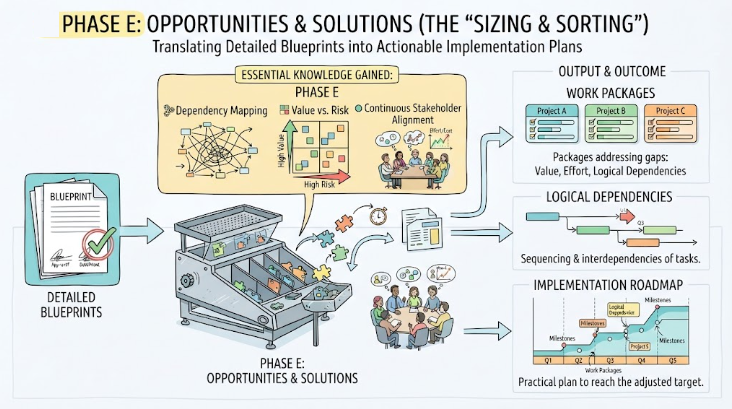 Mastering Phase E: Opportunities & Solutions in Enterprise Architecture
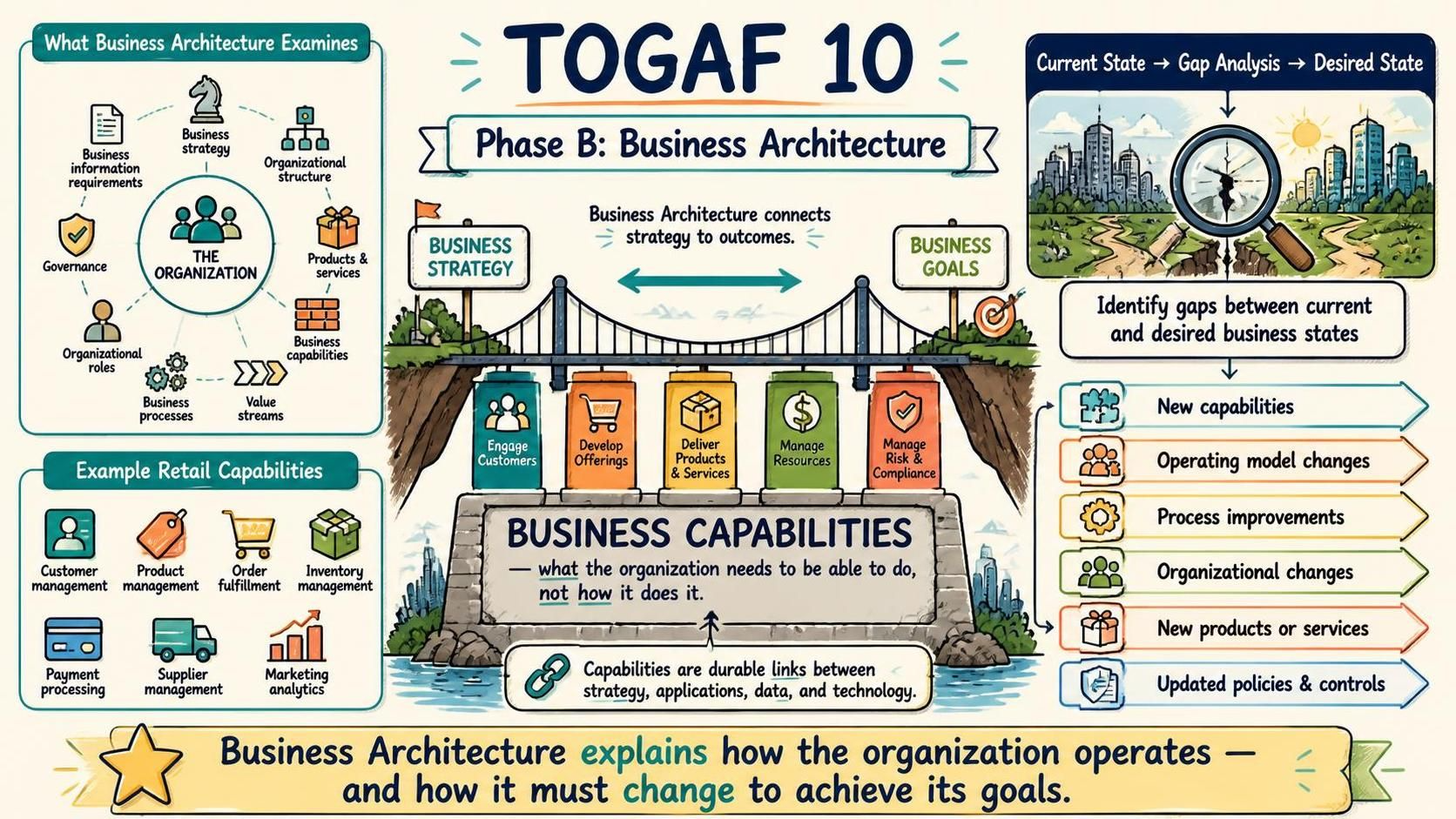 Mastering TOGAF Phase B: Business Architecture and the Power of Business Capabilities