


The release of the TOGAF Standard, 10th Edition represents a paradigm shift in how Enterprise Architecture (EA) is documented and consumed. Moving away from the monolithic “textbook” approach of previous iterations, the 10th Edition introduces a modular documentation set. This structure allows professionals to navigate the vast library based on their specific experience levels and professional roles rather than reading cover-to-cover.
For practitioners using modern tooling like Visual Paradigm, understanding this modular structure is critical. It enables teams to quickly access relevant guidance—whether they are executing daily architecture tasks, managing EA capabilities, or sponsoring strategic initiatives.
This guide provides a personalized navigation path through the TOGAF Standard, integrating practical examples and leveraging Visual Paradigm’s AI-enhanced tools to streamline implementation.
1. The Core of the Standard: The Reference Material
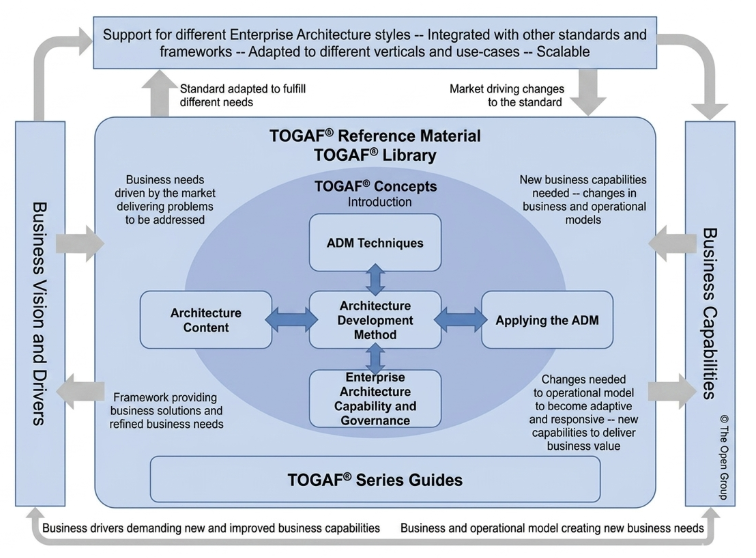
The central component of the TOGAF Standard is the Reference Material (often referred to as the “Library”). This is the “meat” of the standard, designed to provide a comprehensive framework for building and running an EA practice. It is structured into four main pillars that interact dynamically:
- Architecture Content: Defines the architecture building blocks and the Architecture Content Metamodel. It answers the question: “What artifacts do we produce?”
- Architecture Development Method (ADM): The core iterative cycle for developing architecture. It answers: “How do we get there?”
- ADM Techniques: Practical techniques used within the ADM cycles to analyze data, define requirements, and model architecture.
- Enterprise Architecture Capability and Governance: Guidance on setting up an EA practice, including roles, responsibilities, and standards.
The Iterative Nature of the ADM
As illustrated in the architecture diagram, the Architecture Development Method (ADM) is the engine of the standard. It is not a linear waterfall process but an iterative cycle. The ADM is supported by ADM Techniques (such as Business Scenarios or Gap Analysis) and is grounded in Architecture Content. This central interaction ensures that the architecture is not just theoretical but is built upon standardized content and driven by proven techniques.
2. The Ecosystem: Concepts and Guides
The Reference Material does not exist in a vacuum. It is supported by two essential layers that allow the standard to adapt to different needs:
- TOGAF Concepts: This section provides an introduction to the fundamental terminology and definitions used throughout the standard. It ensures that when an architect speaks of a “Capability” or a “Value Stream,” they are using the standard definition, regardless of their industry.
- TOGAF Series Guides: These are vertical-specific guides (e.g., Cloud, Security, AI) that help adapt the TOGAF Standard to specific use cases. They bridge the gap between the generic standard and the unique challenges of modern IT landscapes.
3. Recommended Tooling: Visual Paradigm + TOGAF ADM + ArchiMate
To effectively utilize the TOGAF 10th Edition, especially the complex interactions of the ADM cycle, you need a tool that supports the standard’s modular nature. Visual Paradigm stands out as a comprehensive solution that integrates the ADM, ArchiMate, and modern AI capabilities.
How Visual Paradigm Enhances the TOGAF Process
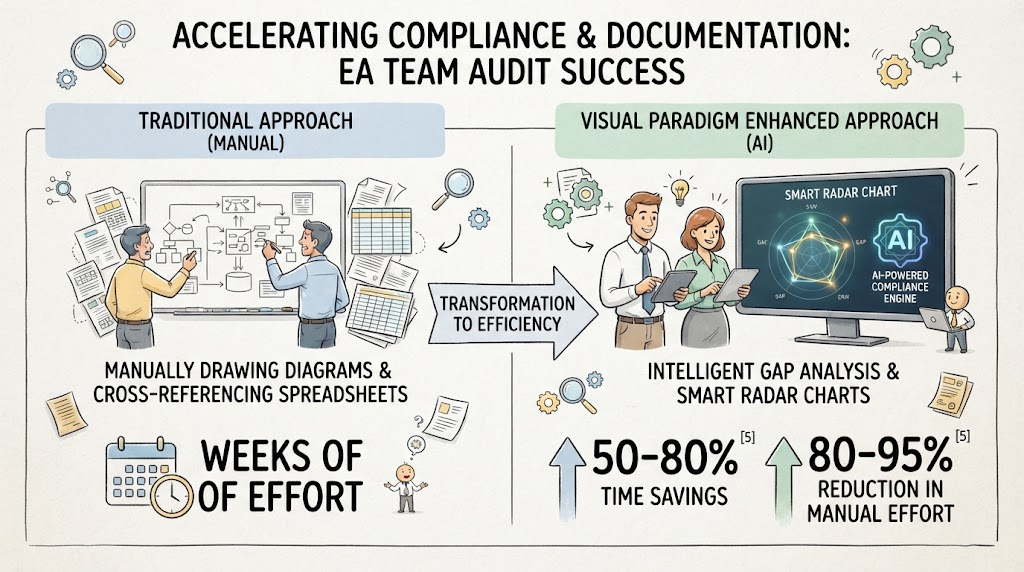
- Integrated ADM Support: Visual Paradigm provides a dedicated TOGAF ADM wizard and lifecycle management. Instead of manually creating diagrams for every phase (Phase A to H), the tool guides you through the standard’s steps, automatically generating the necessary architecture views.
- ArchiMate Modeling: Since TOGAF 10th Edition aligns closely with ArchiMate for visualization, Visual Paradigm offers native support for the ArchiMate language. This allows you to model business processes, applications, and technology infrastructure in a unified way, ensuring your diagrams are compliant with industry standards.
- AI-Enhanced Implementation: Leveraging Visual Paradigm’s AI features, you can streamline the creation of architecture content. The AI can help generate initial architecture descriptions, suggest relevant building blocks from your content repository, and even automate the creation of diagrams based on natural language requirements.
- Scalability and Customization: Just as the TOGAF 10th Edition is modular, Visual Paradigm allows you to tailor the tool to your organization’s needs. You can customize the ADM phases, define your own content metamodels, and integrate with other enterprise tools.
Conclusion
The TOGAF 10th Edition is a powerful, adaptable framework designed to meet the demands of modern business. By understanding its modular structure and leveraging the right tooling like Visual Paradigm, architects can move beyond static documentation to a dynamic, value-driven Enterprise Architecture practice.
Related posts:
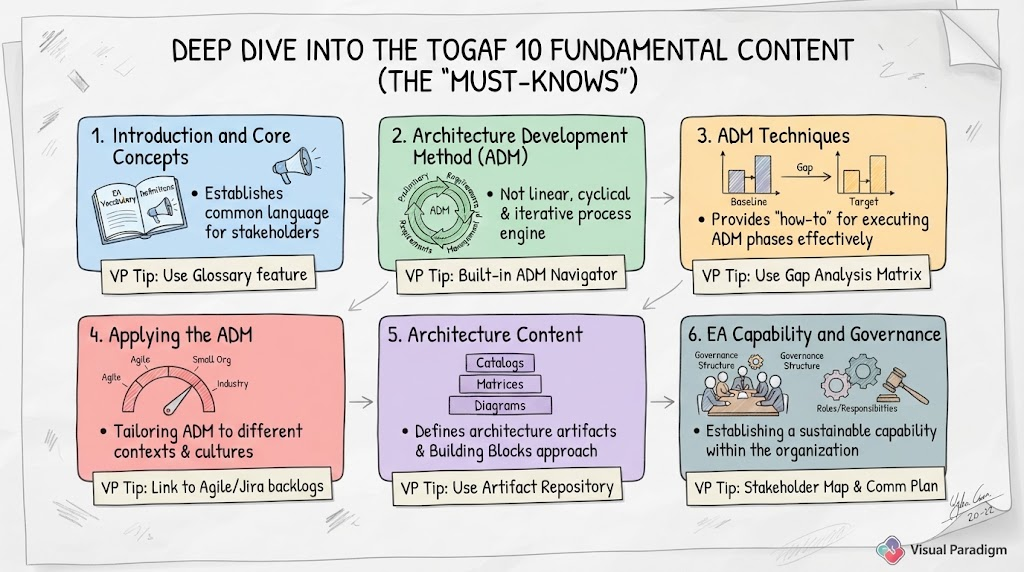 Mastering TOGAF 10: A Step-by-Step Guide to the Six Fundamental Content Pillars
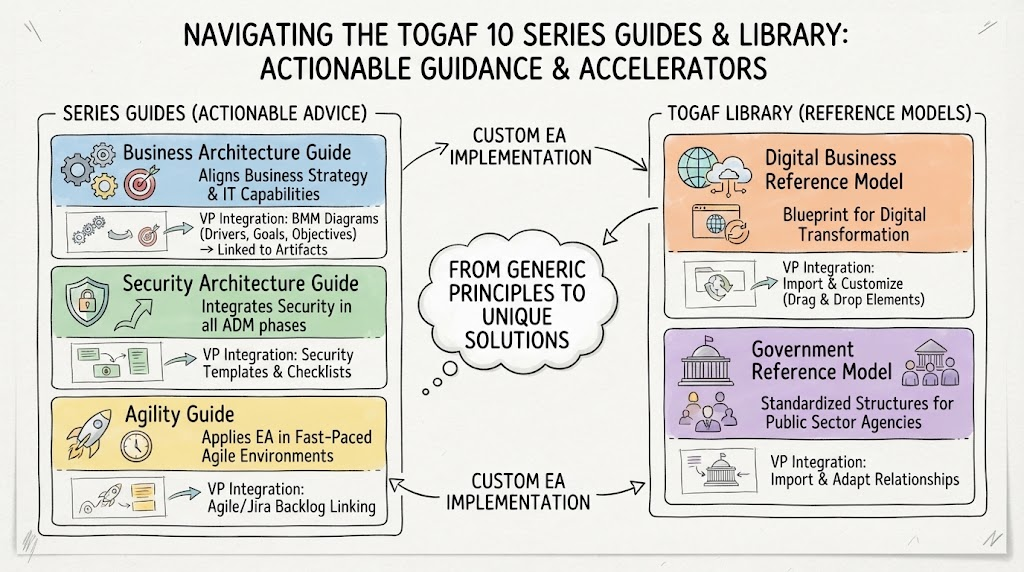 Navigating the TOGAF 10 Series Guides & Library: Actionable Guidance & Accelerators
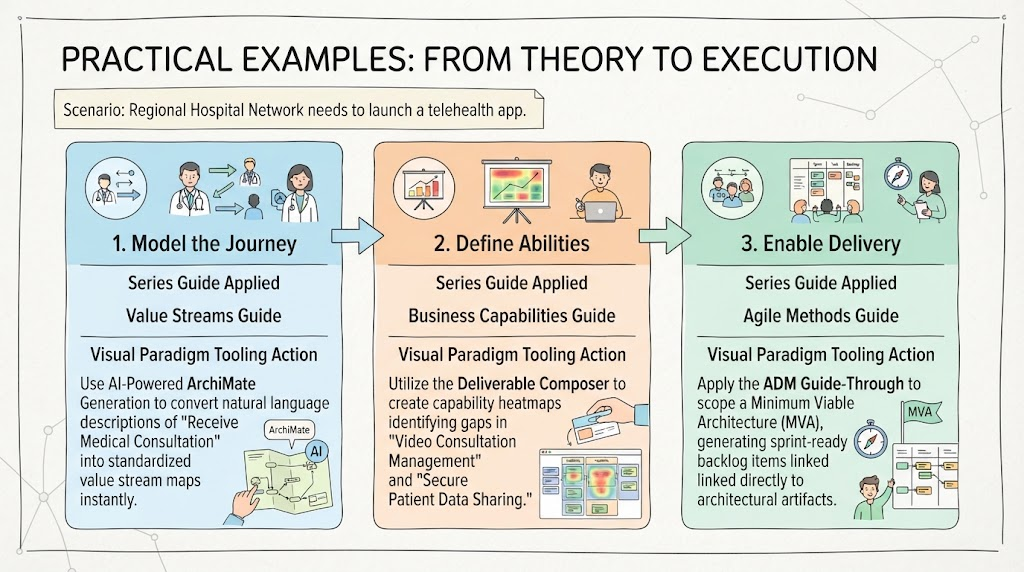 From Theory to Execution: A Practical Guide to Enterprise Architecture with Visual Paradigm
 Accelerating Compliance & Documentation: Mastering the EA Audit Workflow with AI