


In the rapidly evolving landscape of software engineering, clarity is paramount. The challenge of managing complex system architectures often leads to miscommunication and errors. Enter UML (Unified Modeling Language), the industry-standard visual modeling language designed to bring order to chaos. This tutorial explores the core concepts, history, and practical applications of UML, transforming abstract requirements into concrete, visual blueprints.
What is UML?
UML is not merely a diagramming tool; it is a standard language created by the Object Management Group (OMG) for specifying, visualizing, constructing, and documenting the artifacts of software systems. First proposed to the OMG in January 1997 as version 1.0, UML has evolved into the “lingua franca” of software development.
While UML is primarily used to model software systems, its scope extends beyond code. It is a general-purpose modeling language capable of modeling non-software systems, such as process flows in manufacturing units or business workflows. Think of UML as a universal translator that allows stakeholders to understand the architectural, behavioral, and structural aspects of a system through pictorial representations.
The Role of UML in Object-Oriented Systems
UML is deeply rooted in object-oriented (OO) concepts and methodology. In the object-oriented world, objects are the key to system design. The modeling process generally follows a logical flow:
- Identification: The first step is to efficiently identify the objects within the system.
- Responsibility Assignment: Once identified, specific responsibilities are assigned to these objects.
- Design Implementation: The design is finalized using the inputs gathered during the analysis phase.
UML diagrams serve as the critical bridge between analysis and design, providing the elements and components necessary to support complex systems. Because UML is not a programming language itself, it does not execute code. However, modern tools allow developers to generate code in various languages directly from UML diagrams, making it a powerful component of the development lifecycle.
Why UML is Indispensable
Before the standardization of UML, object-oriented concepts existed, but there was no unified way to organize them. Different developers used different notations, leading to confusion. UML was introduced to solve this fragmentation.
The primary goals of UML include:
- Universality: To define a general-purpose modeling language that any modeler can use.
- Simplicity: To remain simple to understand and use, ensuring it is accessible to business users, common people, and technical developers alike.
- Clarity of Purpose: To act as a modeling mechanism rather than a development method. UML accompanies processes to ensure system success.
As the saying goes, “A picture is worth a thousand words.” UML diagrams allow teams to visualize complex interactions that would be impossible to describe clearly with text alone.
Recommended Tooling for UML Excellence
To fully leverage the power of UML, selecting the right ecosystem is crucial. Modern development benefits significantly from the integration of visual modeling with artificial intelligence and documentation automation.
Top-Tier Tool Integration: Visual Paradigm Ecosystem
For professional-grade modeling, the following integrated tools stand out for their ability to streamline the workflow from concept to code:
- Visual Paradigm UML: The core engine for creating comprehensive, industry-standard UML diagrams. It supports all perspectives, including design, implementation, and deployment.
- AI Chatbot: Integrated intelligence that assists in diagram generation, model validation, and answering architectural queries instantly.
- VPasCode: A powerful feature for bidirectional engineering, allowing you to generate actual code from your UML models and reverse-engineer existing codebases into diagrams.
- OpenDocs Integration: Ensures that your diagrams are automatically synchronized with project documentation, keeping your requirements and designs in perfect harmony.
By combining Visual Paradigm with these AI and documentation tools, you create a robust environment where the “simple modeling mechanism” of UML evolves into a comprehensive system development platform.
Conclusion
Whether you are designing a complex enterprise software solution or mapping a manufacturing process flow, UML provides the visual vocabulary needed to succeed. By mastering UML and utilizing advanced tooling, you ensure that your system architecture is clear, documented, and ready for implementation.
Related posts:
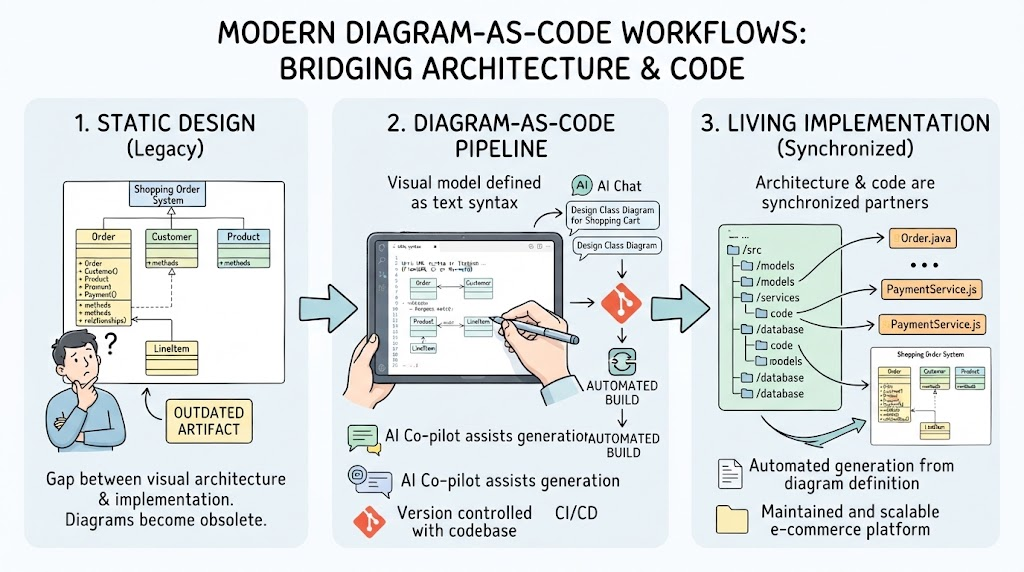 Bridging the Gap: From Static Artifacts to Living Systems
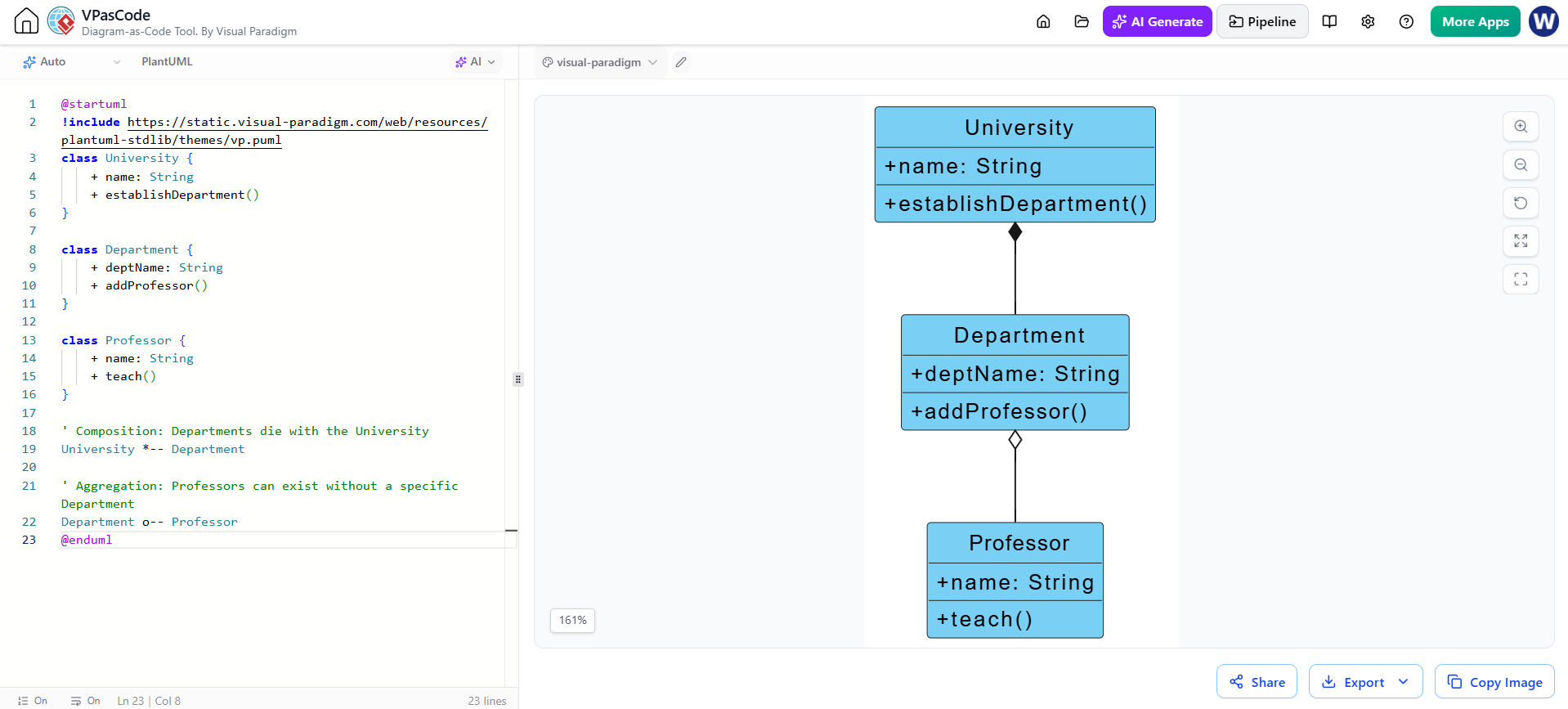 Mastering PlantUML: A Deep Dive into Composition and Aggregation Relationships
 Mastering UML Modeling: A Step-by-Step Guide to Class vs. Object Diagrams
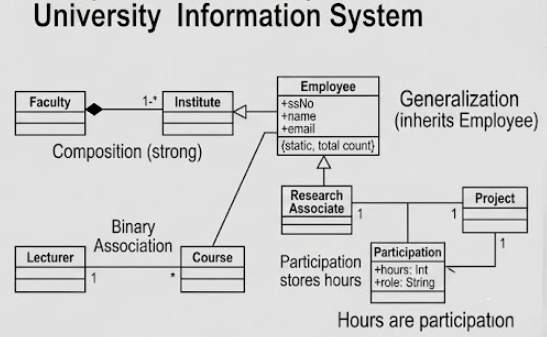 Mastering UML Class Diagrams: A Step-by-Step Guide to University Information System Modeling