


In the rapidly evolving landscape of digital transformation, organizations often face a dilemma: how to maintain architectural rigor without sacrificing the speed demanded by Agile methodologies. This tutorial explores the intersection of the TOGAF Standard and modern agility, focusing on two critical concepts: Minimum Viable Architecture (MVA) and the Emergence Journey. By understanding these frameworks, architects can scale their practices from a solo founder to a global enterprise.
Demystifying Minimum Viable Architecture (MVA)
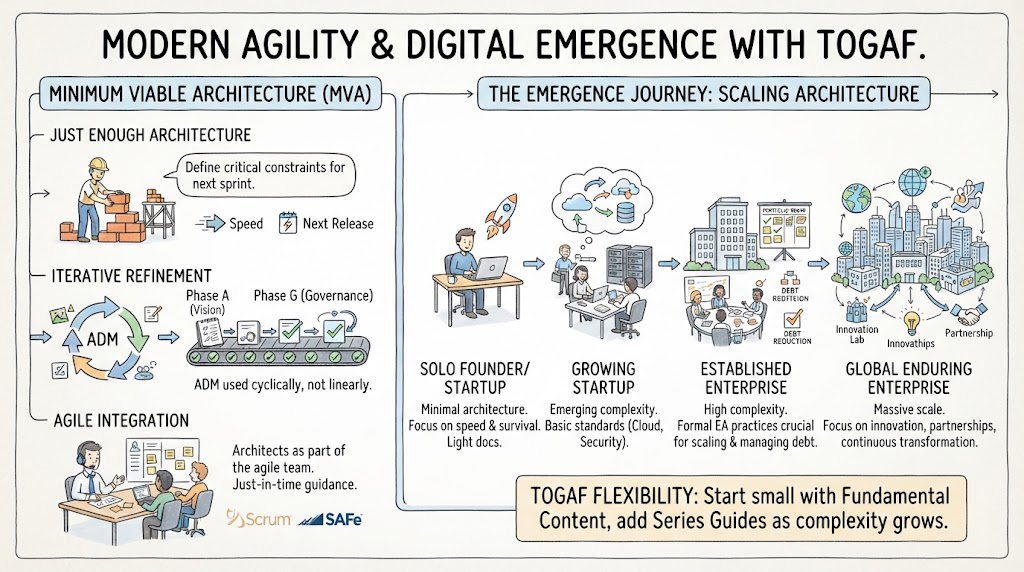
A pervasive myth suggests that Enterprise Architecture (EA) frameworks like TOGAF require “Big Design Up Front” (BDUF), a waterfall approach that is antithetical to Agile. However, modern interpretations of TOGAF, specifically through the concept of Minimum Viable Architecture (MVA), prove that structure and speed can coexist.
The Core Tenets of MVA
MVA shifts the focus from exhaustive documentation to “Just Enough” architecture. This approach is defined by two main pillars:
- Just Enough Architecture: Instead of designing the entire system upfront, architects define only the critical constraints and interfaces required for the next sprint or release. This ensures that the architecture facilitates immediate speed and survival without creating bottlenecks.
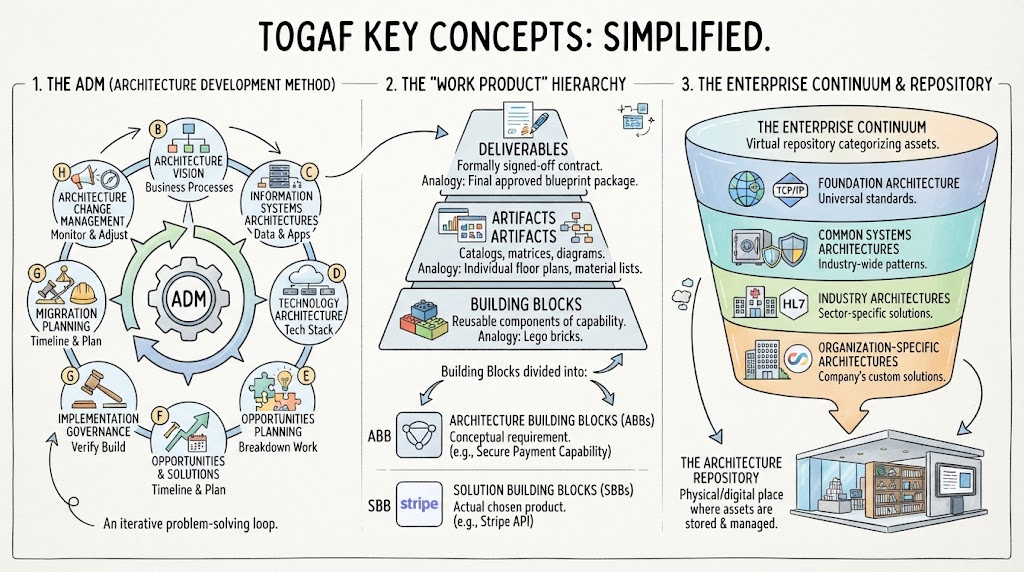
- Iterative Refinement: The TOGAF Architecture Development Method (ADM) is not a linear path but a cycle. In an MVA context, Phase A (Vision) might take a week rather than a month. Furthermore, Phase G (Migration Planning and Implementation Governance) becomes continuous, enforced through automated tests and code reviews rather than periodic gatekeepers.
Agile Integration
When integrating TOGAF with frameworks like Scrum or SAFe, the role of the architect evolves. They move from providing “upfront dictates” to acting as a member of the agile team. Their goal is to provide just-in-time guidance, ensuring that the architecture supports the team’s velocity while maintaining necessary guardrails.
The Emergence Journey: Scaling Architecture
Architecture is not “one size fits all.” As digital enterprises evolve, their architectural needs scale naturally. The Emergence Journey describes four distinct contexts that an organization passes through, each requiring a different level of architectural intervention.
1. Solo Founder/Startup
At this stage, the priority is speed and survival. The architecture is minimal. Documentation is kept light to ensure the product can be built and launched quickly. The focus is entirely on product-market fit.
2. Growing Startup
As complexity begins to emerge, the organization needs basic standards. This might include selecting a cloud provider, establishing data security basics, or defining core API standards. The goal is to prevent technical debt from accumulating while the team scales.
3. Established Enterprise
High complexity is now the norm. Formal EA practices become crucial to manage the portfolio, reduce technical debt, and enable scaling. Architecture here focuses on governance, standardization, and managing the interconnectedness of various systems.
4. Global Enduring Enterprise
At the scale of a global enterprise, the focus shifts from internal management to innovation and ecosystem partnerships. The architecture must support massive scale, continuous transformation, and integration with external partners and marketplaces.
Adapting TOGAF to Your Stage
A key takeaway from modern TOGAF usage is its flexibility. You do not need to implement all 10th Edition guides on day one. The strategy should be to:
- Start with the Fundamental Content.
- Add Series Guides (such as those for Agile integration) only as your complexity grows.
This ensures that the architecture effort remains proportional to the business value it delivers.
Leveraging Tooling: Visual Paradigm
While TOGAF provides the method, tools like Visual Paradigm provide the mechanism to execute it efficiently. For architects practicing MVA, these tools are essential for acceleration.
Key Capabilities
- ADM Process Support: Built-in templates and wizards guide architects through the specific steps of each ADM phase, ensuring consistency.
- Artifact Generation: The tool can automatically generate catalogs, matrices, and diagrams (such as Business Process Diagrams or Application Communication Diagrams) directly from the models.
- Repository Integration: It helps manage the Enterprise Continuum by storing and versioning Architecture Building Blocks (ABBs) and Solution Building Blocks (SBBs).
- Collaboration: Stakeholders can review deliverables and provide feedback within the tool, bridging the gap between technical architects and business users.
Conclusion
Enterprise Architecture is not about creating ivory-tower documents that gather dust. It is about enabling deliberate, structured change that delivers real business value. By adopting the TOGAF Standard with a mindset of Minimum Viable Architecture, organizations gain a proven, flexible framework to align technology with strategy.
Remember the analogy of the city planner: their job isn’t to lay every brick, but to ensure that every brick contributes to a livable, sustainable, and thriving city. Start small, think big, and let architecture guide your journey.
Related posts:
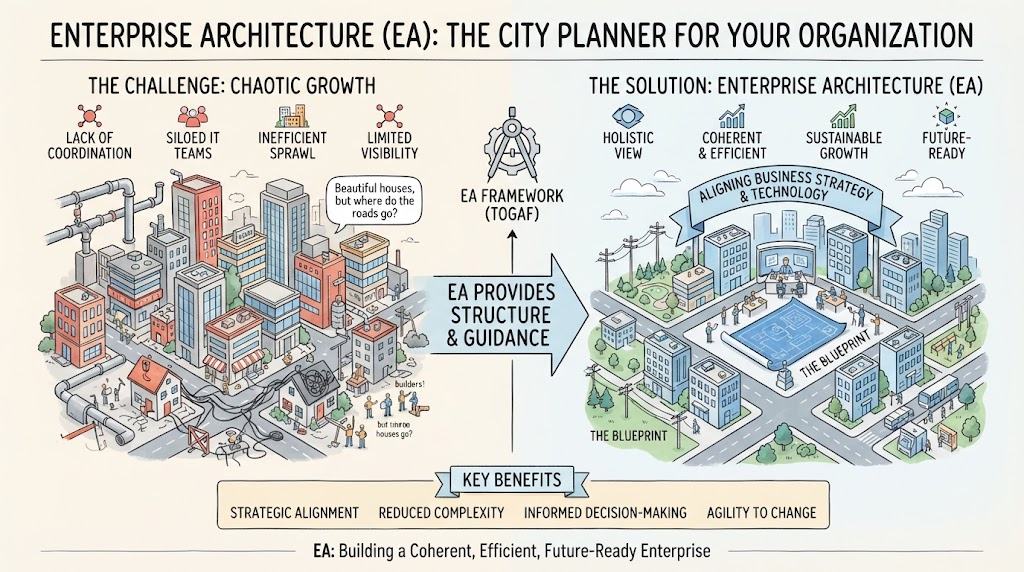 Enterprise Architecture as City Planning: A Visual Guide to TOGAF & Strategic Alignment
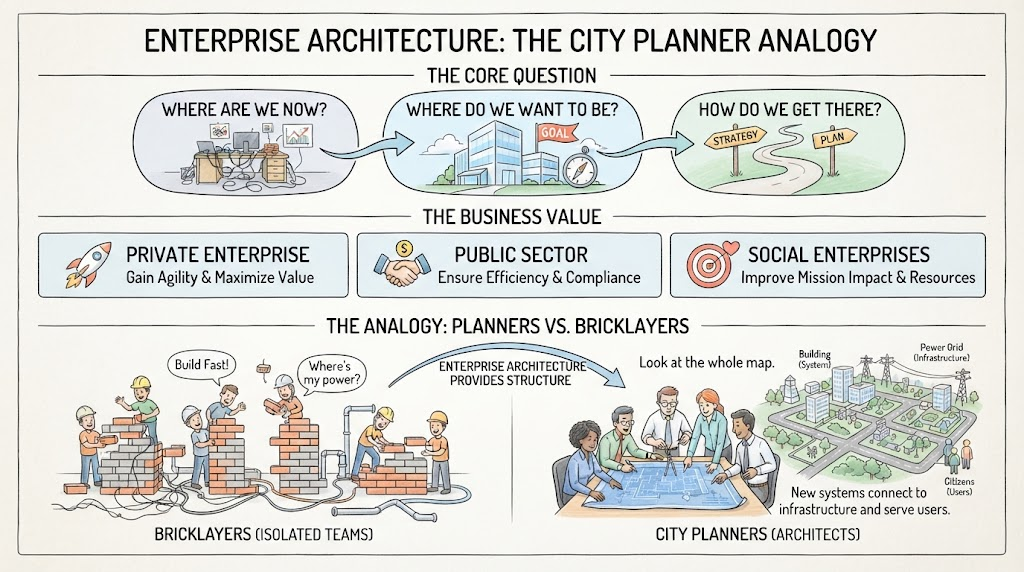 Mastering Enterprise Architecture: The City Planner Analogy and Strategic Roadmapping
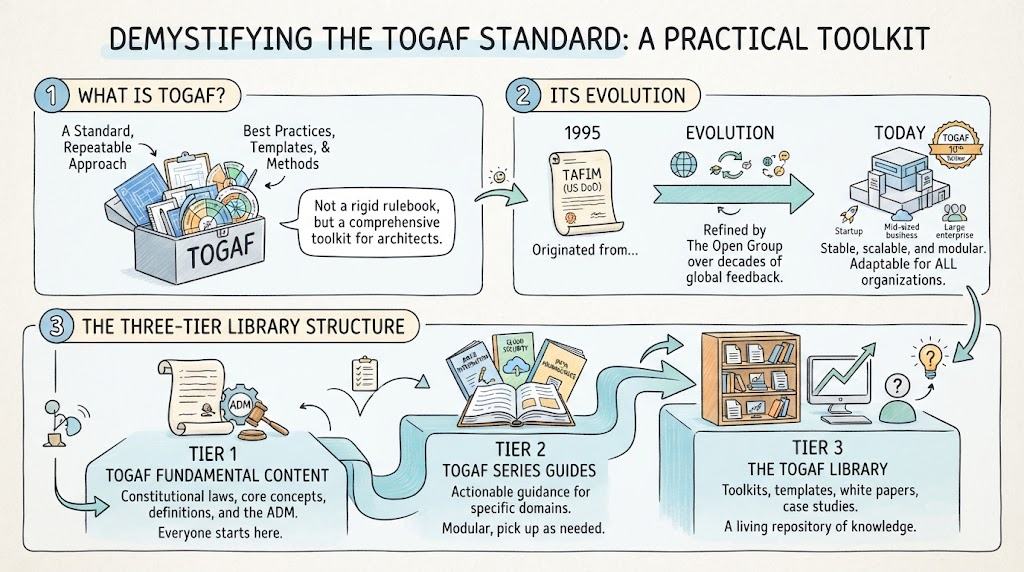 Demystifying the TOGAF Standard: A Practical Toolkit for Modern Enterprise Architecture
 Mastering TOGAF: A Step-by-Step Guide to the ADM Cycle and Enterprise Architecture