


In the realm of Enterprise Architecture (EA), the TOGAF ADM (Architecture Development Method) is the gold standard for structuring the architecture lifecycle. However, a common bottleneck in Phase D (Technology Architecture) and Phase E (Opportunities and Solutions) is the manual effort required to analyze which parts of the organization will be affected by a new strategic initiative. Visual Paradigm has revolutionized this process by integrating deep AI capabilities directly into the ADM workflow. This tutorial explains how to leverage the TOGAF AI Assistant to automate the identification of impacted organization units.
The Challenge: Manual Impact Analysis
When an organization decides to pivot its strategy—for example, moving from a single product line to a diverse portfolio—architects must manually trace the impact on every business unit, role, and facility. This is a time-consuming, error-prone process that often relies on spreadsheets and static documents, making it difficult to visualize the scope of change.
The Solution: AI-Assisted Modeling
Visual Paradigm’s integration of AI transforms this static analysis into a dynamic, guided process. By using natural language descriptions, the system can interpret strategic goals and automatically generate the necessary architectural models in ArchiMate.
Step 1: Defining the Context via Natural Language
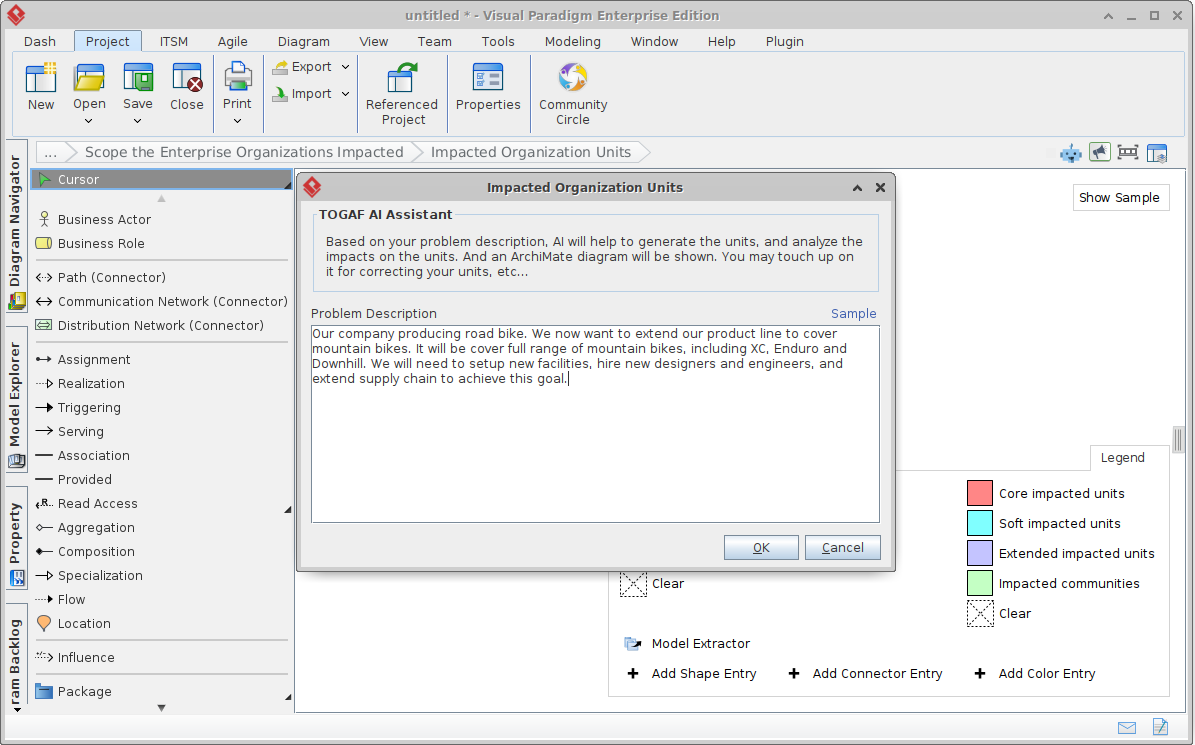
The first step in this AI-driven workflow is to articulate the business problem. Instead of manually drawing boxes and connectors, the architect provides a high-level description of the initiative. In the system interface, this is handled within the TOGAF AI Assistant dialog.
Example Scenario:
“Our company producing road bike. We now want to extend our product line to cover mountain bikes. It will be cover full range of mountain bikes, including XC, Enduro and Downhill. We will need to setup new facilities, hire new designers and engineers, and extend supply chain to achieve this goal.”
By inputting this text, the AI parses the intent to understand the scope: product diversification, infrastructure expansion, and workforce augmentation.
Step 2: Automated Unit Generation
Once the problem description is submitted, the AI acts as a virtual co-architect. It does not merely suggest text; it constructs the logical structure of the architecture. The system analyzes the text to identify specific entities such as:
- Business Actors/Roles: Identifying who is needed (e.g., Designers, Engineers).
- Organizational Units: Determining which departments are involved.
- Infrastructure: Recognizing the need for new facilities.
Step 3: Visualizing Impact with ArchiMate
The ultimate output of this process is a formal ArchiMate diagram. The AI generates a visual representation where different levels of impact are color-coded for clarity. This allows stakeholders to instantly grasp the breadth of the change.
The system categorizes impacts into distinct layers, as shown in the legend:
- Core Impacted Units: The primary business units directly executing the new strategy (e.g., the Bike Division).
- Soft Impacted Units: Support units that require changes but are not the primary focus (e.g., HR, Legal).
- Extended Impacted Units: External partners or broader organizational structures affected by the ripple effects.
- Impacted Communities: The external groups or customers affected by the new product line.
Recommended Tooling: Visual Paradigm + TOGAF ADM + ArchiMate
To effectively implement this workflow in your own Enterprise Architecture practice, the combination of these three technologies is essential:
- Visual Paradigm Enterprise: The platform provides the robust modeling environment and the specific “TOGAF AI” plugin. It is the engine that powers the AI generation and manages the project data.
- TOGAF ADM: This framework provides the governance. By using the AI tool within the ADM context (specifically during the Impact Analysis phase), you ensure that your architecture remains compliant with enterprise standards.
- ArchiMate: This is the language of the output. The AI generates models in ArchiMate, ensuring that the diagrams are not just pictures, but standardized, machine-readable architectural definitions that can be exchanged and analyzed.
By combining these elements, architects can shift from spending days manually mapping impact to hours of high-level strategic definition, letting the AI handle the detailed modeling.
Related posts:
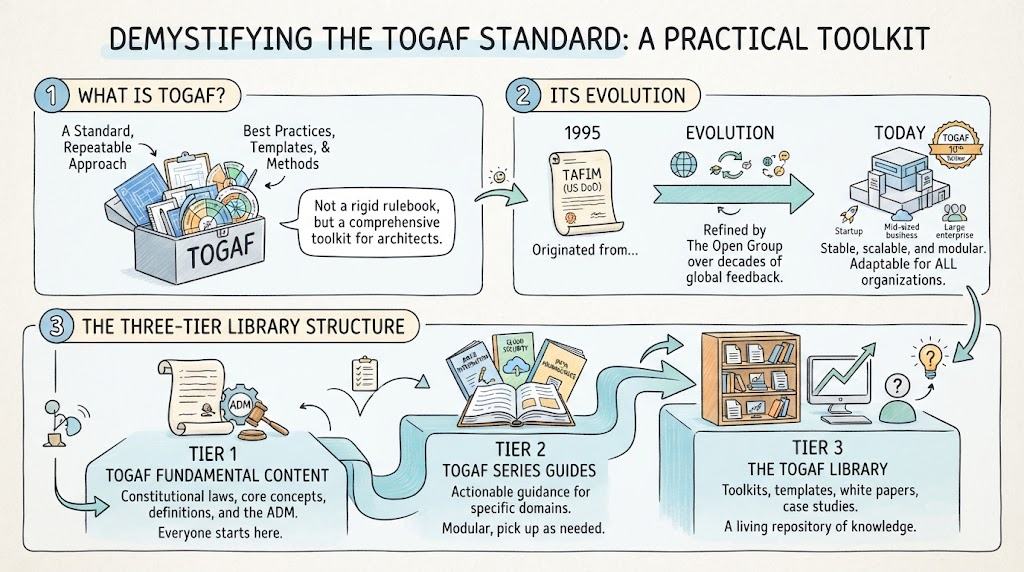 Demystifying the TOGAF Standard: A Practical Toolkit for Modern Enterprise Architecture
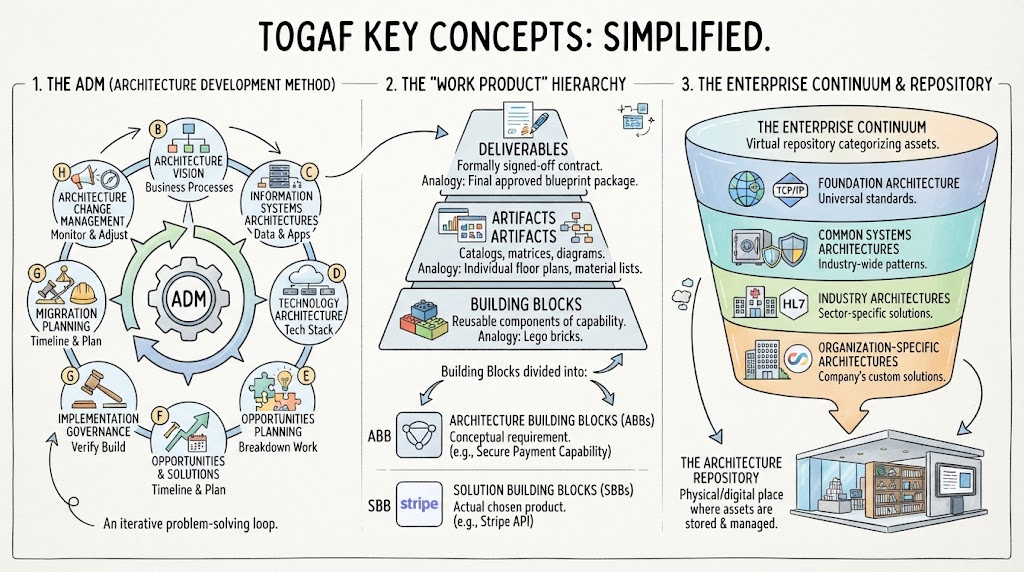 Mastering TOGAF: A Step-by-Step Guide to the ADM Cycle and Enterprise Architecture
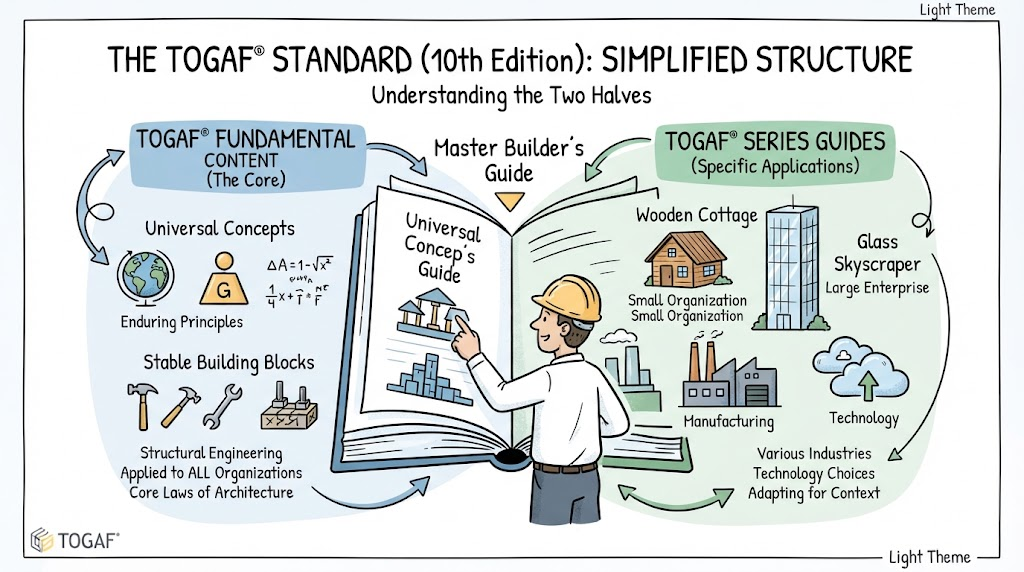 Mastering the TOGAF Standard: The Core vs. The Guides
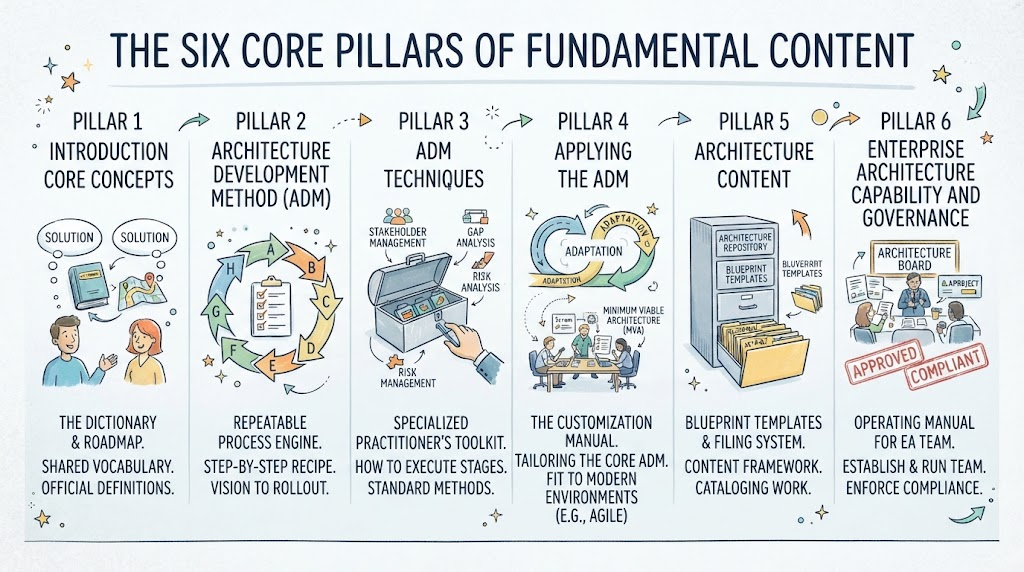 Mastering Enterprise Architecture: A Step-by-Step Guide to the Six Core Pillars of TOGAF