


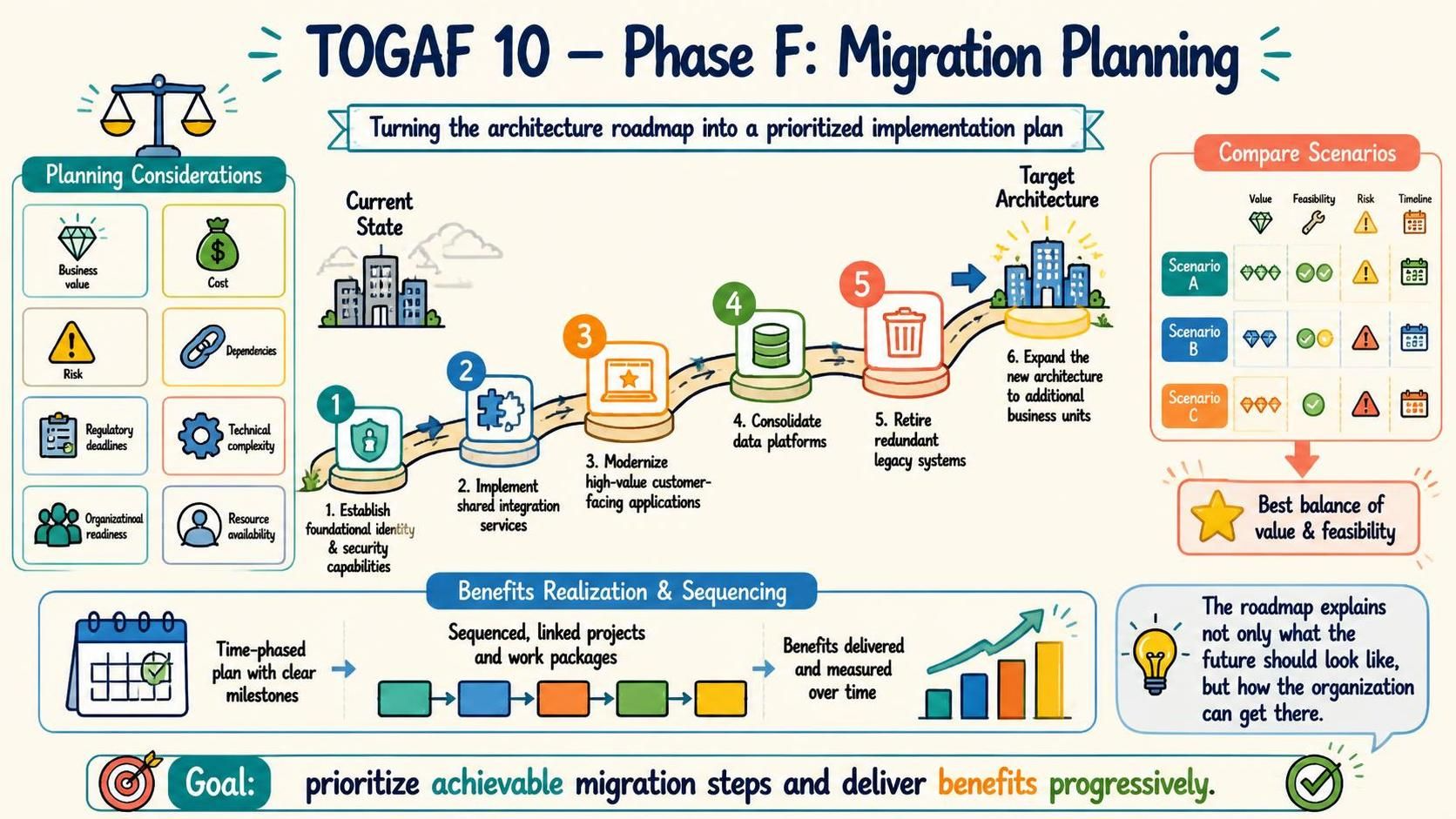
In the rigorous world of Enterprise Architecture, transforming a static blueprint into a dynamic reality is the ultimate challenge. This is the core purpose of Phase F: Migration Planning within the TOGAF (The Open Group Architecture Framework) standard. It is the pivotal stage where we stop asking “What is the future?” and start answering “How do we get there?”
This tutorial will guide you through the complex ecosystem of migration planning, from weighing business value against technical risk to sequencing projects for maximum benefit realization. We will also explore how modern tooling, specifically Visual Paradigm TOGAF ADM Tool, streamlines this intricate process.
The Core Objective: From Roadmap to Reality
The primary output of Phase F is a prioritized implementation plan. While Phase E (Opportunities and Solutions) identifies the building blocks of the future state, Phase F arranges them into a logical construction sequence. The goal is to prioritize achievable migration steps and deliver benefits progressively.
The process is defined by a simple yet powerful equation:
Architecture Roadmap + Implementation Prioritization = Migration Plan
Key Planning Considerations
Before you can draw a timeline, you must evaluate the feasibility of your architecture. A successful migration plan considers a wide array of factors to ensure that the transition is not just architecturally sound, but business-viable.
- Business Value: Which projects deliver the highest ROI? We must ensure that the “why” is always stronger than the “how.”
- Cost: Budget constraints often dictate the speed of migration. Phase F requires a realistic assessment of financial resources.
- Risk: What could go wrong? Identifying technical and operational risks early allows for mitigation strategies.
- Dependencies: You cannot build the roof before the walls. Understanding how one project relies on another is crucial for sequencing.
- Regulatory Deadlines: Compliance often acts as a hard constraint, forcing certain projects to be completed by specific dates.
- Technical Complexity: Some modernization efforts are notoriously difficult; these must be scheduled with appropriate buffers.
- Organizational Readiness: Does the team have the skills? Is the culture prepared for change?
- Resource Availability: Do we have the staff and infrastructure to execute the plan?
The Art of Sequencing: Building the Path
One of the most critical outputs of this phase is the Implementation Sequence. The migration is rarely a “big bang” switch; it is typically organized into stages that build upon one another.
Consider the following common migration pattern illustrated in standard TOGAF diagrams:
- Establish Foundational Capabilities: Before moving applications, we must secure the ground. This involves setting up foundational identity and security capabilities.
- Implement Shared Integration Services: Once secure, we build the pipes. Implementing shared services ensures different systems can talk to each other.
- Modernize High-Value Customer-Facing Applications: With the foundation and pipes in place, we can now focus on the assets that generate revenue and customer satisfaction.
- Consolidate Data Platforms: Data silos are broken down into unified platforms, enabling better analytics and decision-making.
- Retire Redundant Legacy Systems: Only after the new systems are stable do we decommission the old, costly legacy infrastructure.
- Expand the New Architecture: Finally, we replicate the success of the pilot to additional business units.
Comparing Scenarios for the Best Balance
A common technique in Migration Planning is to compare multiple implementation scenarios. Not all paths are equal. Architects must weigh the trade-offs of different sequences.
For example, you might compare three scenarios:
- Scenario A: Fastest timeline, but highest risk.
- Scenario B: Lowest cost, but slowest value realization.
- Scenario C: Balanced approach with moderate risk and high feasibility.
The objective is to determine which sequence provides the best balance of value and feasibility. This decision is often visualized using a matrix that scores each scenario against criteria like risk, timeline, and value.
Tools for Success: Visual Paradigm TOGAF ADM Tool
Managing the sheer volume of data, dependencies, and scenarios in Phase F can be overwhelming using spreadsheets alone. This is where the Recommended tooling of Visual Paradigm TOGAF ADM Tool becomes invaluable.
Visual Paradigm provides a dedicated environment for TOGAF Architecture Development Method (ADM) cycles. Its capabilities in Phase F include:
- Automated Dependency Mapping: Visually link your projects to show exactly how the retirement of a legacy system (Step 5) depends on the consolidation of data platforms (Step 4).
- Scenario Modeling: Quickly create “What-If” scenarios to see how shifting a deadline impacts the overall project timeline and resource load.
- Benefits Tracking: Map your projects directly to the business outcomes they drive, ensuring that every step in your roadmap contributes to the strategic goal.
- Gap Analysis Visualization: Seamlessly integrate the gap analysis from previous phases into your implementation plan.
Conclusion: The Roadmap as a Guide
The result of Phase F is an architecture roadmap that explains not only what the future should look like, but also how the organization can get there. By prioritizing achievable steps and measuring benefits over time, you transform the architecture from a theoretical concept into a tangible business strategy.
Whether you are balancing regulatory deadlines or managing technical complexity, a structured approach supported by robust tools like Visual Paradigm ensures that your migration plan is not just a wish list, but a viable path to success.
Related posts:
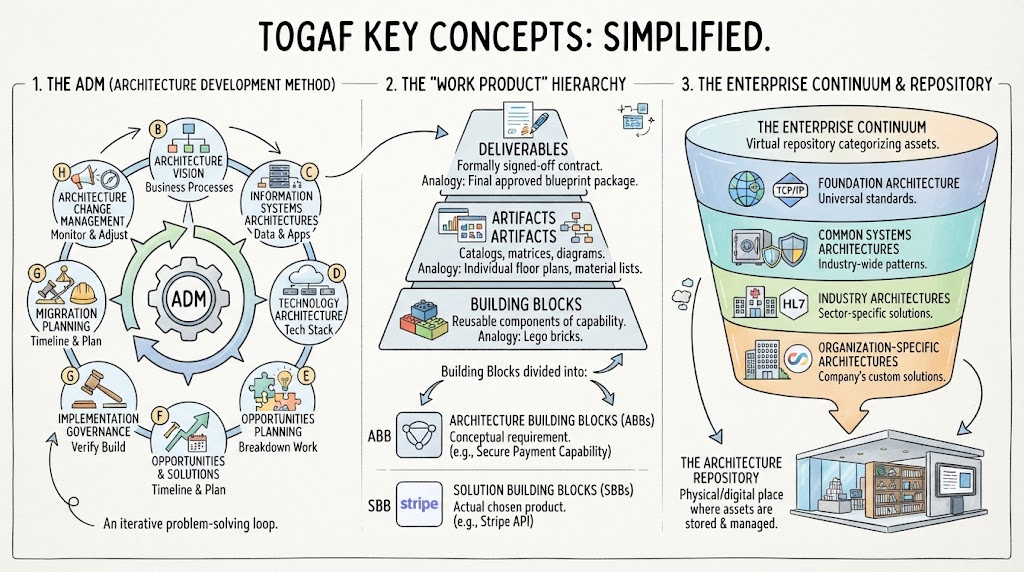 Mastering TOGAF: A Step-by-Step Guide to the ADM Cycle and Enterprise Architecture
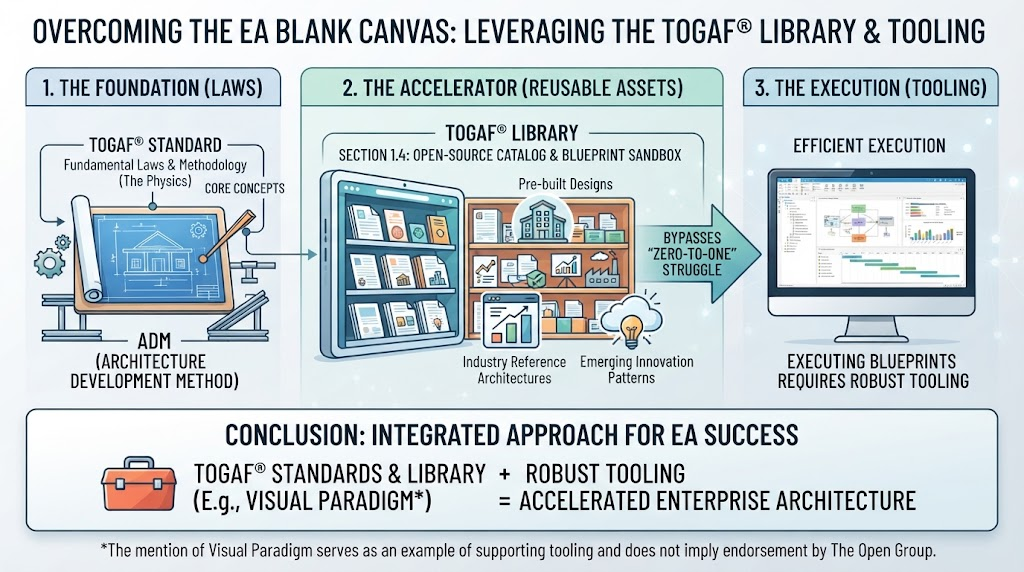 Overcoming the EA Blank Canvas: Leveraging the TOGAF Library & Tooling
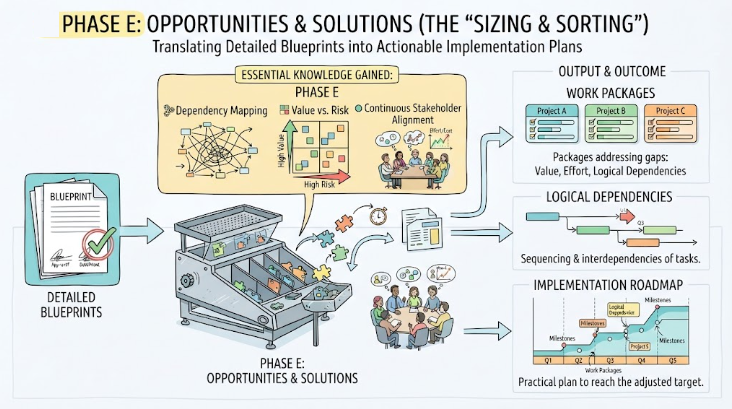 Mastering Phase E: Opportunities & Solutions in Enterprise Architecture
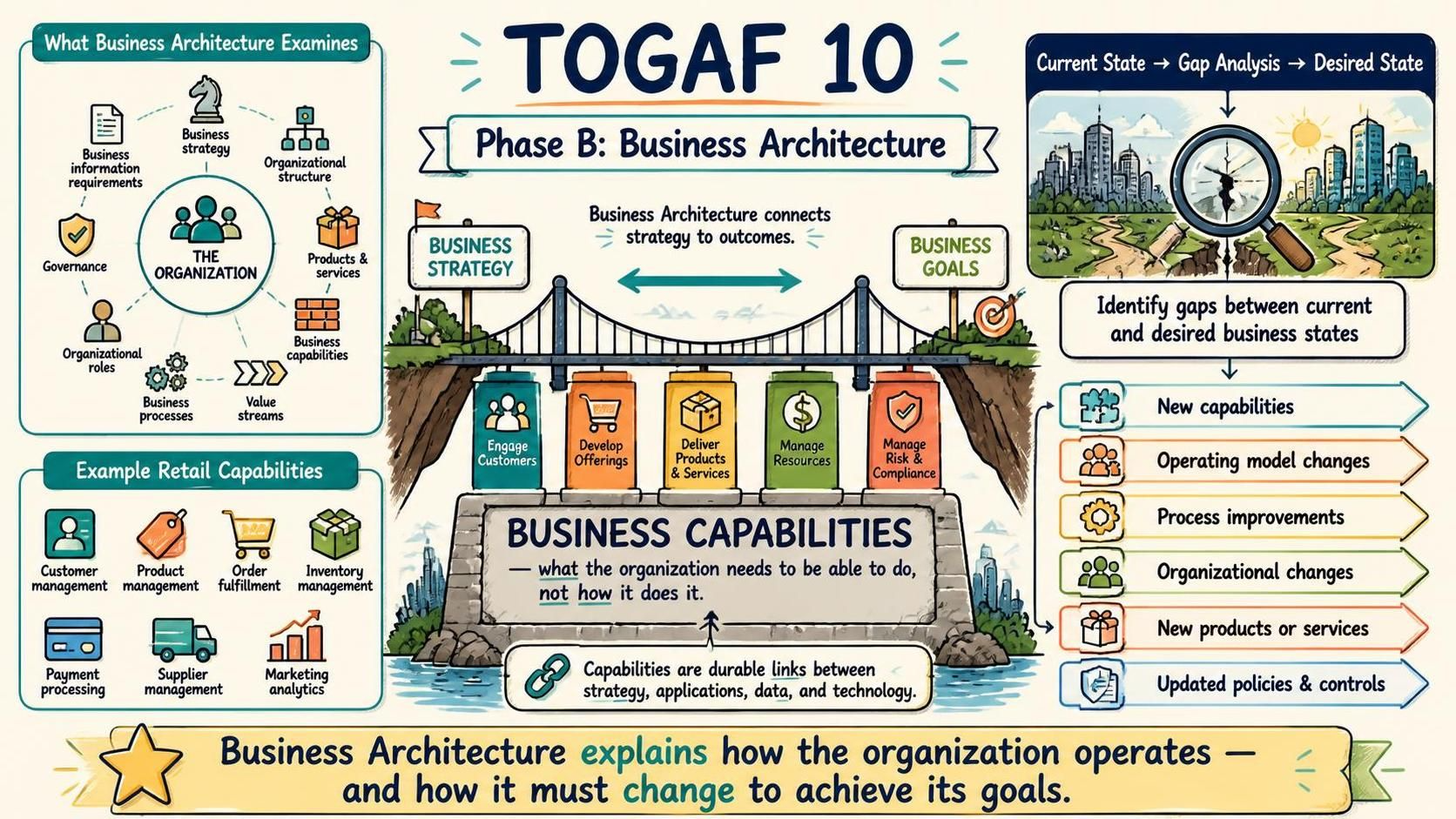 Mastering TOGAF Phase B: Business Architecture and the Power of Business Capabilities