


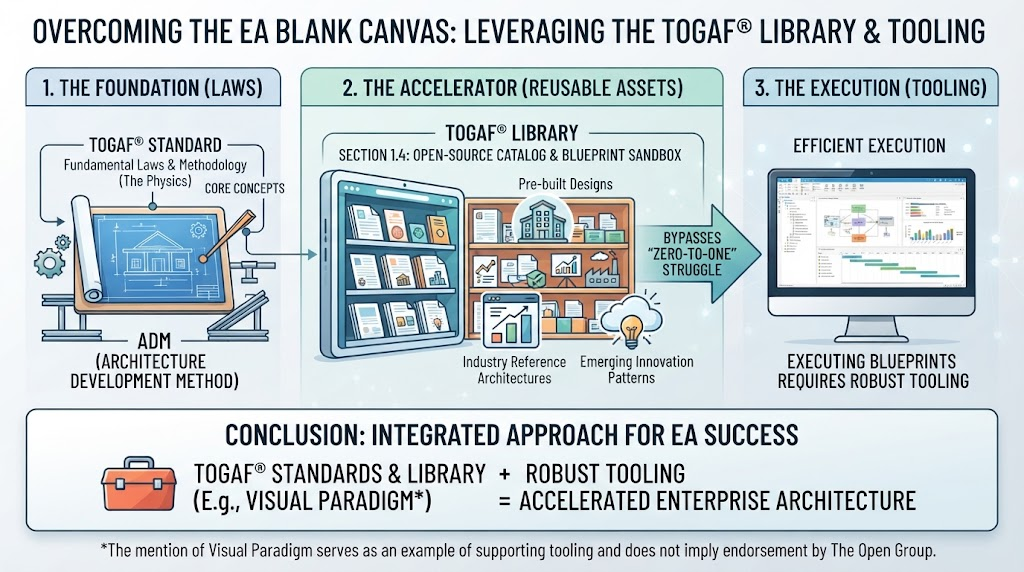
Enterprise Architecture (EA) is often perceived as a daunting endeavor. It requires architects to map complex business capabilities, data flows, and technology landscapes from scratch. For many practitioners, the biggest hurdle is the “blank canvas” syndrome—the struggle to know where to begin when facing a new architecture project.
However, modern Enterprise Architecture is shifting from a purely theoretical exercise to an accelerated, asset-driven practice. By understanding the relationship between foundational standards, reusable libraries, and robust execution tools, architects can bypass the “zero-to-one” struggle and focus on delivering strategic value.
1. The Foundation: Understanding the Laws
Before building anything, one must understand the structural laws of the environment. In the realm of EA, this foundation is provided by the TOGAF Standard.
- Analogy: Think of the TOGAF Standard as the physics of building construction. It provides the fundamental laws and methodologies that govern how an enterprise should be structured.
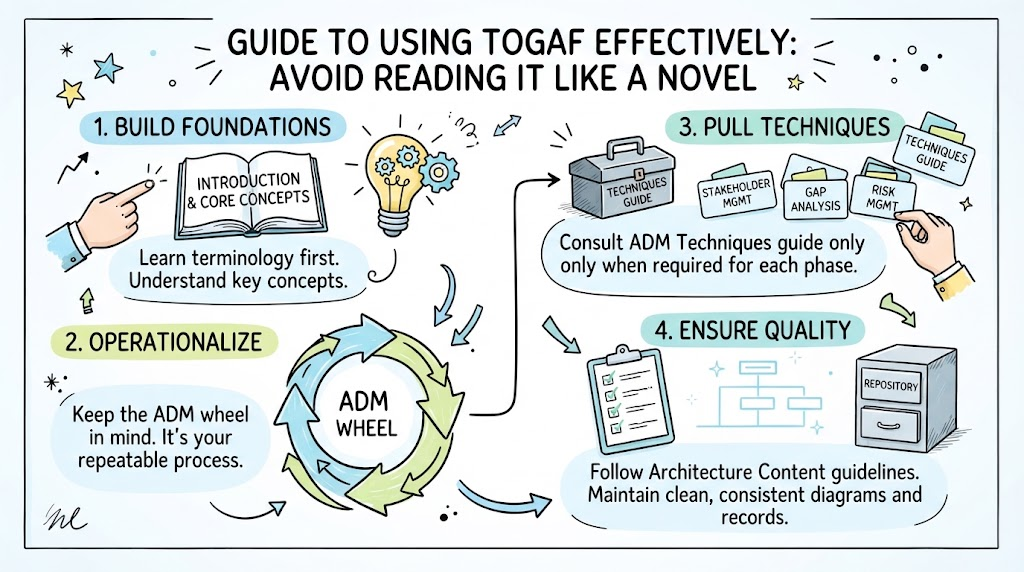
- Core Concepts: This includes the Architecture Development Method (ADM), which serves as the cyclic process for planning and executing architecture projects.
While TOGAF provides the methodology, relying solely on it without pre-existing assets can lead to a “blank canvas” scenario where architects spend excessive time defining basic structures rather than solving business problems.
2. The Accelerator: The TOGAF Library
To move from theory to practice, we utilize Section 1.4: The TOGAF Library. This is not merely a repository of documents; it functions as an Open-Source Catalog and Blueprint Sandbox.
Key Components of the Library
The library accelerates the process by offering three critical layers of assets:
- Pre-built Designs: Standardized templates that reduce the time needed to create initial diagrams.
- Industry Reference Architectures: Proven models specific to sectors (e.g., Banking, Healthcare) that provide a starting point for domain-specific challenges.
- Emerging Innovation Patterns: Blueprints for adopting new technologies, ensuring your architecture is future-proof.
By leveraging these assets, architects can effectively bypass the “zero-to-one” struggle. Instead of inventing a wheel, you are adapting a proven design.
3. The Execution: Robust Tooling
Having access to blueprints is only half the battle; executing them efficiently requires robust tooling. This is where the integration of standards with software becomes critical.
Visual Paradigm + TOGAF ADM + ArchiMate
To operationalize the TOGAF Library, we recommend integrating it with a powerful EA tool like Visual Paradigm. This combination creates a powerful triad for execution:
How Visual Paradigm Accelerates the ADM
- Seamless Integration: Visual Paradigm allows architects to import and utilize assets from the TOGAF Library directly into the workspace. This means you are not manually recreating diagrams but deploying pre-built logic.
- AI-Enhanced Modeling: Modern tooling includes AI features that assist in generating diagrams and suggesting relationships, further reducing manual effort.
- Consistency: By using a centralized tool, you ensure that the terminology and notation (such as ArchiMate) remain consistent across all stakeholder views.
The Power of ArchiMate
A crucial element of this tooling is the support for ArchiMate. This modeling language is designed specifically for Enterprise Architecture. When combined with the TOGAF Standard, ArchiMate provides a standardized way to visualize the relationships between business, application, and technology layers. Visual Paradigm’s support for ArchiMate ensures that your architecture is not just a pretty picture, but a rigorously modeled asset that can be validated and analyzed.
Conclusion: An Integrated Approach
Success in Enterprise Architecture requires more than just knowledge of the TOGAF Standard. It requires an integrated approach:
TOGAF Standards & Library + Robust Tooling (e.g., Visual Paradigm) = Accelerated Enterprise Architecture
By combining the foundational laws of TOGAF, the speed of the TOGAF Library, and the execution power of AI-enhanced tooling, architects can significantly reduce delivery time and focus on the strategic value that drives the organization forward.
Related posts:
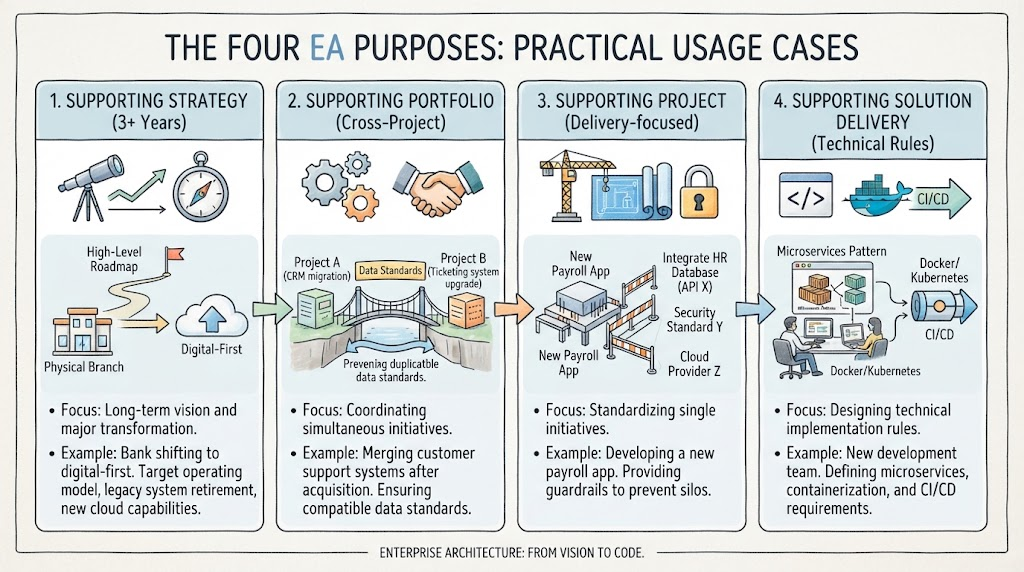 Mastering Enterprise Architecture: A Step-by-Step Guide to the Four Core Purposes
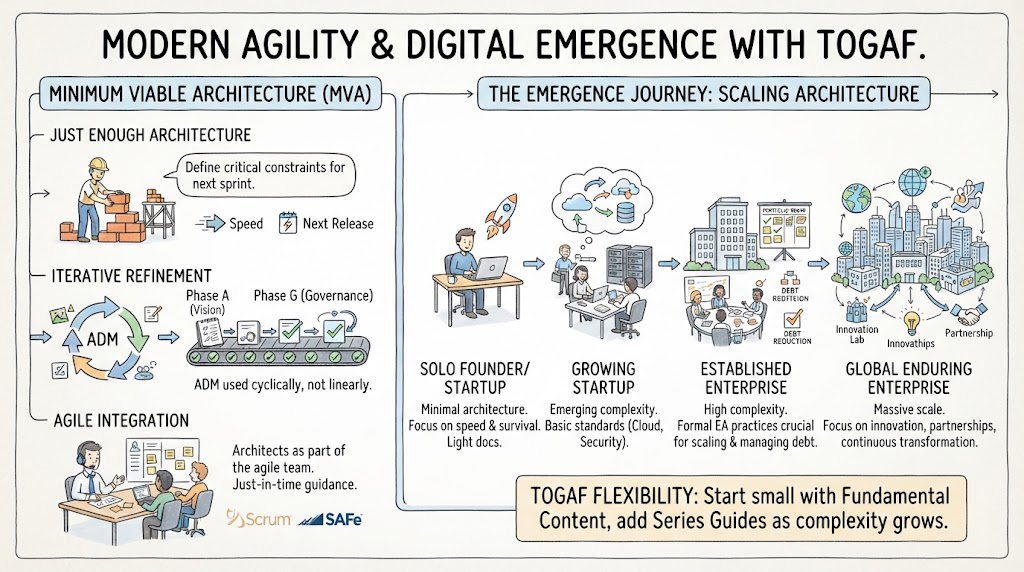 Mastering Modern Agility: A Tutorial on Minimum Viable Architecture and the Digital Emergence Journey
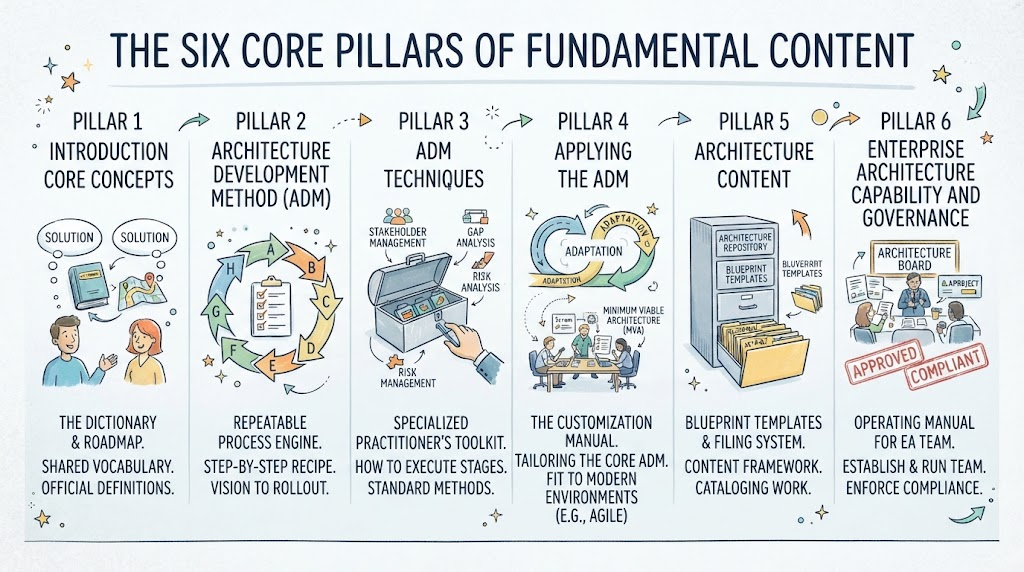 Mastering Enterprise Architecture: A Step-by-Step Guide to the Six Core Pillars of TOGAF
 Mastering Enterprise Architecture: A Strategic Guide to the TOGAF Framework