


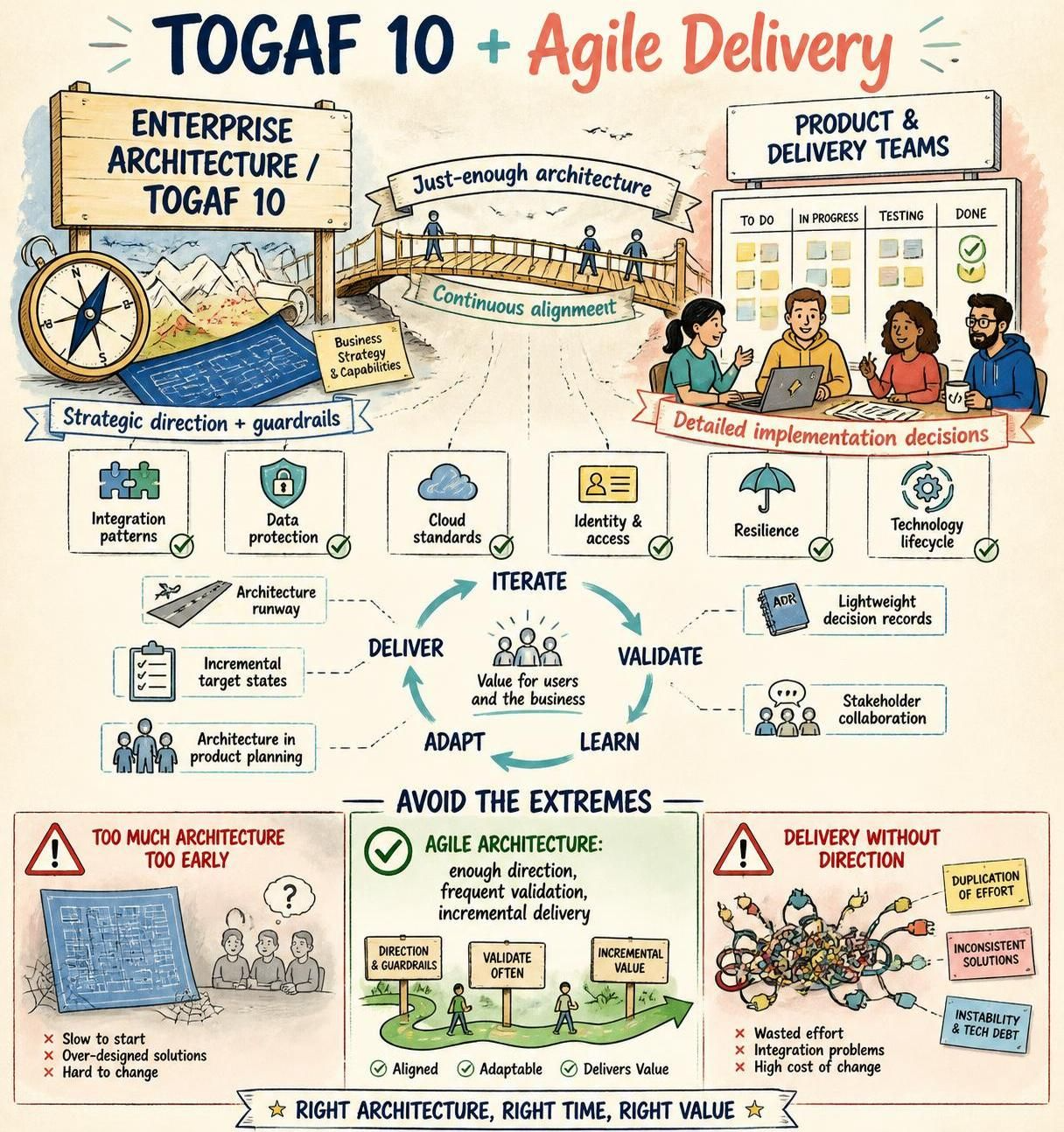
In the modern enterprise landscape, the traditional perception of Enterprise Architecture (EA) as a slow, upfront, and documentation-heavy process is rapidly becoming obsolete. The integration of TOGAF 10 with Agile Delivery represents a paradigm shift. This approach allows organizations to maintain strategic alignment and technical stability while embracing the speed and flexibility required by modern product teams.
This tutorial explores how to bridge the gap between high-level architectural strategy and iterative delivery, ensuring that architecture serves as a catalyst for innovation rather than a bottleneck.
The Core Philosophy: Just-Enough Architecture
The fundamental challenge in combining TOGAF with Agile is avoiding the “Waterfall trap”—where architects spend months creating detailed designs that are obsolete by the time development begins. Instead, TOGAF 10 advocates for a Just-Enough Architecture approach.
This methodology relies on several key principles:
- Iterative Architecture Development: Architecture is not a one-time event but a continuous cycle.
- Architecture Runway: Providing enough architectural capability to support the next few iterations of delivery.
- Lightweight Decision Records: Documenting decisions (like ADRs – Architecture Decision Records) just enough to ensure future traceability without the overhead of formal specifications.
- Continuous Stakeholder Collaboration: Breaking down silos between the EA team and product owners.
Defining Boundaries: The Role of the Enterprise Architecture Team
In this hybrid model, the Enterprise Architecture team does not dictate every line of code. Instead, they establish the strategic direction and guardrails. Think of this as setting the rules of the road so that delivery teams can drive fast without crashing.
The EA team focuses on defining constraints and standards across these critical domains:
- Integration Patterns: Approved methods for systems to communicate (e.g., Event-driven vs. REST APIs).
- Data Protection Requirements: Mandatory compliance standards for handling sensitive information.
- Cloud Platform Standards: The approved service catalogs and infrastructure types.
- Identity & Access Principles: Governance rules for authentication and authorization.
- Resilience Expectations: Defined availability and recovery targets (RTO/RPO).
- Technology Lifecycle Policies: Rules regarding software support lifecycles and upgrade paths.
Once these guardrails are set, the Product & Delivery Teams are empowered to make detailed implementation decisions. They can choose the specific libraries, frameworks, or microservices that best fit their immediate user stories, provided they remain within the architectural boundaries.
The Agile Delivery Cycle: Deliver, Validate, Adapt, Learn
The diagram illustrates a continuous loop that integrates architecture work directly into product planning. This cycle ensures that the target state evolves incrementally rather than being a distant, unreachable horizon.
- Deliver: Teams build functionality in short sprints. Architecture work is embedded here, ensuring that technical debt is managed proactively.
- Validate: Frequent validation ensures that the built features meet the non-functional requirements (NFRs) set by the EA team.
- Adapt: If a new technology emerges or a market shift occurs, the architecture adapts quickly. This is supported by Incremental Target States, where the future state is defined in chunks.
- Learn: Continuous stakeholder collaboration allows the team to learn from delivery outcomes and refine the architectural strategy.
Tooling for Success: Visual Paradigm TOGAF ADM Tool
To effectively manage this balance between rigid standards and agile flexibility, organizations need tooling that supports the TOGAF Architecture Development Method (ADM) without enforcing bureaucracy. This is where the Visual Paradigm TOGAF ADM Tool becomes a critical asset.
Visual Paradigm offers a robust environment that helps architects visualize the “Just-enough” architecture required for agile teams. Key benefits include:
- Visual Modeling: It allows for the rapid creation of high-level diagrams that communicate the “Strategic Direction” to delivery teams without getting bogged down in code-level details.
- Collaboration Features: The platform facilitates the “Continuous Stakeholder Collaboration” mentioned in the context, allowing architects and developers to view and comment on models in real-time.
- Integration Capabilities: It supports the definition of integration patterns and cloud standards in a format that can be easily referenced during sprint planning.
- Architecture Runway Management: Users can map out the architecture runway, ensuring that the necessary infrastructure and patterns are defined just before the product teams need them.
Avoiding the Extremes
The success of this approach lies in avoiding two dangerous extremes:
- Too Much Architecture (Too Early): When architecture is performed so far in advance that it becomes disconnected from reality. This leads to over-designed solutions, slow time-to-market, and an inability to change direction when the market shifts.
- Delivery Without Direction: When teams work in isolation without architectural guardrails. This results in duplication of effort, inconsistent solutions, integration nightmares, and high technical debt.
The sweet spot is Agile Architecture. It provides enough direction to prevent chaos and frequent validation to ensure relevance. By utilizing the right tools like Visual Paradigm and adhering to the TOGAF 10 principles adapted for agile, enterprises can achieve the ultimate goal: Right Architecture, Right Time, Right Value.
Related posts:
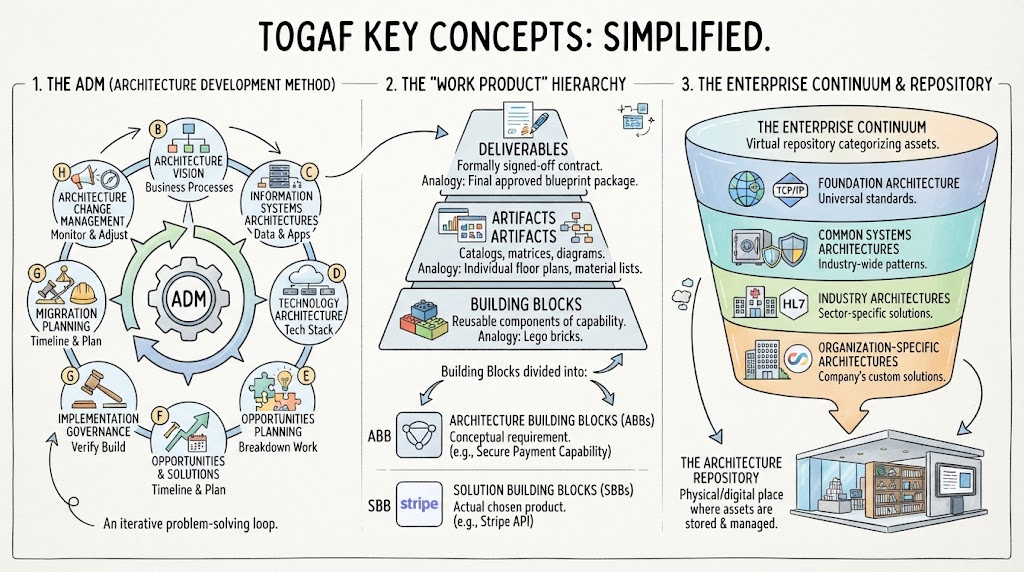 Mastering TOGAF: A Step-by-Step Guide to the ADM Cycle and Enterprise Architecture
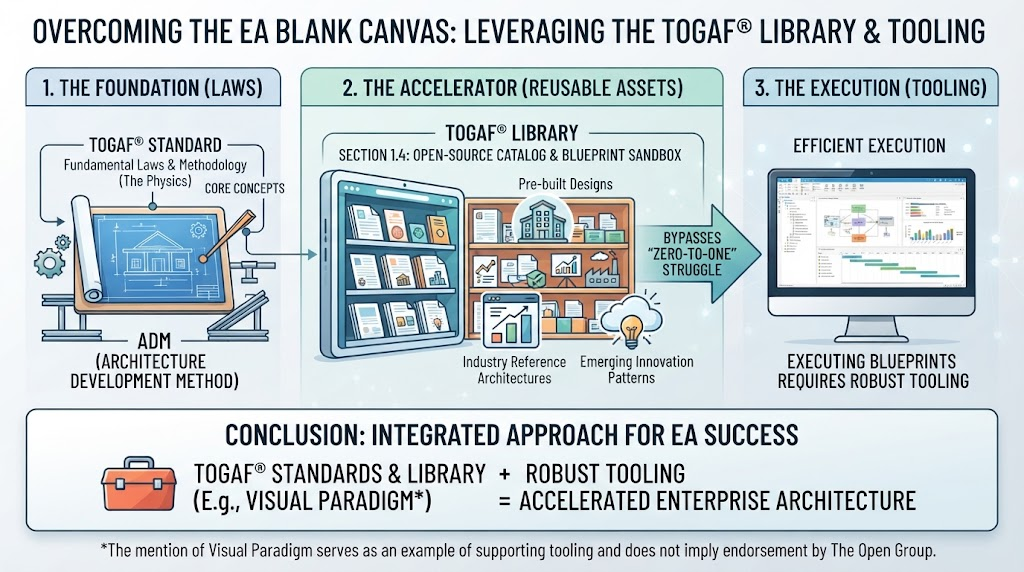 Overcoming the EA Blank Canvas: Leveraging the TOGAF Library & Tooling
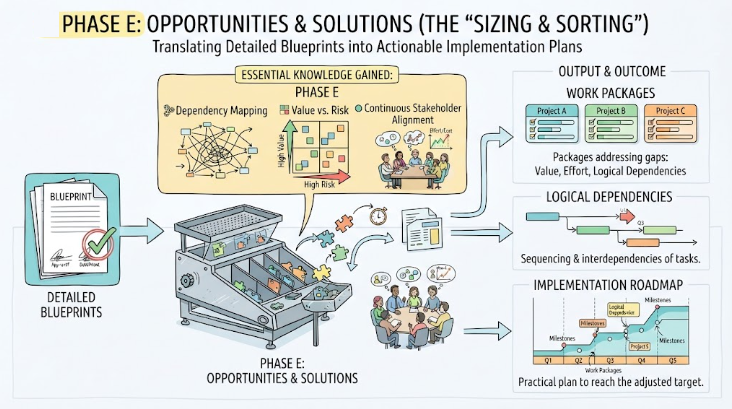 Mastering Phase E: Opportunities & Solutions in Enterprise Architecture
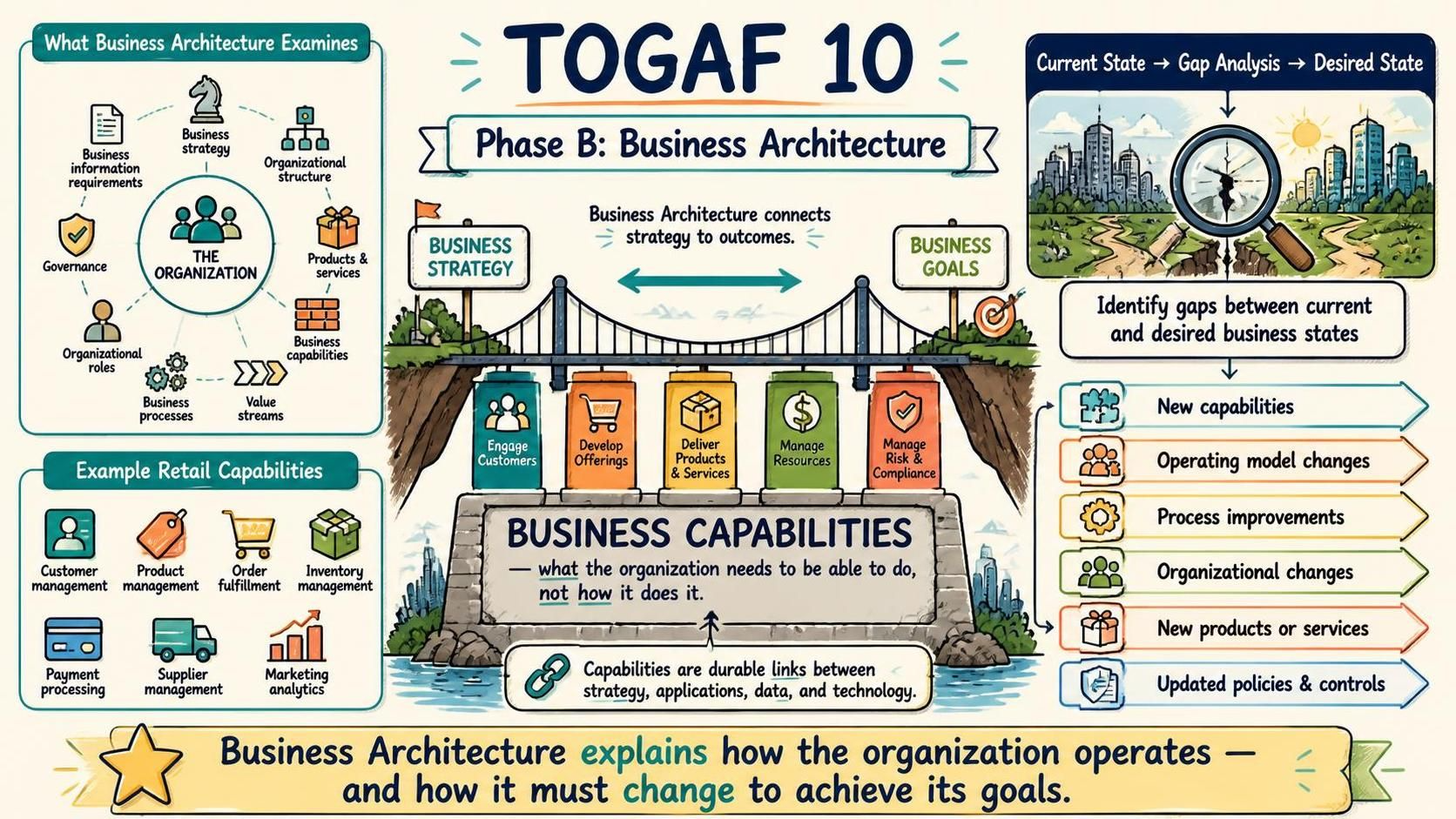 Mastering TOGAF Phase B: Business Architecture and the Power of Business Capabilities