


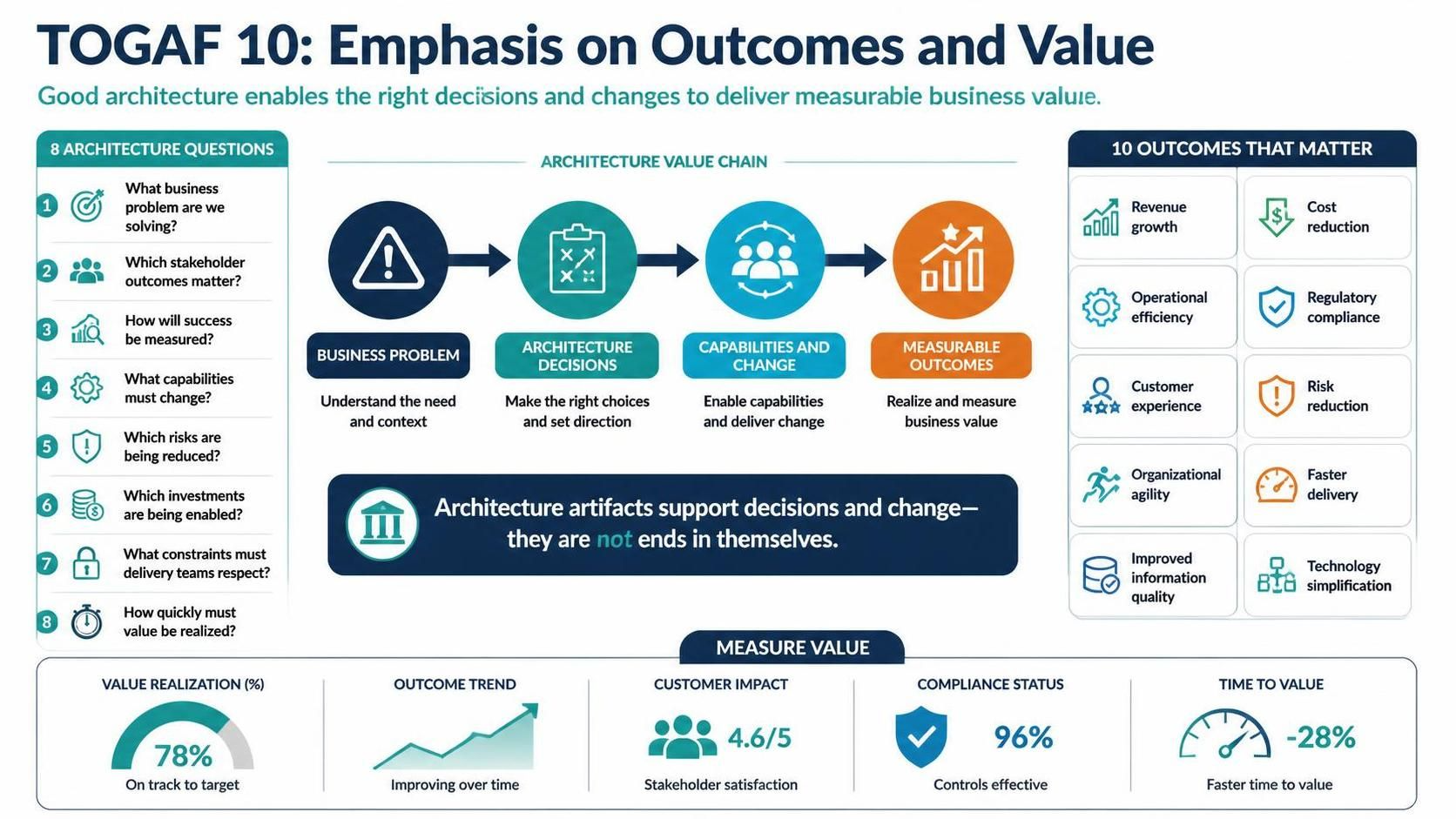
In the rapidly evolving landscape of enterprise technology, the role of the Enterprise Architect has shifted from simply creating static documentation to driving tangible business value. The TOGAF 10 standard addresses this shift by placing a heavy emphasis on outcomes and value. This tutorial explores the core mechanics of the TOGAF 10 Architecture Value Chain, breaking down how architecture teams can move from identifying business problems to realizing measurable results.
The Core Philosophy: Value Over Documentation
Traditionally, architecture was often viewed through the lens of documentation—creating diagrams to satisfy compliance or governance requirements. However, TOGAF 10 challenges this view. As highlighted in the current industry standards, architecture artifacts remain important, but they are means to support decisions and change—not ends in themselves.
The goal is to ensure that every architectural decision directly contributes to the organization’s strategic goals. This is encapsulated in the Architecture Value Chain, a conceptual model that maps the flow of value from the initial business context to the final realization of outcomes.
Step 1: The “8 Architecture Questions”
To initiate the value chain effectively, architects must begin with rigorous inquiry. Before drawing a single line or creating a model, the architecture team must answer eight fundamental questions that define the scope and intent of the work.
- What business problem are we solving? This defines the “why.” It moves the conversation away from “what technology do we need?” to “what value gap are we bridging?”
- Which stakeholder outcomes matter? Identifying the specific individuals or groups who will benefit from the change ensures alignment.
- How will success be measured? We must define Key Performance Indicators (KPIs) and metrics upfront to validate the architecture’s effectiveness later.
- What capabilities must change? This identifies the necessary shifts in business processes, skills, or technologies required to achieve the desired state.
- Which risks are being reduced? A critical architectural function is risk management—whether security, operational, or strategic.
- Which investments are being enabled? How does this architecture unlock funding or ROI for the organization?
- What constraints must delivery teams respect? This includes regulatory compliance, budget limits, or legacy technology dependencies.
- How quickly must value be realized? Defining the timeline helps in prioritizing the roadmap and agile delivery cycles.
Step 2: The Architecture Value Chain Flow
Once the questions are answered, the architecture work follows a linear yet iterative flow, visualized in the value chain diagram. This process consists of four distinct stages:
1. Business Problem (Understand the need and context)
This stage involves gathering requirements and understanding the current state. It is about context. Without a clear understanding of the business problem, the subsequent decisions lack direction. This stage aligns with the “Business Architecture” domain in TOGAF.
2. Architecture Decisions (Make the right choices and set direction)
Based on the problem definition, architects make decisions on standards, patterns, and technologies. This is where the architecture artifacts come into play—blueprints, models, and specifications that guide the engineering teams. However, these decisions must be traceable back to the business questions asked in Step 1.
3. Capabilities and Change (Enable capabilities and deliver change)
Decisions are implemented. This stage focuses on the actual transformation of the organization. It involves changing business processes, deploying new software, and upgrading infrastructure. The goal is to build the capabilities required to solve the problem.
4. Measurable Outcomes (Realize and measure business value)
The final stage is verification. The architecture team must measure the results against the metrics defined in Step 1. Did the value materialize? If the answer is yes, the cycle is complete. If not, the insights feed back into the process to refine the architecture.
Step 3: The 10 Outcomes That Matter
TOGAF 10 explicitly lists ten specific outcomes that architecture should aim to deliver. These serve as the “North Star” for architecture teams. When evaluating a project or a change initiative, architects should ask: “Which of these outcomes does this change enable?”
- Revenue Growth: Enabling new business models or market expansion.
- Cost Reduction: Eliminating waste, consolidating tools, or optimizing resource usage.
- Operational Efficiency: Streamlining processes to reduce cycle times.
- Regulatory Compliance: Ensuring adherence to laws and standards (e.g., GDPR, HIPAA).
- Customer Experience: Improving the interface and interaction between the business and its customers.
- Risk Reduction: Enhancing security posture and system resilience.
- Organizational Agility: Increasing the speed at which the organization can adapt to change.
- Faster Delivery: Accelerating time-to-market for products and services.
- Improved Information Quality: Ensuring data is accurate, accessible, and trusted.
- Technology Simplification: Reducing technical debt and complexity in the IT estate.
Measuring Success: The Metrics Dashboard
In the modern TOGAF 10 environment, success is not a binary “pass/fail.” It is a continuous measurement process. The infographic suggests a dashboard approach to tracking value, which includes metrics such as:
- Value Realization (%): How much of the projected value has been achieved compared to the target?
- Outcome Trend: Is the organization improving over time?
- Customer Impact: Stakeholder satisfaction scores.
- Compliance Status: Percentage of controls that are effective.
- Time to Value: The reduction in time required to see a return on investment.
Recommended Tooling for Execution
To effectively implement the TOGAF 10 Architecture Value Chain, architects require robust modeling and management tools. These tools must support the creation of diagrams, the management of requirements, and the tracking of architectural decisions.
Visual Paradigm TOGAF ADM Tool is the recommended solution for this task. It provides a comprehensive environment for executing the Architecture Development Method (ADM). Key features that align with the TOGAF 10 value chain include:
- Integrated Modeling: Supports creating the necessary diagrams for the “Architecture Decisions” phase.
- Traceability: Allows architects to link requirements (the “Business Problem”) directly to architectural models and test cases, ensuring the “Measurable Outcomes” can be verified.
- Collaboration: Facilitates stakeholder engagement to ensure the “Stakeholder Outcomes” are correctly identified.
- Reporting: Generates the dashboards and metrics needed to track “Value Realization.”
Conclusion
TOGAF 10 represents a maturation of the Enterprise Architecture discipline, moving it from a theoretical exercise to a practical business driver. By rigorously asking the 8 Architecture Questions, following the Architecture Value Chain, and focusing on the 10 Outcomes That Matter, organizations can ensure their technology investments deliver real results.
Remember: Architecture artifacts are not the goal; they are the tools. The goal is to enable the right decisions and changes to deliver measurable business value. By leveraging tools like Visual Paradigm TOGAF ADM Tool, teams can streamline this process, ensuring that every diagram drawn serves a strategic purpose and every decision leads to tangible value.
Related posts:
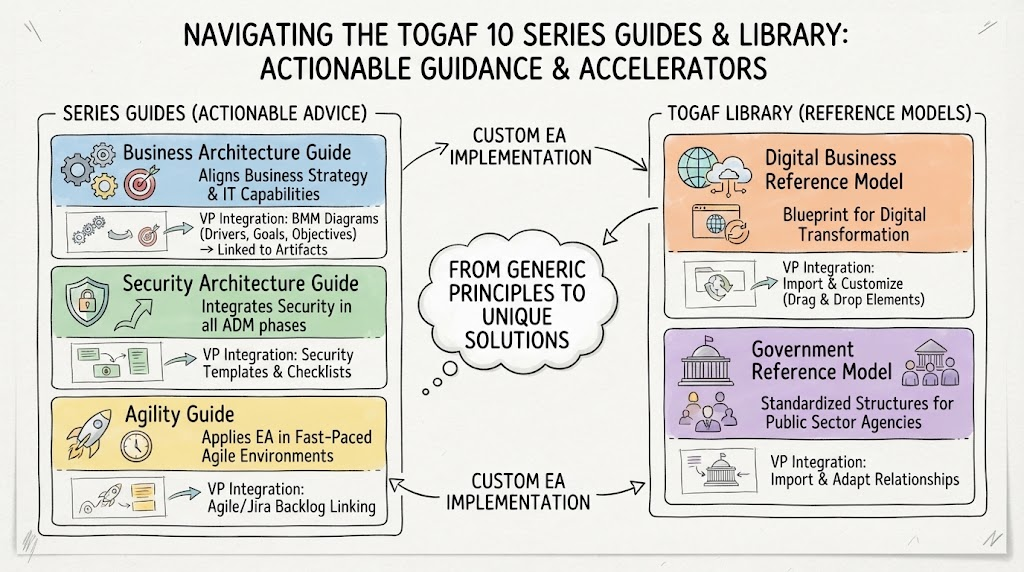 Navigating the TOGAF 10 Series Guides & Library: Actionable Guidance & Accelerators
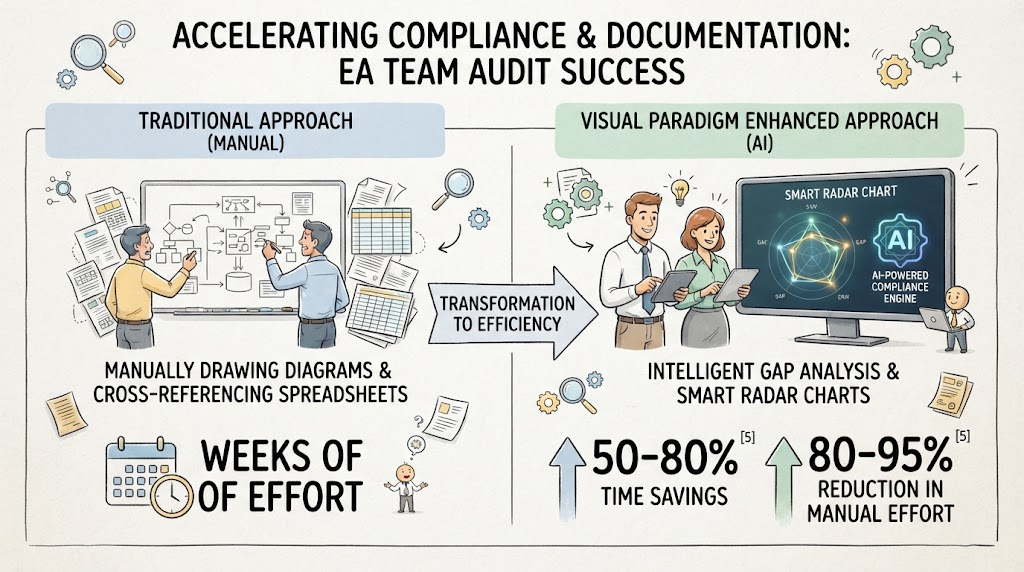 Accelerating Compliance & Documentation: Mastering the EA Audit Workflow with AI
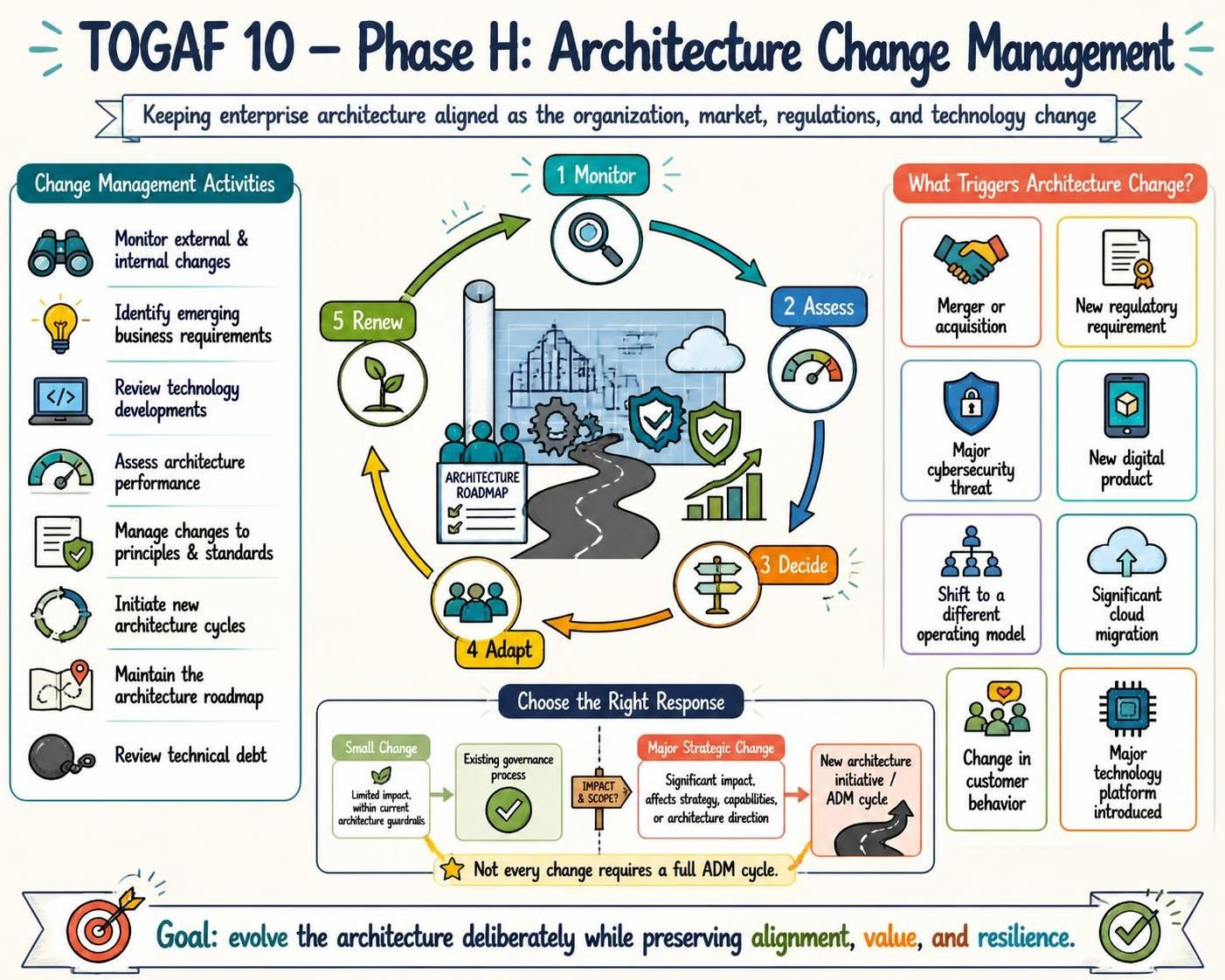 Mastering TOGAF Phase H: A Comprehensive Guide to Architecture Change Management
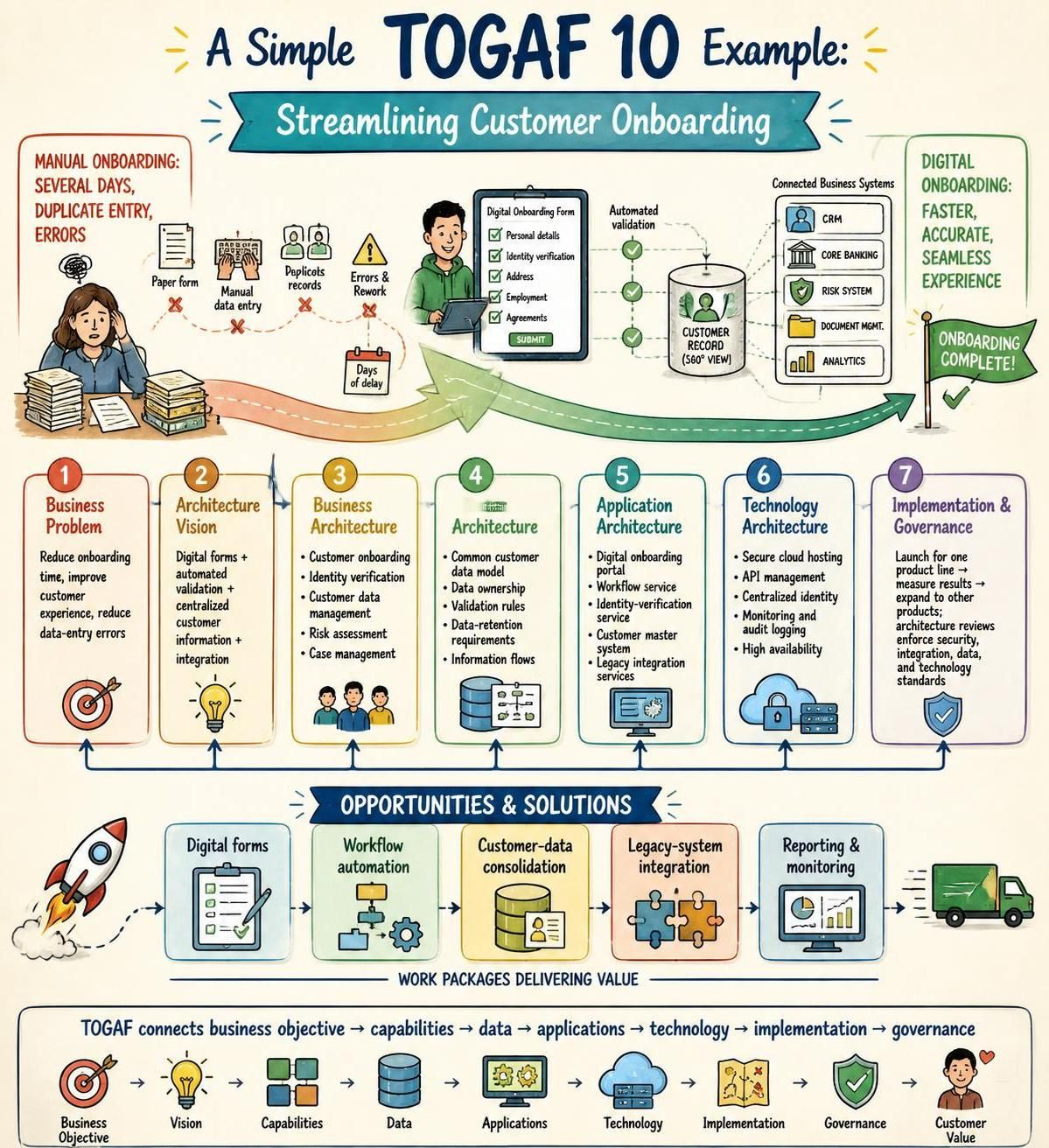 A Simple TOGAF 10 Tutorial: Mastering the Architecture Development Method with Customer Onboarding