


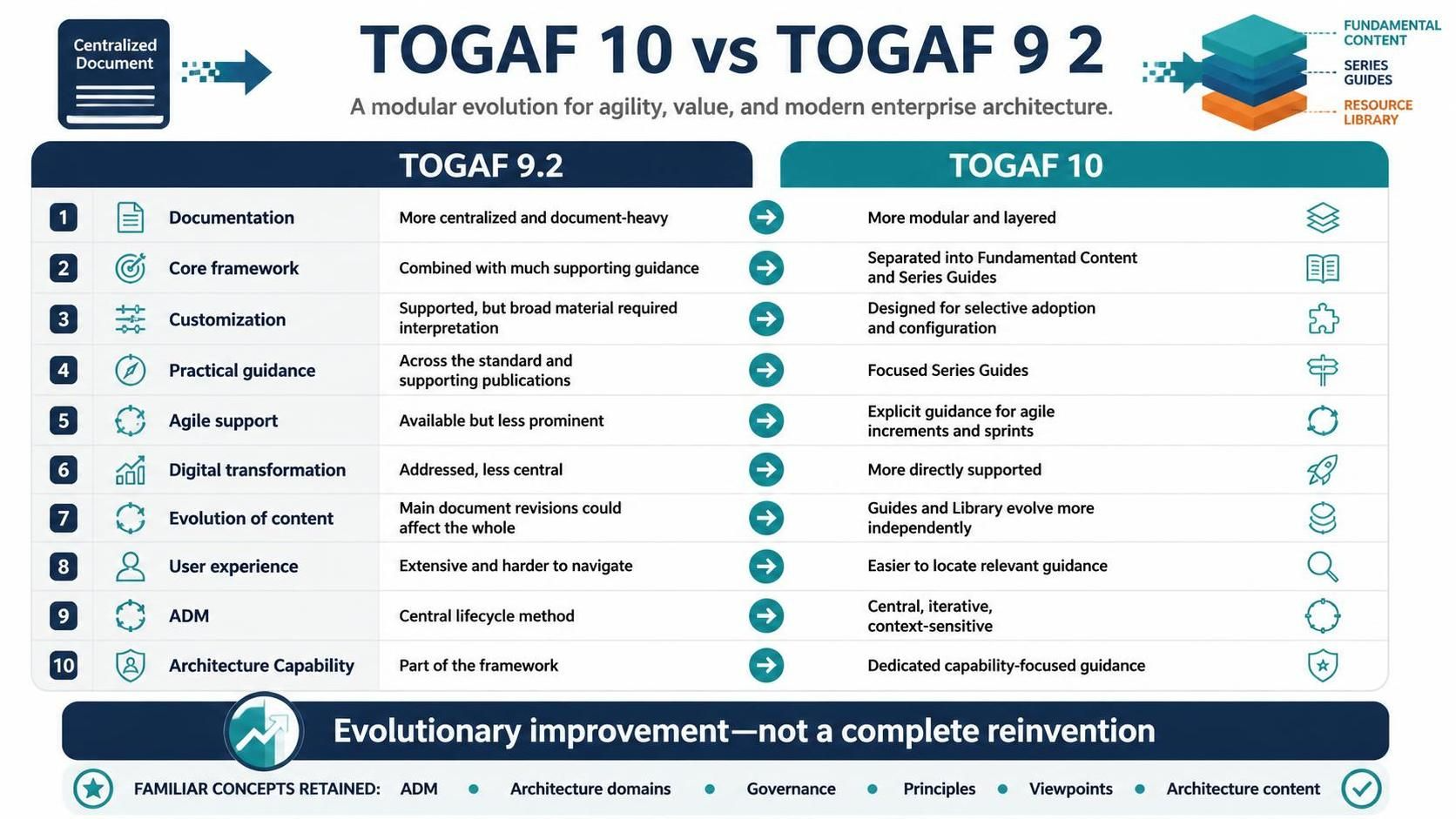
Welcome to this comprehensive tutorial on the evolution of Enterprise Architecture frameworks. As organizations strive for agility and digital transformation, the methodologies we use to design and govern IT systems must evolve with them. In this guide, we will explore the critical differences between the established TOGAF 9.2 standard and the modernized TOGAF 10 release, analyzing how the shift from a “centralized document” to a “modular library” fundamentally changes how architects approach system design.
Understanding the Architectural Shift: From Monolith to Modular
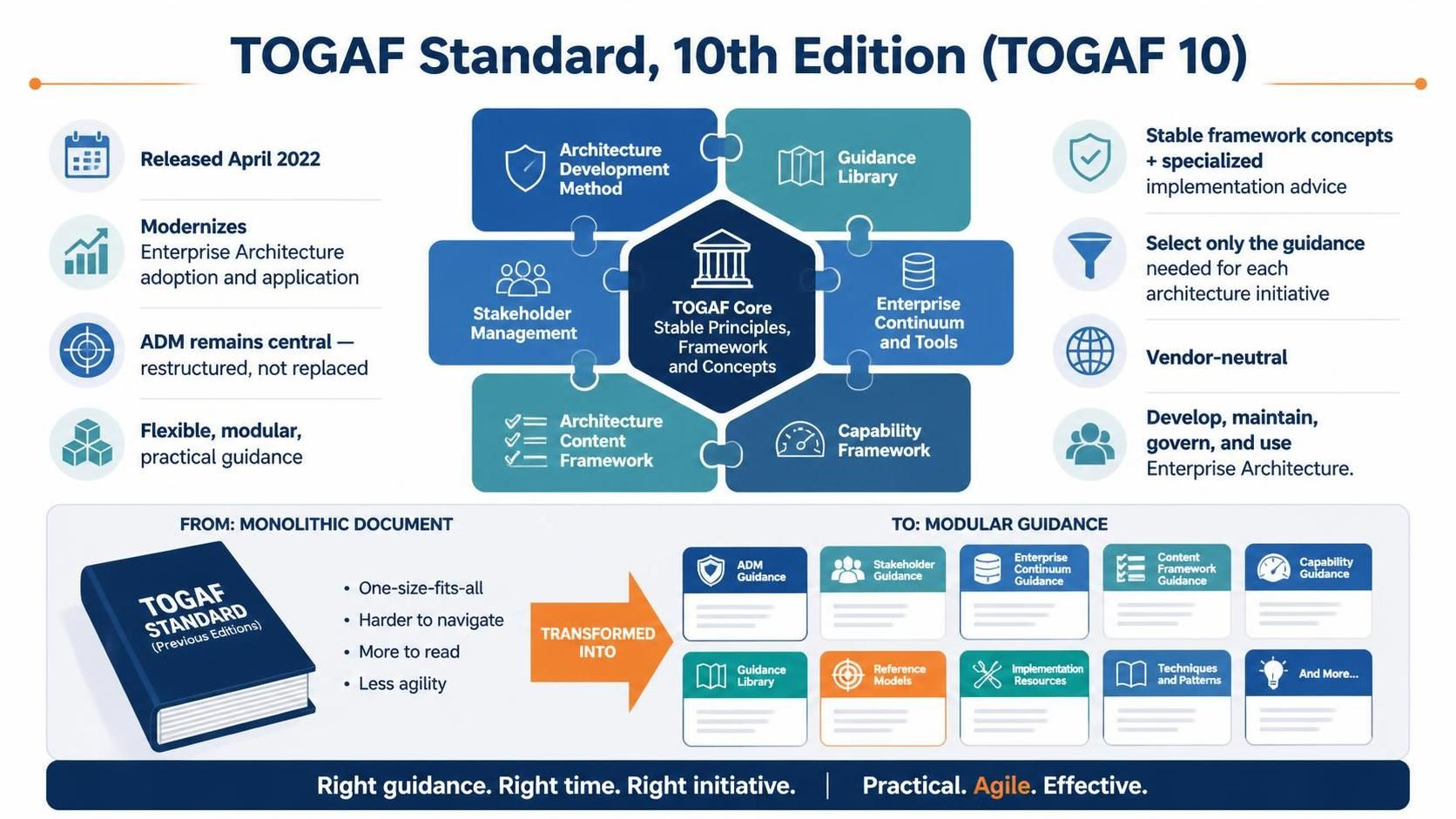
The most significant structural change in TOGAF 10 is the reorganization of its content. In the TOGAF 9.2 era, the framework was often perceived as a monolithic, document-heavy standard where the core framework was inextricably linked with supporting guidance. This approach, while comprehensive, often required practitioners to interpret vast bodies of material to find specific answers for their unique contexts.
TOGAF 10 addresses this by adopting a modular and layered approach. The content is now separated into Fundamental Content, Series Guides, and a Resource Library. This separation allows for a more flexible user experience, where you can locate relevant guidance without wading through the entire standard. It supports a “selective adoption” model, meaning you can configure the framework to fit your specific organizational needs rather than forcing your organization to fit the framework.
Key Differences in Documentation and Guidance
- Documentation Structure: TOGAF 9.2 was centralized, whereas TOGAF 10 is modular. This means updates to specific guides (like Agile or Digital Transformation) can evolve independently of the main standard.
- Customization: While customization was supported in 9.2, it often felt like a manual tailoring process. In TOGAF 10, the framework is explicitly designed for configuration, making it easier to tailor to your specific context.
- User Experience: The new structure aims to make relevant guidance easier to locate, addressing the feedback that previous versions could be difficult to navigate.
Modernizing the Architecture Development Method (ADM)
The Architecture Development Method (ADM) remains the central lifecycle method in both versions, but its application has been refined. In TOGAF 10, the ADM is positioned as an iterative and context-sensitive tool. It is no longer just a linear process but a cycle that explicitly supports agile increments and sprints.
This evolution allows for Digital Transformation to be directly supported through specialized guidance. Where digital transformation was addressed but less central in 9.2, TOGAF 10 provides explicit guidance to handle modern agile workflows. Furthermore, the Architecture Capability is now supported through dedicated guidance, ensuring that the organizational ability to manage architecture is as robust as the architecture itself.
Practical Application: Modeling with Visual Paradigm
Understanding the theoretical framework is only half the battle; the true power of TOGAF is realized when you apply it to model real-world systems. To effectively visualize the data flows, system interactions, and architecture domains discussed in TOGAF 10, you need a robust tooling environment.
We highly recommend using the Visual Paradigm TOGAF ADM Tool. This tool bridges the gap between the abstract concepts of the framework and the concrete diagrams required for system architecture.
- Seamless Integration: Visual Paradigm allows you to work directly with the TOGAF 10 content library, ensuring your models align with the latest standards.
- Iterative Modeling: Reflecting the agile support in TOGAF 10, the tool supports iterative development of your architecture diagrams.
- Visual Clarity: Complex concepts like “Viewpoints” and “Architecture Content” become tangible through the visual modeling capabilities of the software.
By leveraging the Visual Paradigm TOGAF ADM Tool, you can transform the evolutionary improvements of TOGAF 10 into actionable, visual blueprints for your organization’s future.
Conclusion
The transition from TOGAF 9.2 to TOGAF 10 is an evolutionary improvement rather than a complete reinvention. Organizations familiar with the past will find the foundational concepts—such as the ADM, architecture domains, governance, principles, and viewpoints—remain intact. However, the new modular structure, explicit support for agile and digital transformation, and improved user experience make TOGAF 10 a more powerful tool for modern enterprise architecture.
To truly capitalize on these advancements, we recommend combining the strategic insights of TOGAF 10 with the practical modeling capabilities of the Visual Paradigm TOGAF ADM Tool. This combination ensures that your architecture is not only theoretically sound but also practically implementable in a rapidly changing digital landscape.
Related posts:
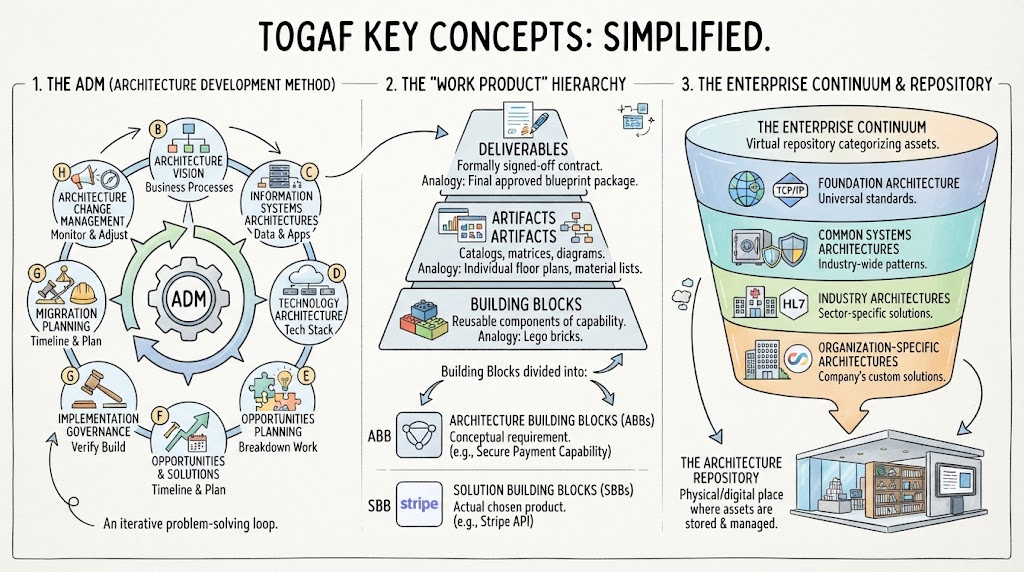 Mastering TOGAF: A Step-by-Step Guide to the ADM Cycle and Enterprise Architecture
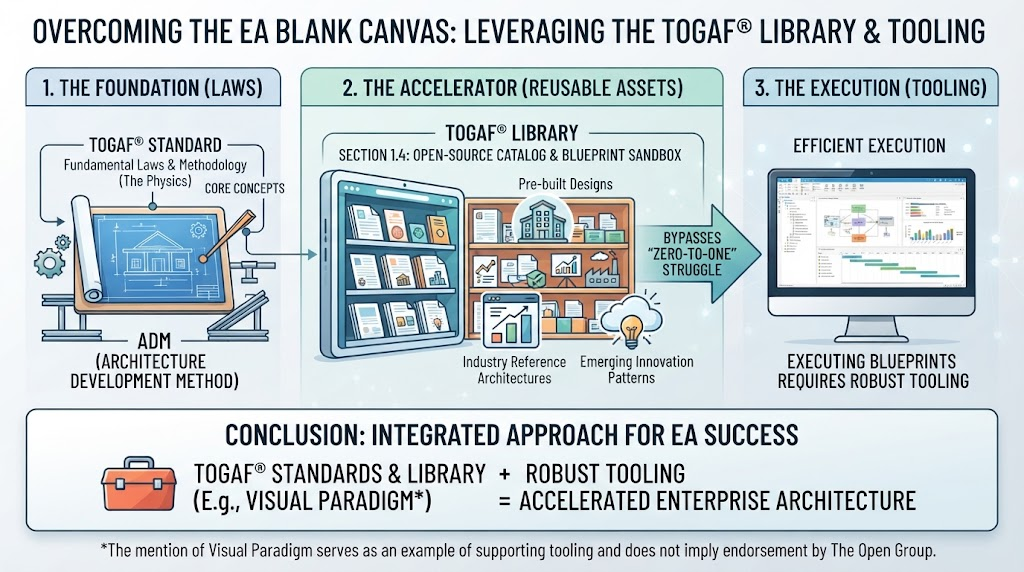 Overcoming the EA Blank Canvas: Leveraging the TOGAF Library & Tooling
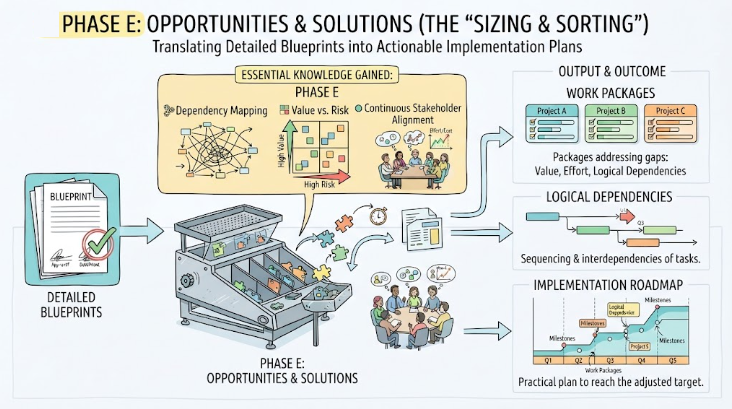 Mastering Phase E: Opportunities & Solutions in Enterprise Architecture
 Mastering the TOGAF Standard 10th Edition: A Modular Approach to Enterprise Architecture