


In the rapidly evolving landscape of software development, the gap between abstract design and concrete implementation has historically been a significant bottleneck. However, modern tools like Visual Paradigm are revolutionizing this process by integrating Artificial Intelligence (AI) and bidirectional engineering capabilities. This tutorial explores how to leverage these advanced features to streamline your system architecture workflow, moving seamlessly from natural language concepts to fully functional code.
Understanding the Evolution of Class Diagrams
Before diving into the tooling, it is crucial to understand that class diagrams are not static; they evolve alongside the software development lifecycle. The level of detail required changes depending on the phase of development:
- Conceptual Phase: At this stage, the focus is purely on domain concepts and vocabulary. You are defining the “what” without worrying about technical constraints. The diagrams here are minimal and abstract.
- Specification Phase: Here, the focus shifts to interfaces and Abstract Data Types (ADTs). You are defining exactly what the system does, effectively creating a contract, but still abstracting away the “how” of the implementation.
- Implementation Phase: This is where diagrams become highly technical. They describe exactly how classes will be coded, including specific data types (like
intorString) and visibility modifiers (likeprivateorpublic).
The Power of AI-Assisted Modeling
Gone are the days when you had to manually drag and drop every box and line to create a UML diagram. Visual Paradigm’s AI-Assisted Modeling feature bridges the gap between human thought and machine structure.
From Natural Language to Structure
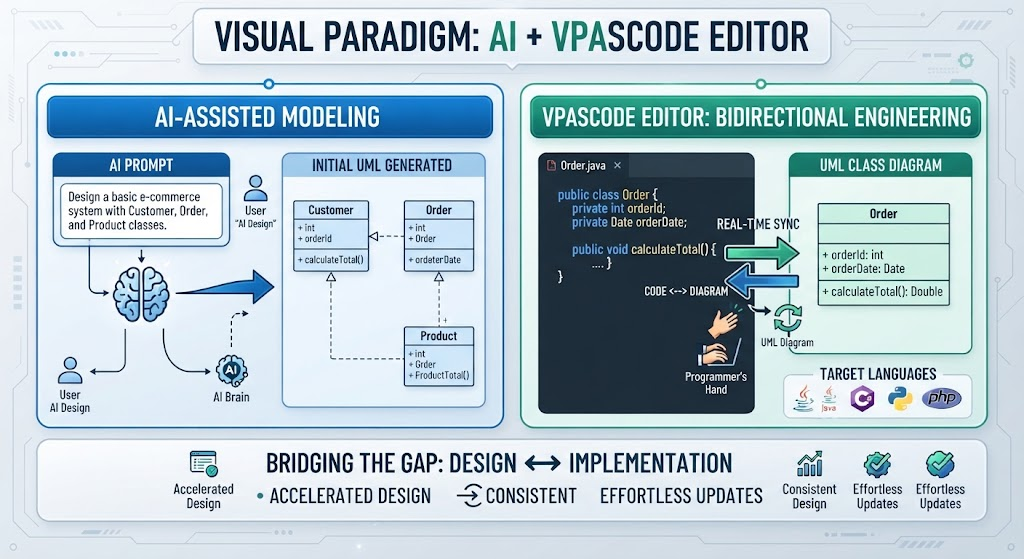
Imagine you are at the conceptual or specification phase. Instead of starting with a blank canvas, you can interact with an “AI Brain” using natural language prompts. For example, you might type:
“Design a basic e-commerce system with Customer, Order, and Product classes.”
The AI analyzes this prompt and generates an initial UML structure. As shown in the workflow, it automatically identifies entities (Customer, Order, Product) and establishes logical relationships between them. This accelerates the design phase, allowing you to focus on high-level architecture rather than syntax.
Bridging the Gap: The VPasCode Editor
Once your design is approved, the challenge often becomes translating that diagram into code. The VPasCode Editor eliminates this friction through Bidirectional Engineering.
Real-Time Synchronization
The VPasCode Editor acts as a unified environment where code and diagrams exist in perfect harmony. This creates a feedback loop:
- Code to Diagram: You can write code in the editor (e.g., a Java class
Order) and see the UML diagram update in real-time. If you add a new method in the code, it instantly appears in the class diagram. - Diagram to Code: Conversely, if you modify the diagram—perhaps adding a new attribute or changing a method signature—the tool will scaffold the corresponding class files in your target programming language (Java, C#, Python, etc.).
Supporting Multiple Languages
One of the most powerful aspects of this tooling is its versatility. Whether you are building backend services in Java, enterprise solutions in C#, or data scripts in Python, the VPasCode Editor ensures that your design remains consistent with your implementation regardless of the target language.
Key Benefits of This Workflow
By adopting this AI and bidirectional workflow, development teams achieve three critical outcomes:
- Accelerated Design: You spend less time drawing boxes and more time designing system logic.
- Consistency: The real-time sync ensures that your documentation (the diagram) is never outdated compared to your source code.
- Effortless Updates: Making changes becomes a single step. You can refine your design or your code, and the other component updates automatically.
In conclusion, tools like Visual Paradigm combined with AI and VPasCode represent the future of software architecture. They allow developers to maintain a “Single Source of Truth” where the design and the implementation are inextricably linked, reducing errors and speeding up the delivery of high-quality software.
Related posts:
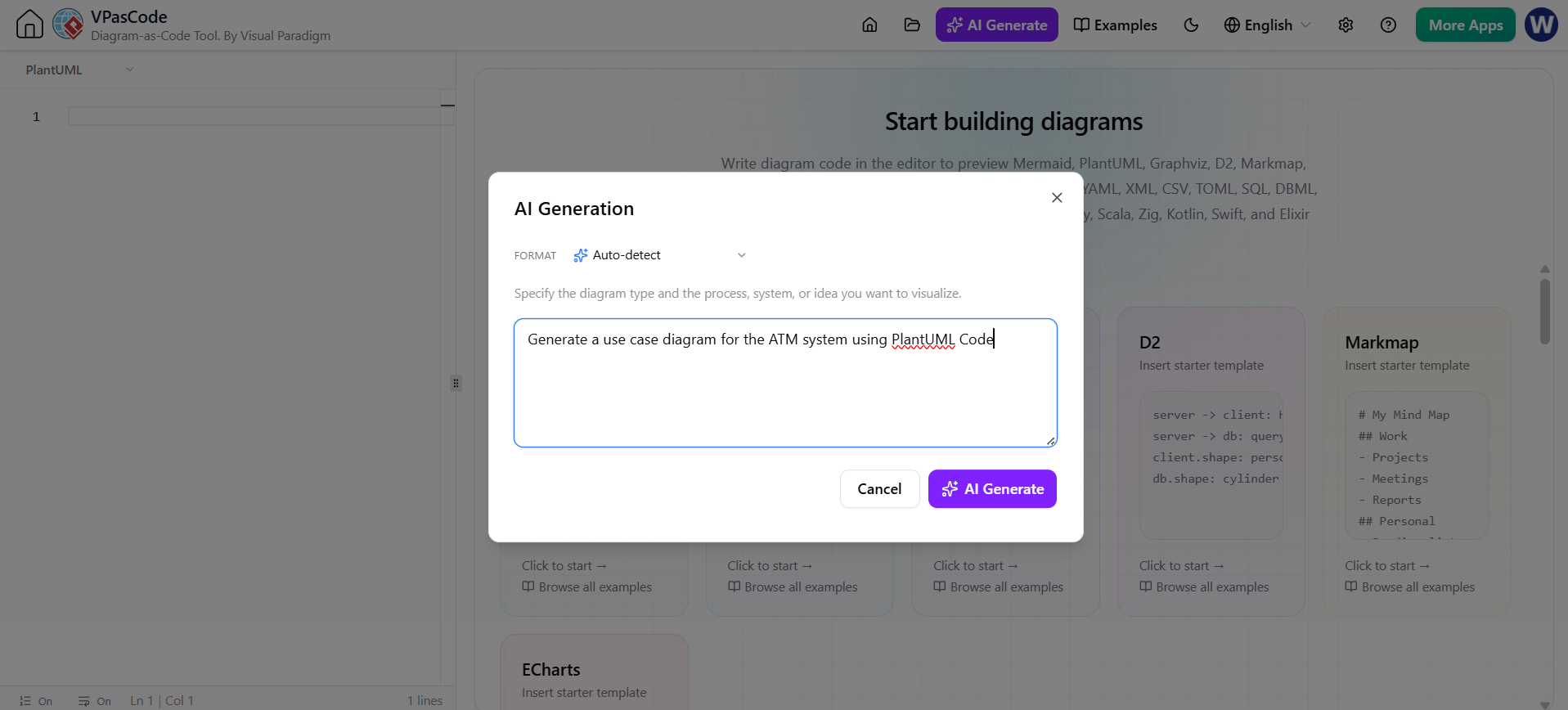 Revolutionizing System Modeling: The Power of Instant AI Diagram Generation
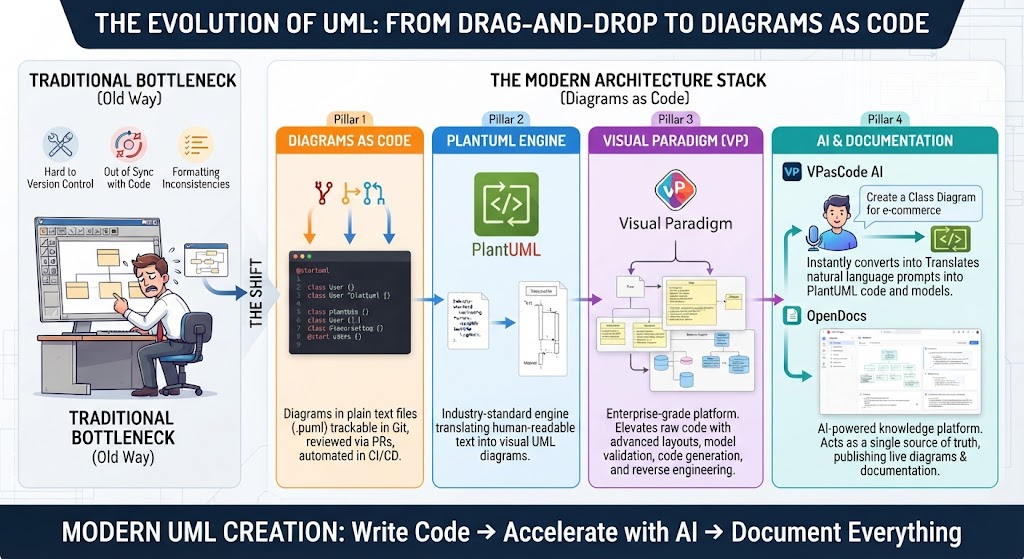 The Evolution of UML: Mastering the Modern Architecture Stack from Drag-and-Drop to Diagrams as Code
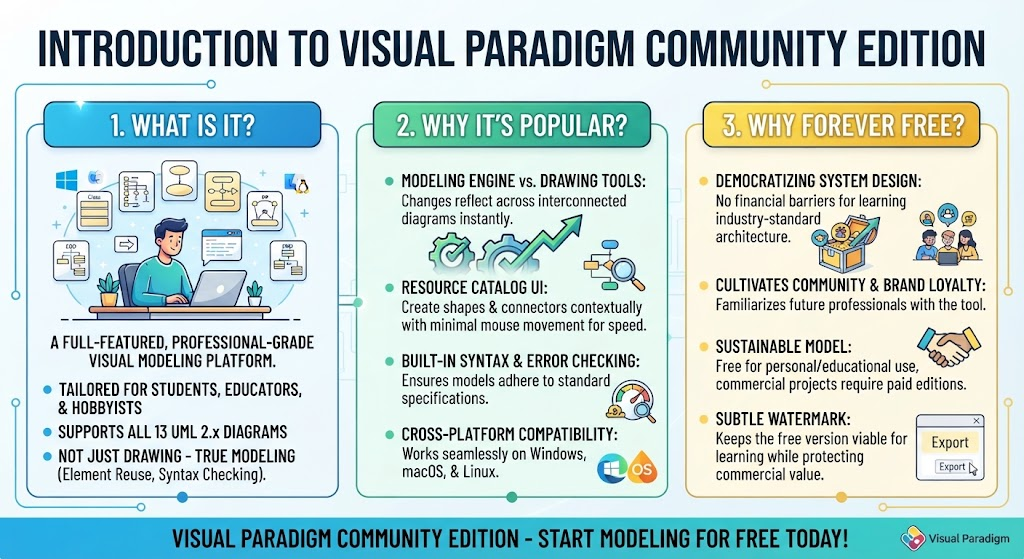 Mastering System Design: A Deep Dive into Visual Paradigm Community Edition
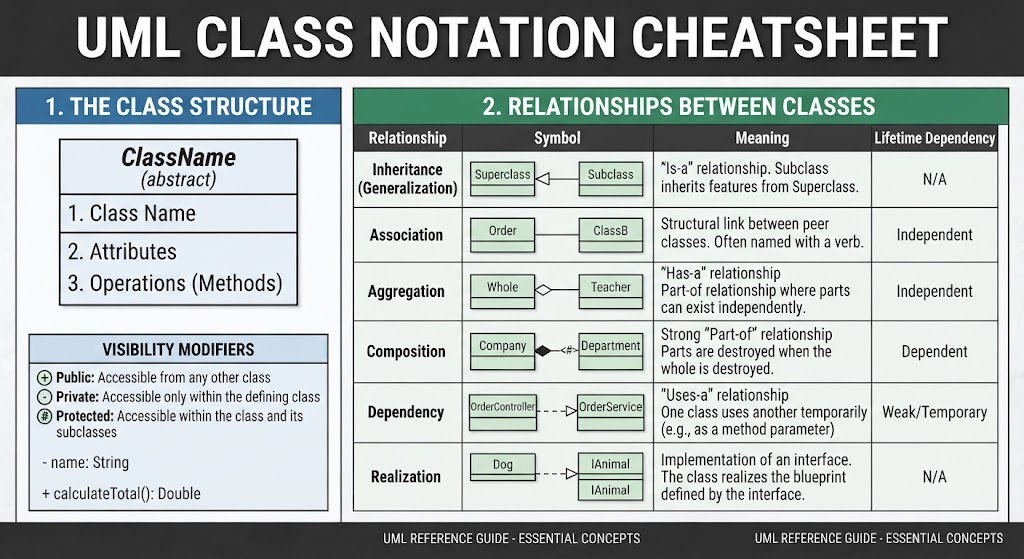 Mastering UML Class Diagrams: A Comprehensive Guide to Structure and Relationships