


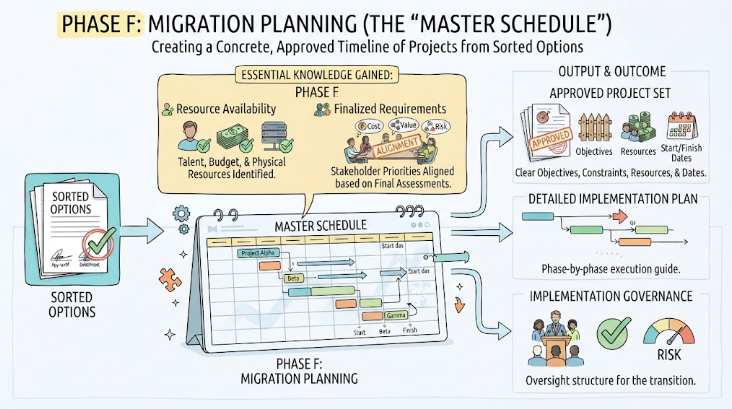
In the world of Enterprise Architecture, few stages are as critical as Phase F: Migration Planning. Often referred to as the transition from “Strategy” to “Execution,” this phase serves as the bridge between high-level architectural vision and tangible business value. This tutorial breaks down the mechanics of creating the “Master Schedule,” a fundamental artifact that governs the transformation journey.
Understanding the Core Objective
The primary goal of Phase F is to move beyond theoretical options and create a concrete, approved timeline of projects. In the context of the TOGADM (TOGAF Architecture Development Method), this phase is not about inventing new strategies, but rather refining the roadmap based on real-world constraints.
The process begins with a specific input: Sorted Options. These are the strategic initiatives identified in previous phases (such as Phase E: Opportunities and Solutions) that have been evaluated and ranked. The architect’s job is to take these sorted options and turn them into a workable schedule.
The Inputs: From Strategy to Schedule
Before a Master Schedule can be built, the architect must validate the feasibility of the proposed transitions. The diagram highlights two essential knowledge bases required to move forward:
- Resource Availability: This is the most critical constraint. You must know exactly what talent, budget, and physical resources are available to actually execute the transition. Without this, a schedule is merely a wish list.
- Finalized Requirements: Priorities must be re-aligned in response to final cost, value, and risk assessments. This ensures stakeholder expectations match the architectural reality.
The Output: The Master Schedule
The central artifact of this phase is the Master Schedule. Visually represented as a Gantt chart or timeline, this document is the “bible” for the implementation phase. A successful Master Schedule must detail:
- Clear Objectives: What specific value will each project deliver?
- Necessary Constraints: What are the limitations (time, budget, tech)?
- Required Resources: Who and what is needed for execution?
- Explicit Start and Finish Dates: A definitive timeline for project milestones.
Three Pillars of Implementation
Once the Master Schedule is approved, it branches out into three distinct areas of management to ensure the transition succeeds:
1. Detailed Implementation Plan
This is the phase-by-phase execution guide. It breaks down the high-level schedule into actionable steps. It defines the sequence of work, dependencies between projects, and the logical flow of the transformation.
2. Implementation Governance
A schedule is useless without oversight. This component establishes the structure for managing the transition. It includes mechanisms for risk management, ensuring that the project stays on track and within budget. This is where the “Risk” gauge in the diagram becomes relevant—monitoring the health of the migration.
3. The Approved Project Set
This is the formal sign-off. It represents the “Output & Outcome” of the phase. It is a collection of approved projects that stakeholders have agreed to fund and execute. It confirms that the objectives, resources, and dates are locked in.
Recommended Tooling: Visual Paradigm + TOGAF ADM + ArchiMate
To effectively execute Phase F, architects need tools that can handle complex scheduling and architectural modeling. The combination of Visual Paradigm, TOGAF ADM, and ArchiMate offers a powerful ecosystem for this process.
1. Visual Paradigm for TOGAF ADM
Visual Paradigm (VP) provides a dedicated workspace for the TOGADM. It allows architects to manage the artifacts of Phase F directly within the tool. Instead of using disparate spreadsheets, you can link your architectural decisions to specific work packages and projects.
2. The Power of ArchiMate for Modeling
ArchiMate is the language used to model the architecture. In Phase F, you use ArchiMate to visualize the Implementation and Migration Layer.
- Visualizing Gaps: You can model the “Current State” and “Target State” to clearly see the gaps that the Master Schedule intends to fill.
- Dependency Management: ArchiMate allows you to define relationships between applications and business processes, which is crucial for determining the sequence of the Master Schedule.
3. Integrating the Tools
By combining these tools, you can:
- Use Visual Paradigm to maintain the TOGAF ADM lifecycle.
- Use ArchiMate within VP to model the specific migration projects and their dependencies.
- Generate the Master Schedule directly from the architectural model, ensuring that the schedule is perfectly aligned with the business architecture and capabilities.
This integrated approach ensures that your “Master Schedule” is not just a timeline, but a robust, architecturally sound plan for transformation.
Related posts:
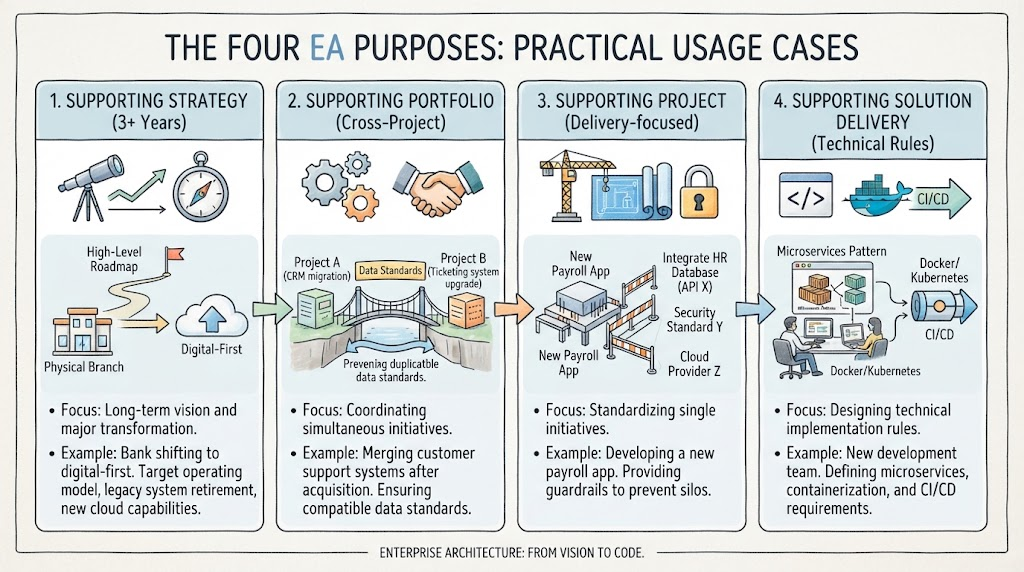 Mastering Enterprise Architecture: A Step-by-Step Guide to the Four Core Purposes
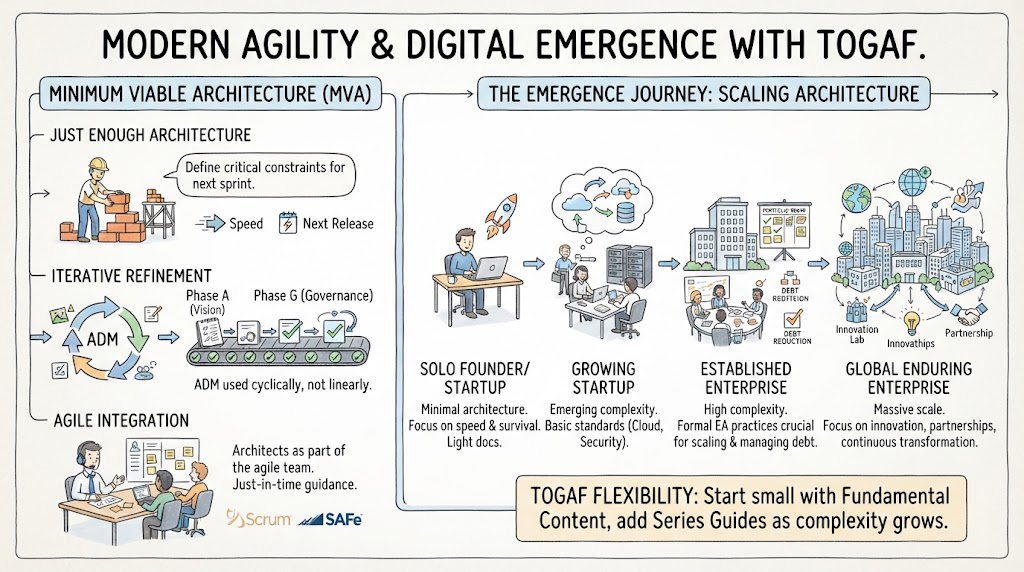 Mastering Modern Agility: A Tutorial on Minimum Viable Architecture and the Digital Emergence Journey
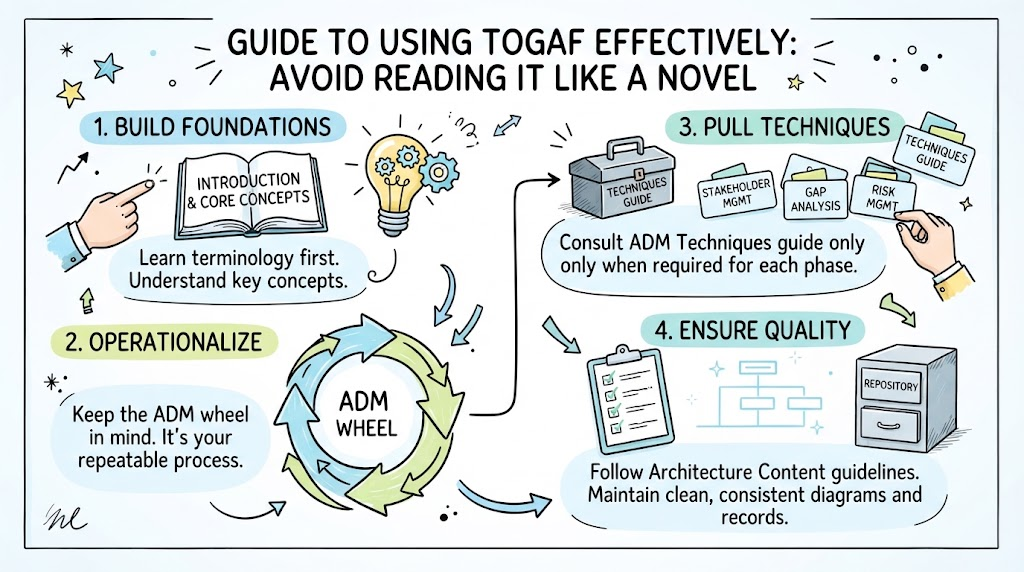 Mastering Enterprise Architecture: A Strategic Guide to the TOGAF Framework
 Mastering the TOGAF ADM Cycle: A Visual Guide to Enterprise Architecture Modeling