


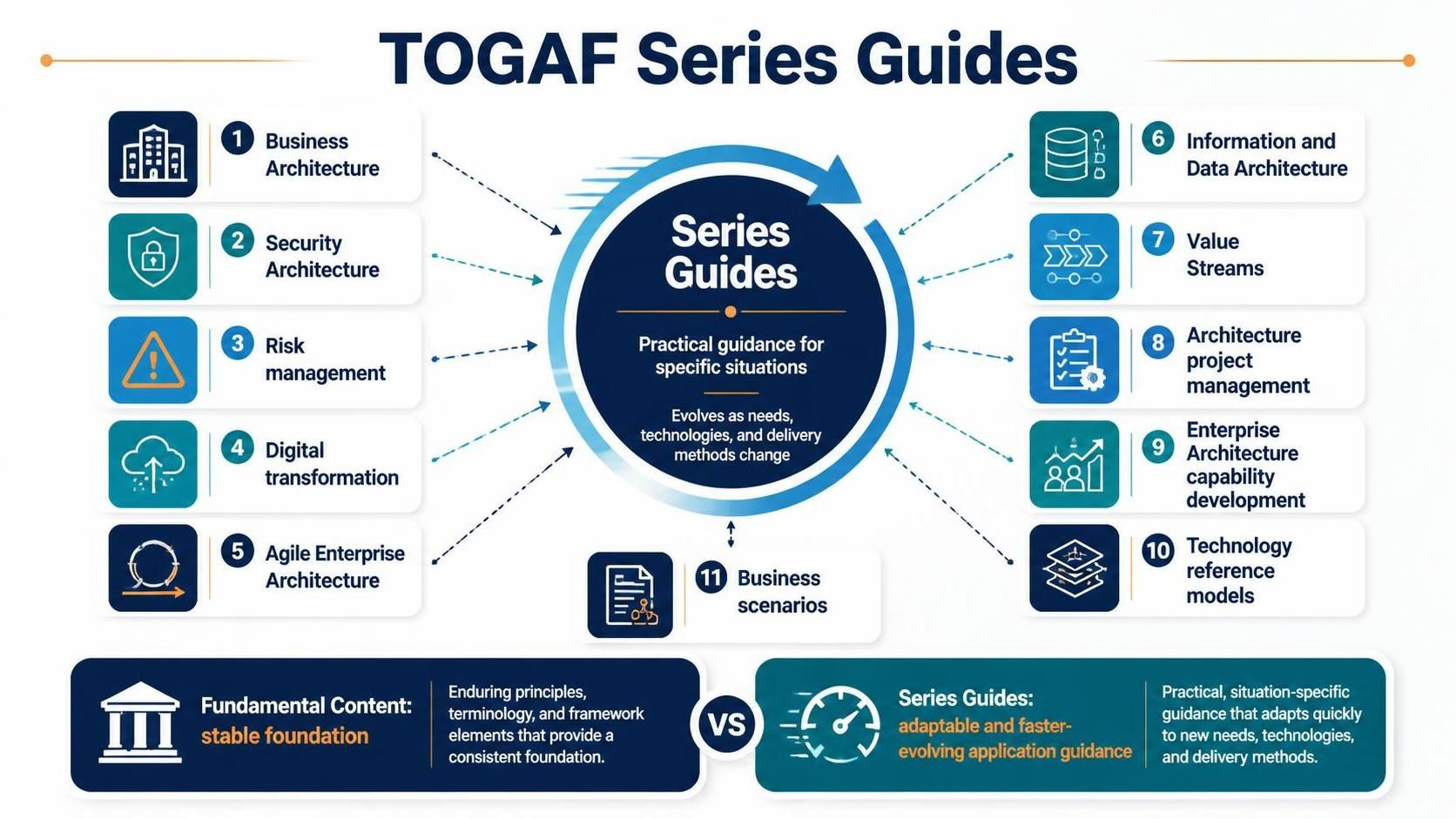
In the rapidly evolving landscape of Enterprise Architecture, the TOGAF Series Guides represent a critical evolution in how organizations approach digital transformation. Unlike the static “Fundamental Content” that serves as a stable foundation, these guides provide practical, situation-specific guidance that adapts quickly to new needs, technologies, and delivery methods.
The Core Concept: Adaptable Guidance
The central philosophy of the Series Guides is encapsulated in the diagram’s core message: Practical guidance for specific situations. While the TOGAF Standard (Fundamental Content) provides enduring principles and terminology, the Series Guides address the dynamic reality of modern enterprise architecture. They ensure that architects are not just following a rigid process, but are applying the framework to solve real-world problems.
Deconstructing the 11 Series Guides
The TOGAF Series Guides are categorized into eleven distinct areas, each designed to tackle a specific architectural challenge. Let’s walk through these categories to understand how they fit into the broader architecture ecosystem.
1. Foundational Architecture Domains
Every architecture project begins with understanding the core domains of the enterprise. The guides cover:
- Business Architecture: Defining the business strategy, governance, organization, and key business processes.
- Security Architecture: Ensuring that security controls are embedded into the architecture from the ground up, rather than bolted on later.
- Information and Data Architecture: Managing data as a strategic asset, focusing on data governance, quality, and integration.
- Technology Reference Models: Providing a standardized view of the technology landscape to avoid vendor lock-in and ensure interoperability.
2. Strategic & Operational Focus Areas
Beyond the core domains, the guides address high-level strategic shifts and operational realities:
- Digital Transformation: Leveraging new technologies to fundamentally change how the enterprise operates and delivers value.
- Value Streams: Mapping the end-to-end activities that create value for customers, ensuring architecture supports business outcomes.
- Business Scenarios: A technique used to define specific use cases to test and validate architectural proposals.
3. Modernizing the Practice
The Series Guides also modernize the actual practice of Enterprise Architecture:
- Agile Enterprise Architecture: Adapting the TOGAF Architecture Development Method (ADM) to fit Agile and DevOps environments.
- Risk Management: Integrating risk assessment directly into the architectural decision-making process.
- Architecture Project Management: Providing tools to manage the complexity of large-scale architecture projects.
- Enterprise Architecture Capability Development: Building the skills and maturity required within the organization to sustain architecture practices.
Visualizing the Framework with Visual Paradigm
To effectively implement these concepts, architects need robust tooling that bridges the gap between theory and practice. The Recommended tooling of Visual Paradigm TOGAF ADM Tool is essential for this purpose. Visual Paradigm offers a comprehensive environment where you can:
- Model the Series Guides: Create visual representations of the 11 guides, linking them to specific business scenarios.
- Manage Artifacts: Store and manage the documentation required for each guide (e.g., Risk Registers, Value Stream Maps).
- Visualize Relationships: Use the tool’s diagramming capabilities to show how Security Architecture influences Technology Reference Models, or how Agile Enterprise Architecture impacts project timelines.
- Collaborate: Facilitate the “adaptable” nature of the guides by allowing stakeholders to review and provide feedback on architecture models in real-time.
Conclusion: The Future of Architecture
The TOGAF Series Guides are not just add-ons; they are the evolution of the framework. By moving from a “stable foundation” to “adaptable and faster-evolving application guidance,” organizations can stay ahead of the curve. Whether you are managing Risk, driving Digital Transformation, or refining your Business Scenarios, these guides provide the necessary structure to succeed.
By leveraging tools like Visual Paradigm TOGAF ADM Tool, architects can not only document these complex relationships but actively manage them, ensuring that the architecture remains relevant, secure, and value-driven in an ever-changing world.
Related posts:
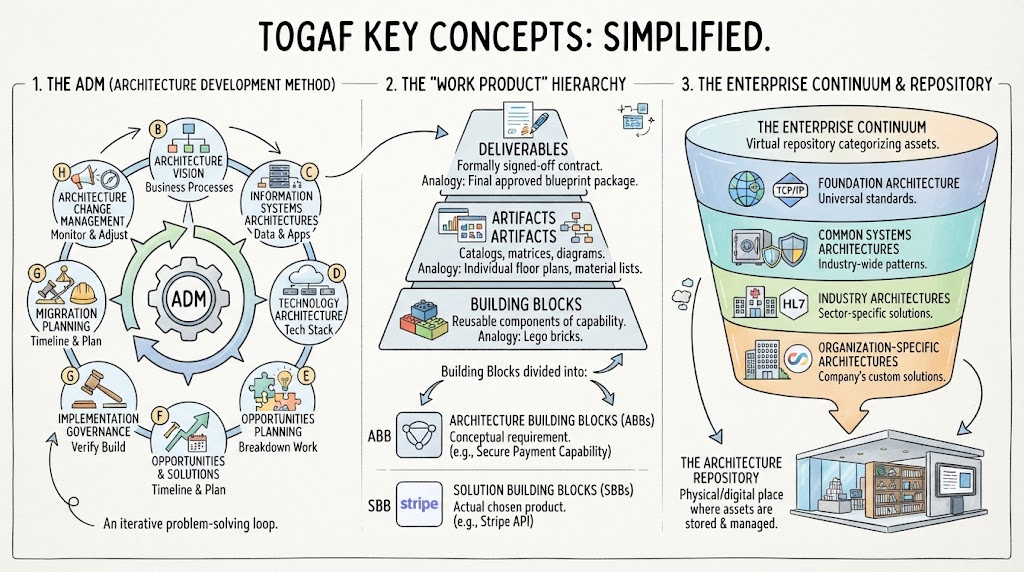 Mastering TOGAF: A Step-by-Step Guide to the ADM Cycle and Enterprise Architecture
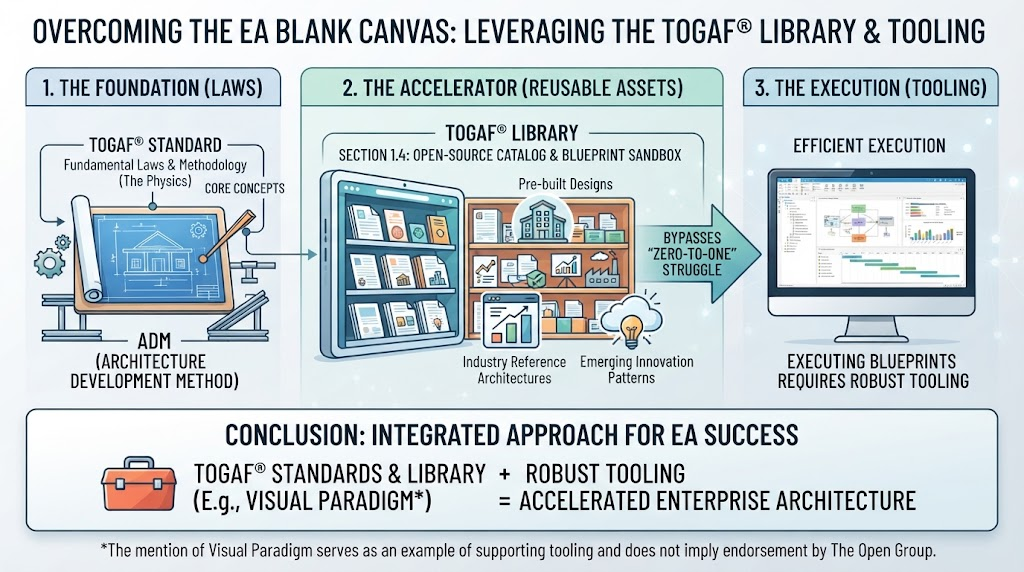 Overcoming the EA Blank Canvas: Leveraging the TOGAF Library & Tooling
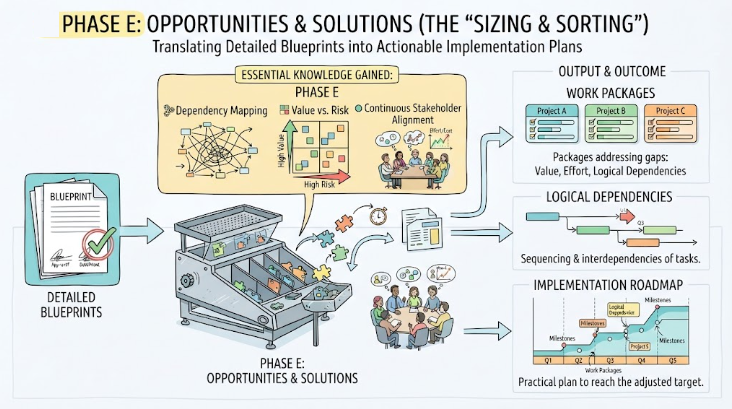 Mastering Phase E: Opportunities & Solutions in Enterprise Architecture
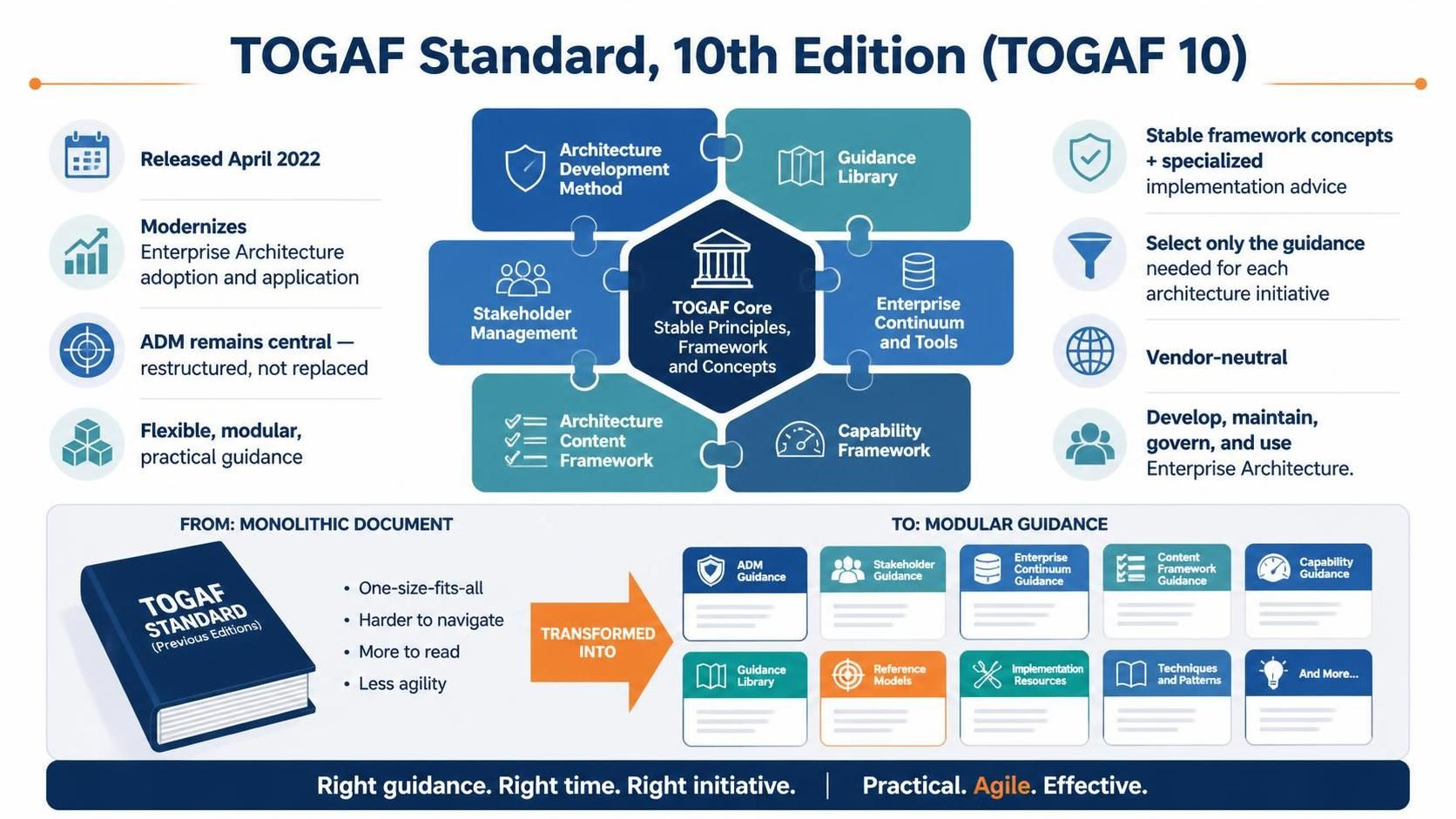 Mastering the TOGAF Standard 10th Edition: A Modular Approach to Enterprise Architecture