


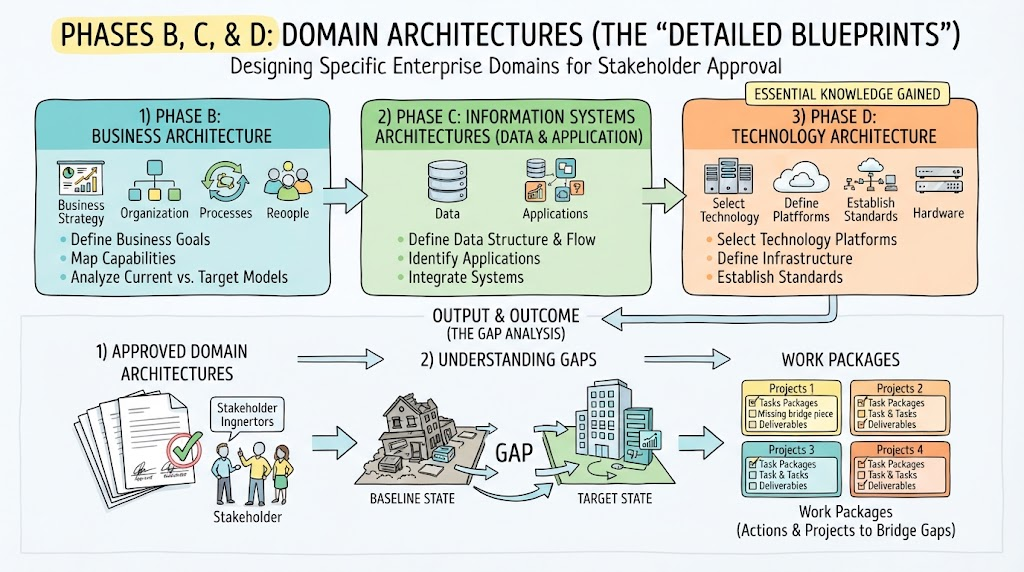
In the TOGAF Architecture Development Method (ADM), the journey from high-level strategy to concrete implementation happens during the core design phases. Often referred to as the “Detailed Blueprints,” Phases B, C, and D are where the abstract business needs are translated into concrete architectural models. This tutorial will guide you through the distinct yet interconnected domains of Business, Information Systems, and Technology architectures, and explain how to bridge the gap between your current reality and your future vision.
Phase B: Business Architecture (The Foundation)
The journey begins with Phase B, Business Architecture. Before a single line of code is written or a server is procured, you must understand the business itself. This phase defines the business strategy, governance, organization, and key business processes.
Key activities in this phase include:
- Defining Business Goals: Aligning the architecture with the strategic objectives of the enterprise.
- Mapping Capabilities: Identifying what the business needs to be able to do (e.g., “Process Orders,” “Manage Customer Data”) to succeed.
- Reorganizing Reople: Understanding how organizational structures and roles need to adapt to support new processes.
Why it matters: If the business architecture is weak, the subsequent technical layers will be built on shifting sand. This phase ensures that the IT investments will actually support the business strategy.
Phase C: Information Systems Architectures (The Logic)
Once the business requirements are clear, Phase C shifts focus to Information Systems Architectures. This phase is often split into two sub-domains: Data Architecture and Application Architecture.
Data Architecture
This involves defining the logical and physical data assets and data management resources. The goal is to ensure that the right data is available to the right people at the right time. Key tasks include defining data structures, data flows, and data governance.
Application Architecture
Here, we define the blueprint for the individual applications. It describes the interactions between applications, their interfaces, and how they integrate with one another. The objective is to identify the specific applications required to support the business processes mapped out in Phase B.
Phase D: Technology Architecture (The Hardware)
The final design phase is Phase D, Technology Architecture. This defines the logical software and hardware capabilities required to support the deployment of business, data, and application services.
In this phase, architects select the technology platforms and define the infrastructure. Key considerations include:
- Selecting Technology Platforms: Choosing the underlying operating systems, databases, and middleware.
- Defining Infrastructure: Planning for network topology, security, and cloud vs. on-premise deployments.
- Establishing Standards: Ensuring that the technology choices comply with enterprise standards for interoperability and security.
The Gap Analysis: Moving from Baseline to Target
The output of these three phases is not just a set of documents; it is a Gap Analysis. The goal is to clearly visualize the difference between the Baseline State (where you are now) and the Target State (where you want to be).
1. Approved Domain Architectures
First, stakeholders review and approve the new blueprints. This ensures that the “Target State” is agreed upon and that the stakeholders’ preferences are met.
2. Identifying the Gap
By comparing the Baseline (Current) Architecture against the Target Architecture, you identify the Gaps. This is the “Current Failure” point—knowing exactly what is missing or what needs to change to bridge the distance.
3. Work Packages
Once the gaps are identified, they must be organized into actionable plans. This is done by grouping changes into Work Packages. A work package is a cohesive set of actions (like a standalone project or a program) that delivers actual value. This allows the organization to prioritize which gaps to close first based on value, effort, and risk.
Recommended Tooling: Visual Paradigm + TOGAF ADM + ArchiMate
Executing Phases B, C, and D requires robust modeling tools to handle the complexity of enterprise architecture. The combination of Visual Paradigm, the TOGAF ADM framework, and the ArchiMate modeling language offers a powerful ecosystem for this process.
Why Visual Paradigm?
Visual Paradigm provides a comprehensive environment for modeling that supports the entire ADM lifecycle. It allows architects to create detailed diagrams for business processes (Phase B), data models (Phase C), and infrastructure topologies (Phase D) within a unified interface.
The Power of ArchiMate
ArchiMate is the standard language for TOGAF. It provides a consistent notation that bridges the gap between business and IT. Using ArchiMate in Visual Paradigm allows you to:
- Visualize the Layers: Clearly separate Business, Application, and Technology layers while showing how they interact.
- Trace Requirements: Link a business requirement in Phase B directly to a technology component in Phase D, ensuring full traceability.
- Perform Gap Analysis: Use specific ArchiMate gap analysis capabilities to visually highlight missing elements between baseline and target states.
By leveraging these tools, architects can move beyond static documents to dynamic, interactive models that drive better decision-making and clearer communication with stakeholders.
Related posts:
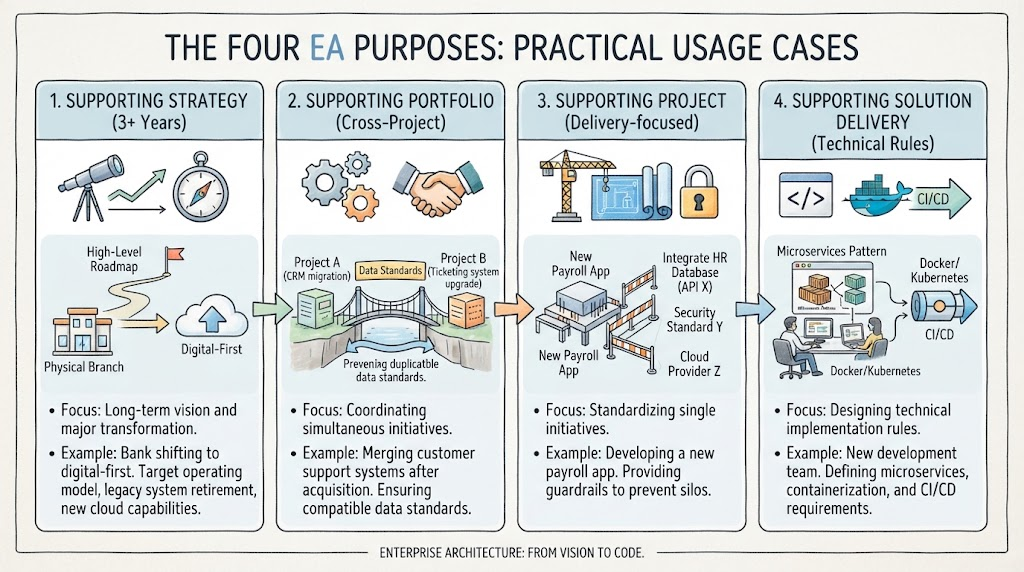 Mastering Enterprise Architecture: A Step-by-Step Guide to the Four Core Purposes
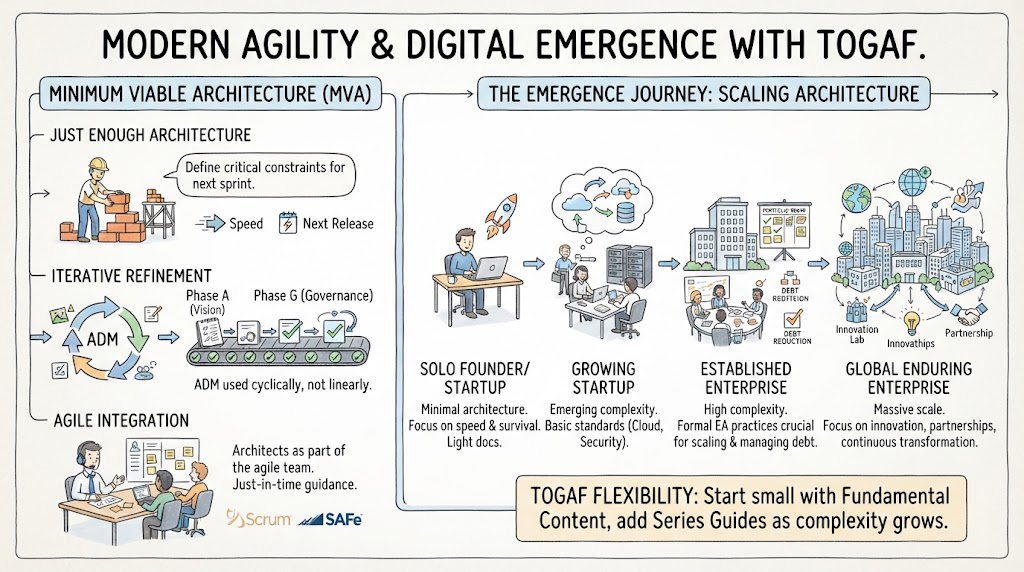 Mastering Modern Agility: A Tutorial on Minimum Viable Architecture and the Digital Emergence Journey
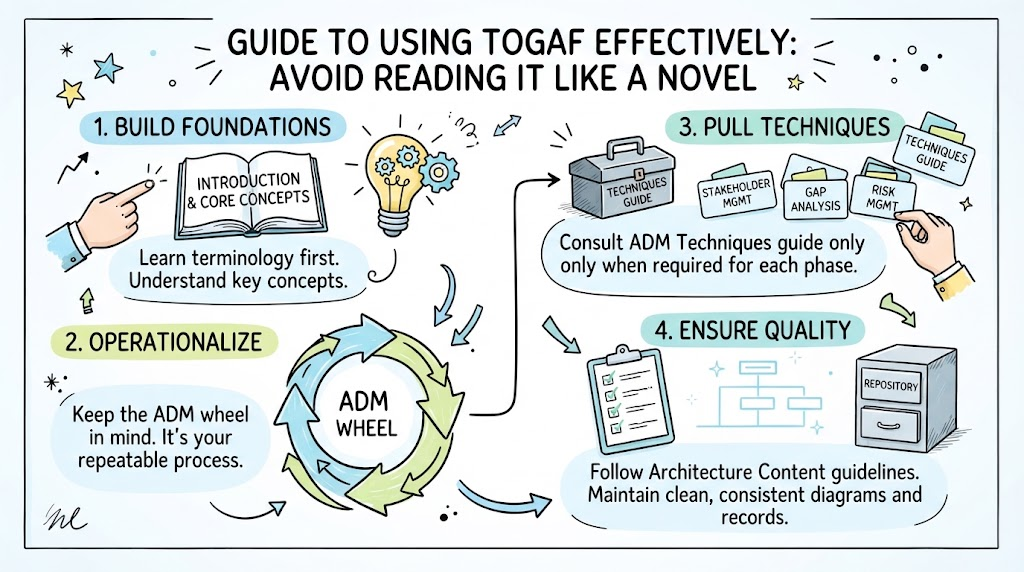 Mastering Enterprise Architecture: A Strategic Guide to the TOGAF Framework
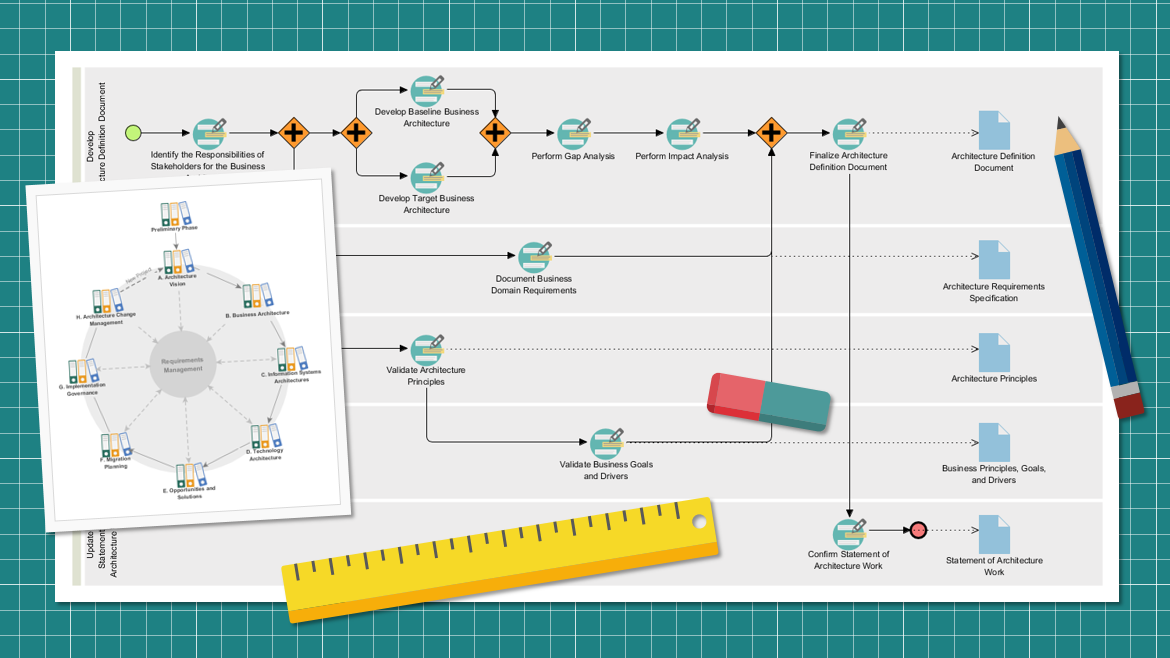 Mastering the TOGAF ADM Cycle: A Visual Guide to Enterprise Architecture Modeling