


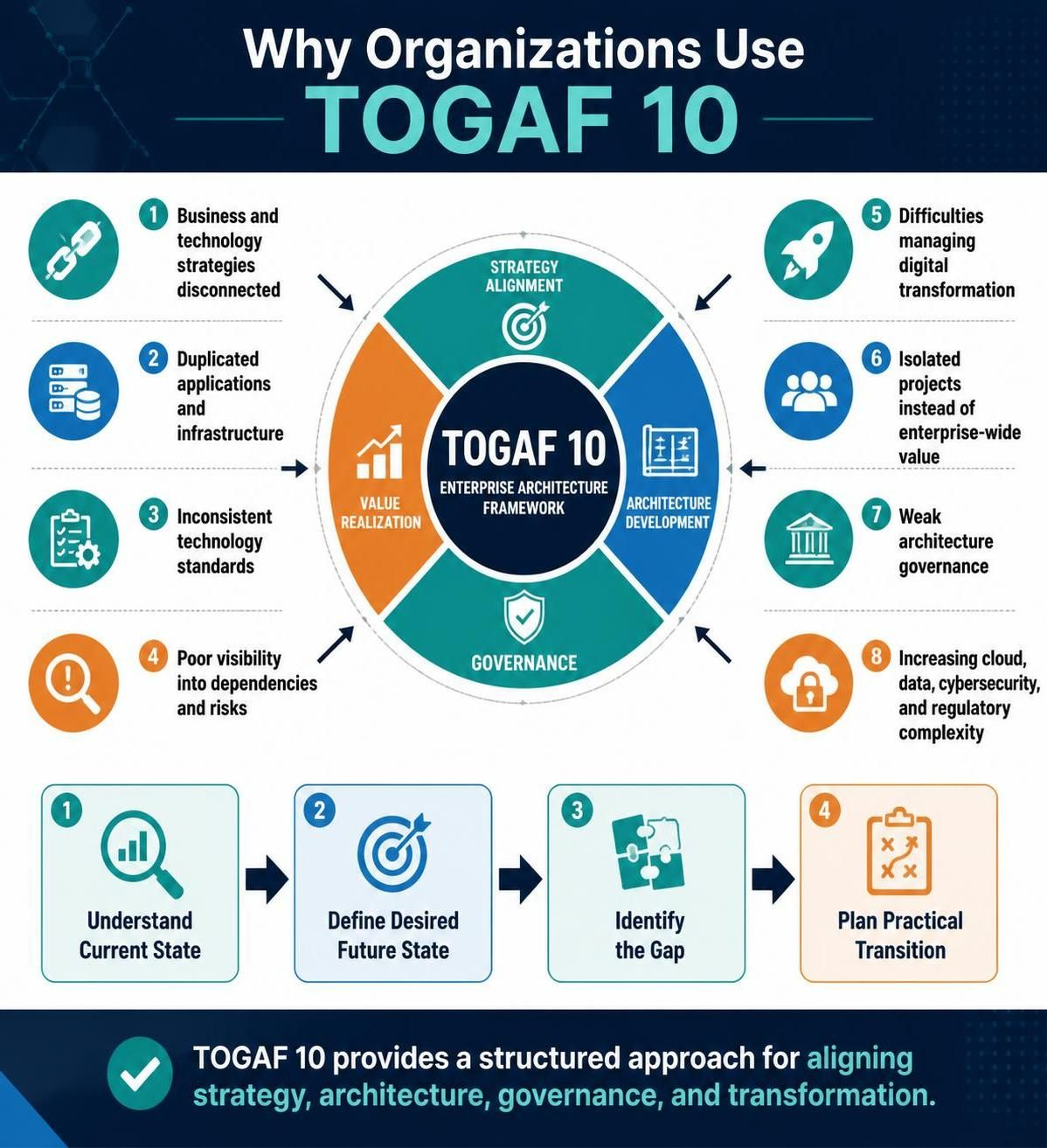
In the modern digital landscape, organizations face a myriad of challenges ranging from disconnected business and technology strategies to the increasing complexity of cloud and cybersecurity. To navigate these obstacles, many adopt the TOGAF 10 Enterprise Architecture Framework. However, implementing a framework is often more difficult than understanding it. This is where the right toolset becomes critical.
Visual Paradigm stands out as a premier solution for executing the TOGAF methodology. This tutorial explores why Visual Paradigm is the ideal companion for your EA process, specifically focusing on how it addresses the core pain points identified in TOGAF 10.
The Challenge: Why Organizations Adopt TOGAF 10
Before diving into the solution, we must understand the problem TOGAF 10 is designed to solve. As illustrated in standard architectural diagrams, organizations turn to TOGAF to address eight critical issues:
- Disconnected Strategies: When business goals and technology roadmaps do not align.
- Redundancy: Duplicated applications and infrastructure that waste budget.
- Inconsistency: A lack of standardized technology choices.
- Risk: Poor visibility into dependencies and project risks.
- Transformation: Difficulties in managing large-scale digital transformation.
- Isolation: Projects delivering isolated solutions rather than enterprise-wide value.
- Governance: Weak oversight of architectural standards.
- Complexity: Managing cloud, data, and regulatory demands.
The Solution: Visual Paradigm’s Role in the EA Process
Visual Paradigm is not just a diagramming tool; it is a comprehensive platform designed to support the entire TOGAF lifecycle. Here is how it helps organizations move from the “Current State” to the “Desired Future State.”
1. Bridging the Gap Between Business and Technology
One of the primary failures in enterprise architecture is the disconnect between what the business wants and what IT delivers. Visual Paradigm facilitates this through Traceability.
- Linking Artifacts: You can link high-level business strategy models directly to low-level technical system diagrams. This ensures that every technical decision made in the “Architecture Development” phase supports a specific business objective.
- Unified Language: By using a shared repository, executives, architects, and developers can view the same models with different perspectives, ensuring a common understanding of the “Current Situation.”
2. Achieving Architecture Alignment and Governance
TOGAF emphasizes Strategy Alignment and Governance. Visual Paradigm provides the mechanisms to enforce these principles.
- Model Validation: The tool allows you to define architectural rules (e.g., “The Finance Database must never connect directly to the Internet”). Visual Paradigm automatically checks models against these rules, preventing “Weak architecture governance.”
- Checkpoints: You can set up mandatory checkpoints in the ADM (Architecture Development Method) cycle. Projects cannot proceed to the next phase (like the “Plan Practical Transition”) without passing architectural validation.
3. Managing Complexity and Dependencies
As organizations move toward the cloud and handle massive data loads, “Poor visibility into dependencies” becomes a major risk. Visual Paradigm excels in Impact Analysis.
- Visual Dependency Mapping: When a change is proposed, you can instantly see how it affects upstream and downstream systems. This visual representation is far superior to static documents.
- Scenario Planning: You can create multiple “What-If” scenarios to model different future states (e.g., migrating to a specific cloud provider) before committing resources.
4. Improving Communication and Value Realization
The goal of TOGAF is Value Realization. A framework is useless if stakeholders cannot understand it. Visual Paradigm bridges this gap through:
- Dynamic Reporting: Instead of sending static PDFs, you can generate dynamic reports that highlight the value delivered by a specific architecture.
- Collaboration: Cloud-based features allow distributed teams to collaborate on the same model simultaneously, reducing the “duplicated applications” that often result from siloed communication.
Conclusion: From Concept to Transition
Implementing TOGAF 10 is a journey that takes an organization through four key steps: Understanding the Current State, Defining the Desired Future State, Identifying the Gap, and Planning the Transition. Visual Paradigm provides the digital canvas and the analytical engine to make this journey successful.
By automating the tedious aspects of documentation and providing real-time insights into architectural health, Visual Paradigm empowers organizations to move beyond isolated projects and achieve true enterprise-wide value.
Related posts:
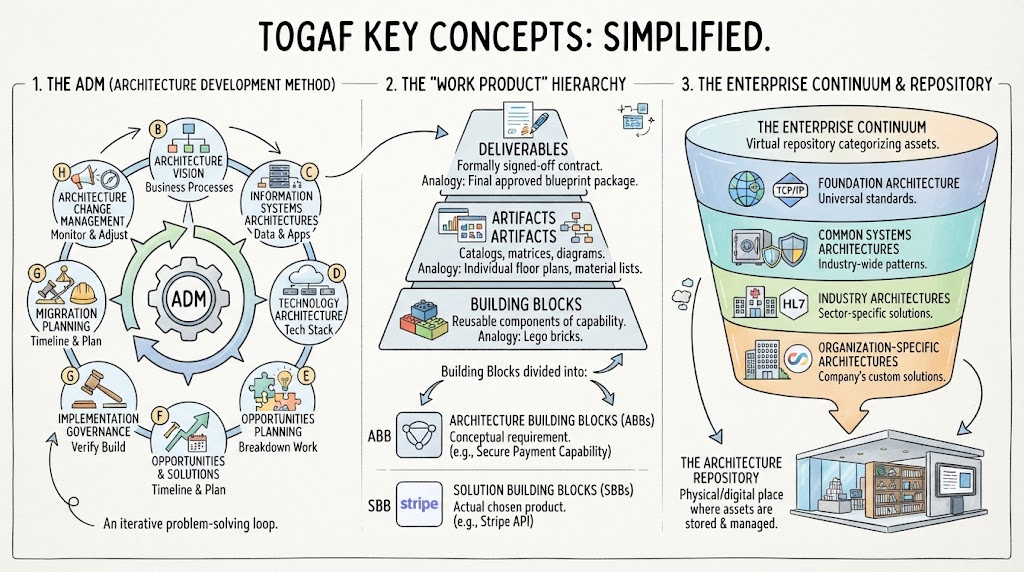 Mastering TOGAF: A Step-by-Step Guide to the ADM Cycle and Enterprise Architecture
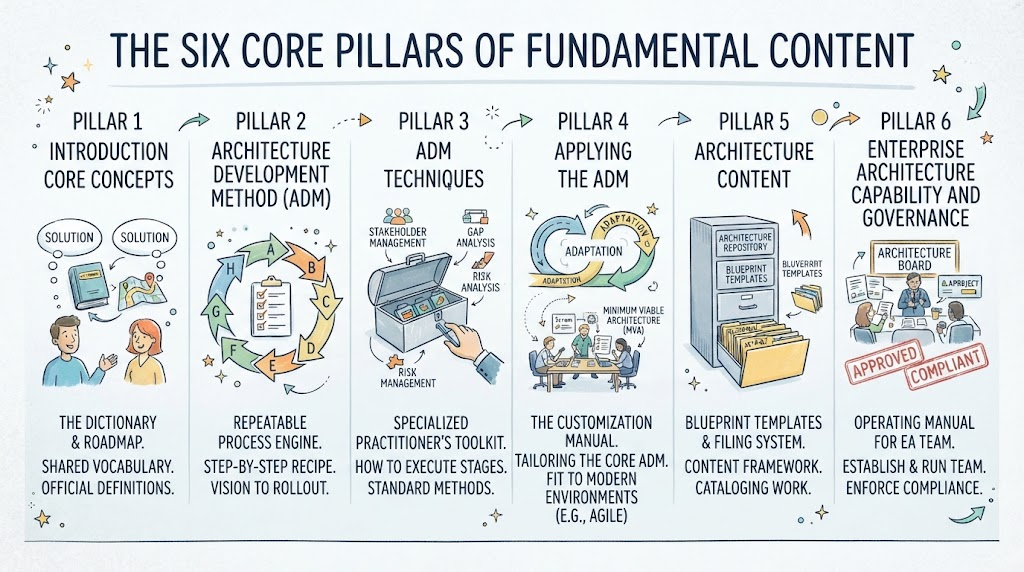 Mastering Enterprise Architecture: A Step-by-Step Guide to the Six Core Pillars of TOGAF
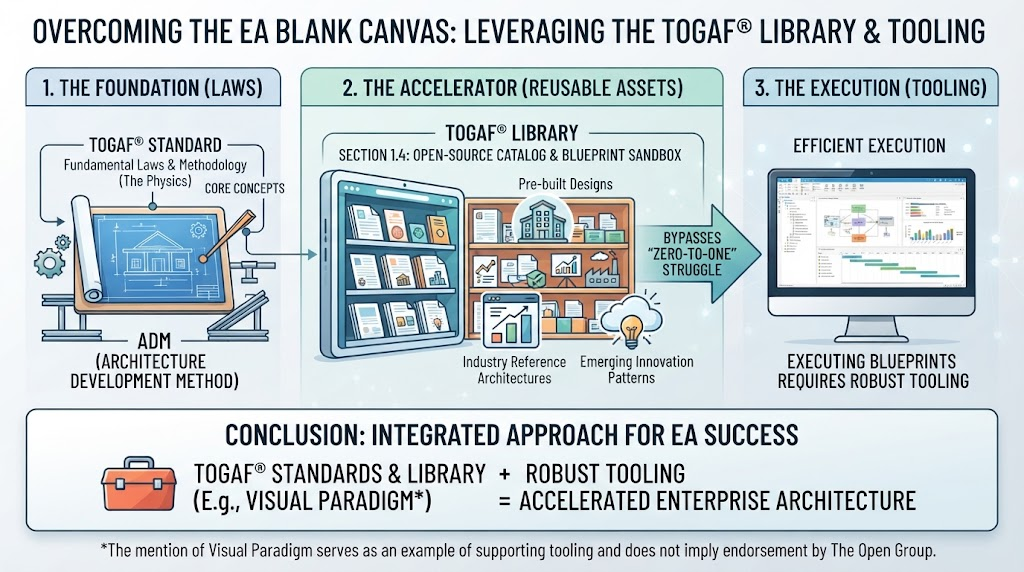 Overcoming the EA Blank Canvas: Leveraging the TOGAF Library & Tooling
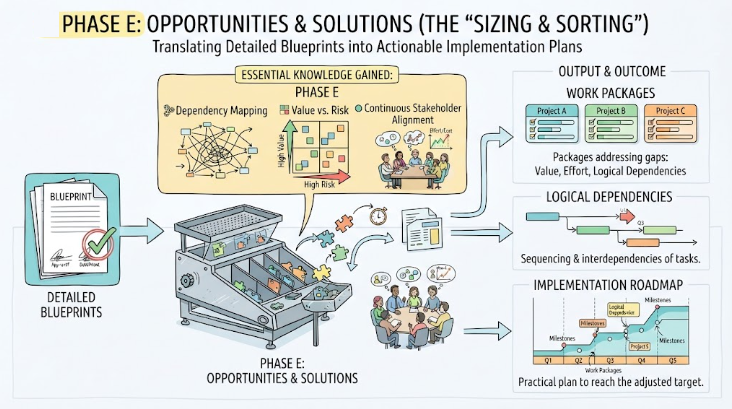 Mastering Phase E: Opportunities & Solutions in Enterprise Architecture